

At a glance
Expert's Rating
Pros
- Clean design
- Strong performance
- Great battery life
Cons
- Apple Intelligence not complete
- No MagSafe
- Expensive
- Slow charging
Our Verdict
The iPhone 16e delivers plenty of power and longevity in a clean, compact design, but for the price, you’ll find plenty of alternatives that offer more; including older but significantly more capable iPhones.
Price When Reviewed
This value will show the geolocated pricing text for product undefined
Best Pricing Today
Best Prices Today: Apple iPhone 16e

From the moment Apple unveiled the iPhone 16e, I’ve been trying to figure out who this thing is for. It wasn’t the next iPhone SE many had expected or hoped for, and the blend of old and new Apple technologies at play means it doesn’t carry the same broad appeal of the standard iPhone 16 or the iPhone 16 Pro.
Even though it lowers the barrier to entry for those eyeing up the iPhone 16 line, when considering what else is out there at the same £599/$599 starting price, it’s hard not to get hung up on what Apple chose to omit from the 16e’s makeup, in order to make it the most affordable of the current iPhone generation.
Design & Build
- IP68-certified dust and water resistance
- No MagSafe
- Improved repairability
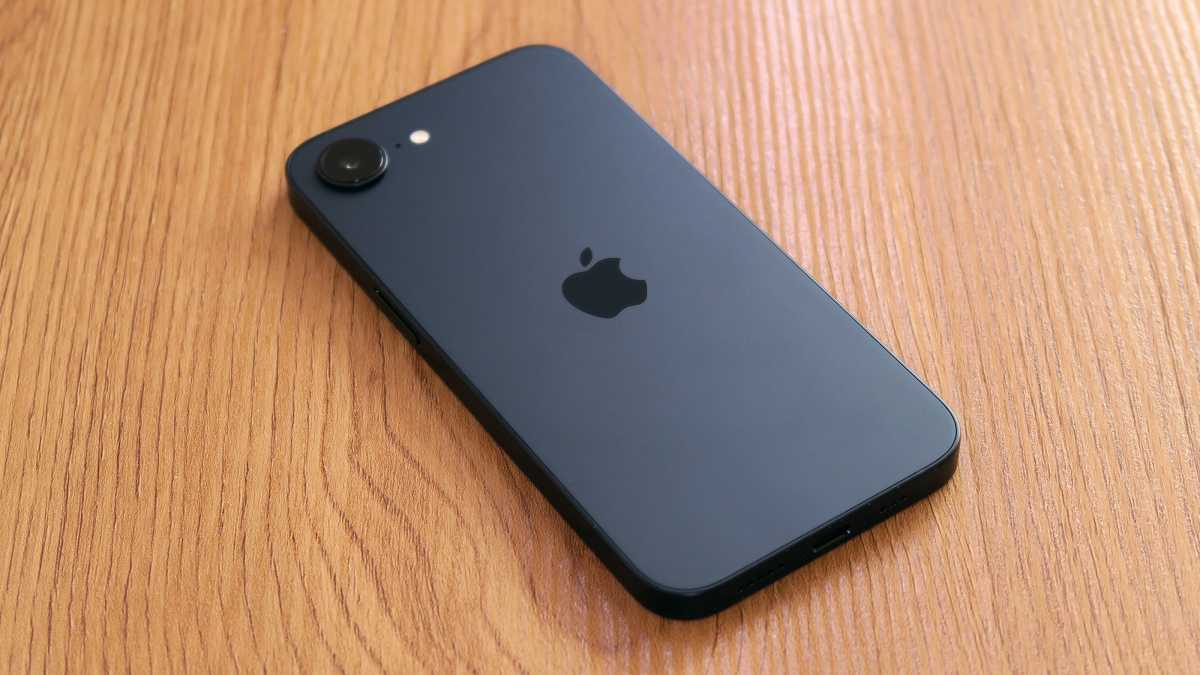
To look at, the iPhone 16e’s design is refreshingly simple. You get the same straight-sided form Apple has been dressing its phones with for the last few generations, paired to a notched 6.1-inch display, which looks as though it’s been lifted directly from 2022’s iPhone 14, while on the back you’re presented with flat etched glass and a single rear camera.
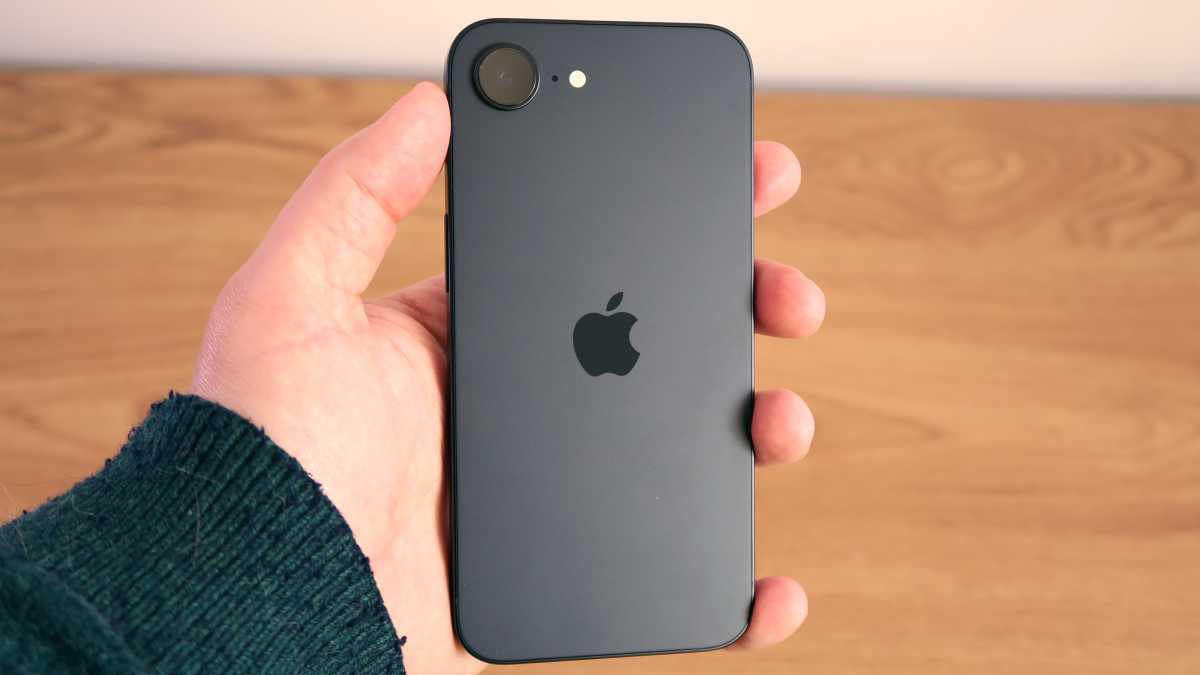

This also truly marks the end of the home button on an iPhone or iPad, although the 16e does get the line’s side-mounted Action Button, instead.
Even though this is the most basic entry in the iPhone 16 family, the 16e’s construction doesn’t feel like it’s received any less attention than the standard or Pro models, in terms of build quality.
Sure, there’s no Pro-tier titanium frame to speak of, but nonetheless its partially-recycled ‘aerospace-grade’ aluminium surround has lightly rounded edges for comfort and feels great in the hand. It’s what we’d expect at this lower price.
There’s no denying that the iPhone 16e is a good-looking phone, but it does only come in two colours
That’s also helped by the phone’s impressively low weight of 167g, which undercuts the standard 16 and is only really beaten out in 2025 by the Samsung Galaxy S25 and a mass of HMD’s plastic-bodied feature phones you’re unlikely to be interested in.
I wasn’t expecting the 16e to join the likes of the best phones of 2025 in terms of their typical IP69-certification, but its IP68-rating should be more than enough for most users who don’t want to have to worry about using their phone in heavy rain or dusty conditions.
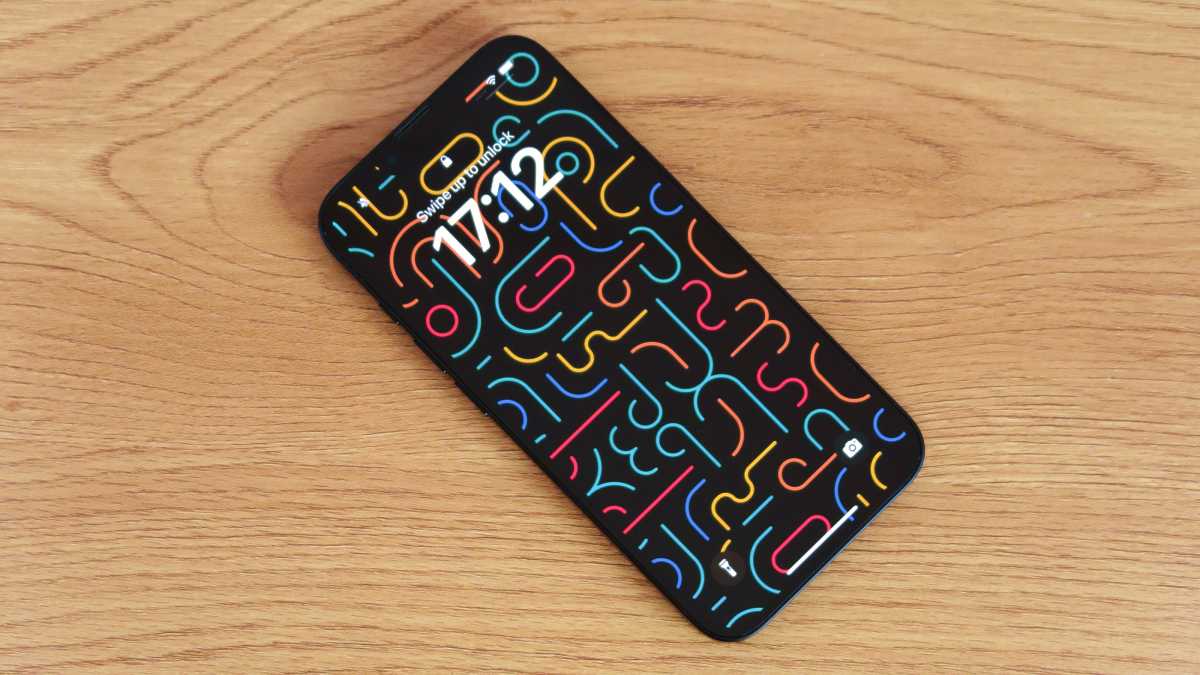
Foundry | Alex Walker-Todd
The phone is fronted by Apple’s toughened Ceramic Shield glass, but it’s an older recipe compared to the more advanced variant found on the iPhone 16 and iPhone 16 Pro.
The company claims that that etched back glass is “the toughest back glass in a smartphone” too, but doesn’t explain any further than that; so without throwing my 16e on the ground, I’m just going to have to take their word for it. The rear camera lens is protected by sapphire crystal to keep scratches at bay.
While I generally have faith in Apple’s durability claims – and my review unit has shown no real signs of wear after a month of testing – it has spent most of the time in a case. However, I didn’t really pick one out for protection but rather aesthetics.
There’s no denying that the iPhone 16e is a good-looking phone, but it does only come in two colours: black and white (the black is definitely the better of the two finishes). If, like me, you want a little flair from your phone, you’re going to have to accessorise so here’s hoping Apple adds to the range in the future.
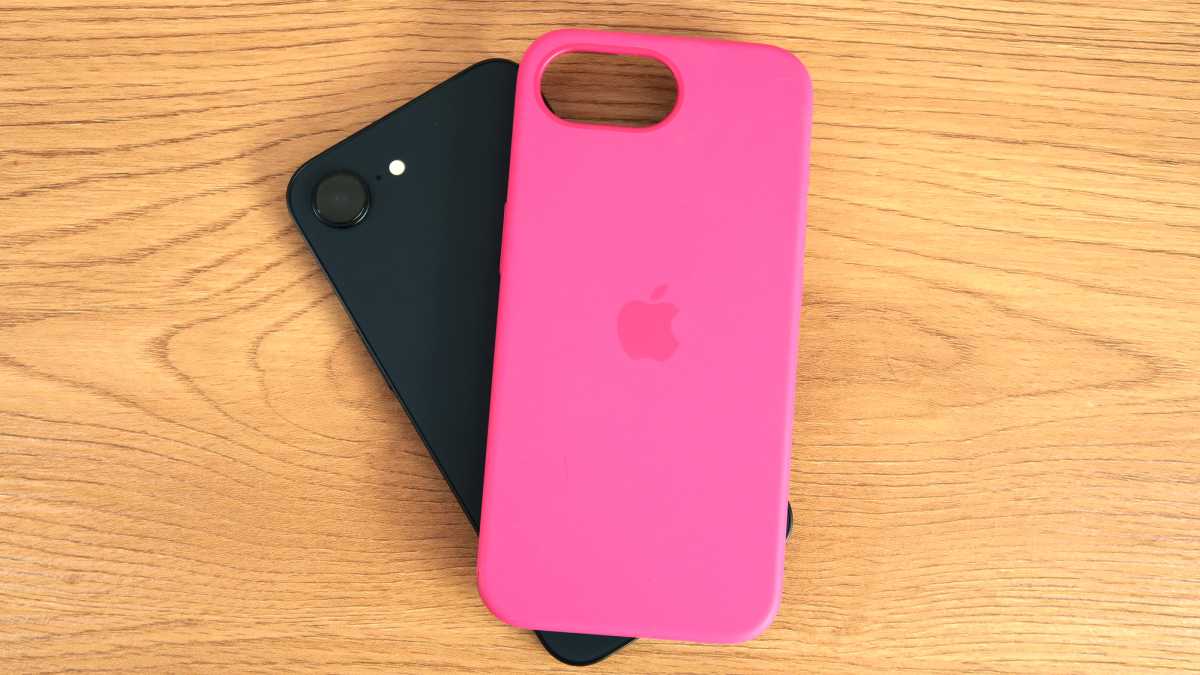
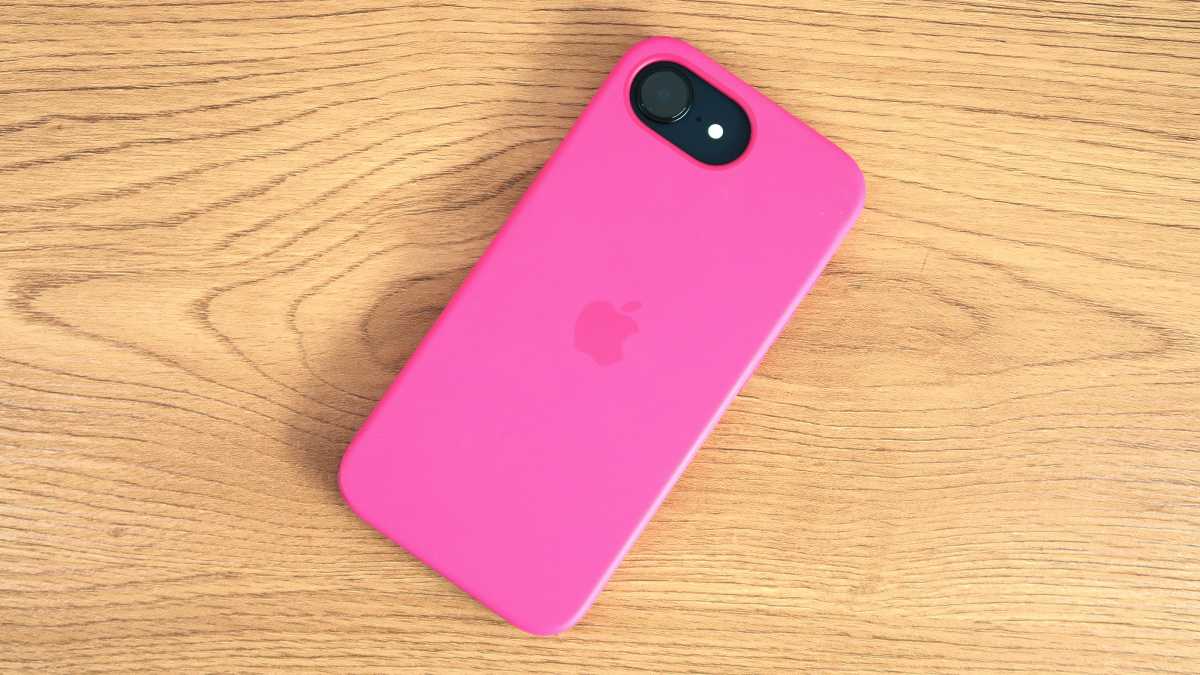
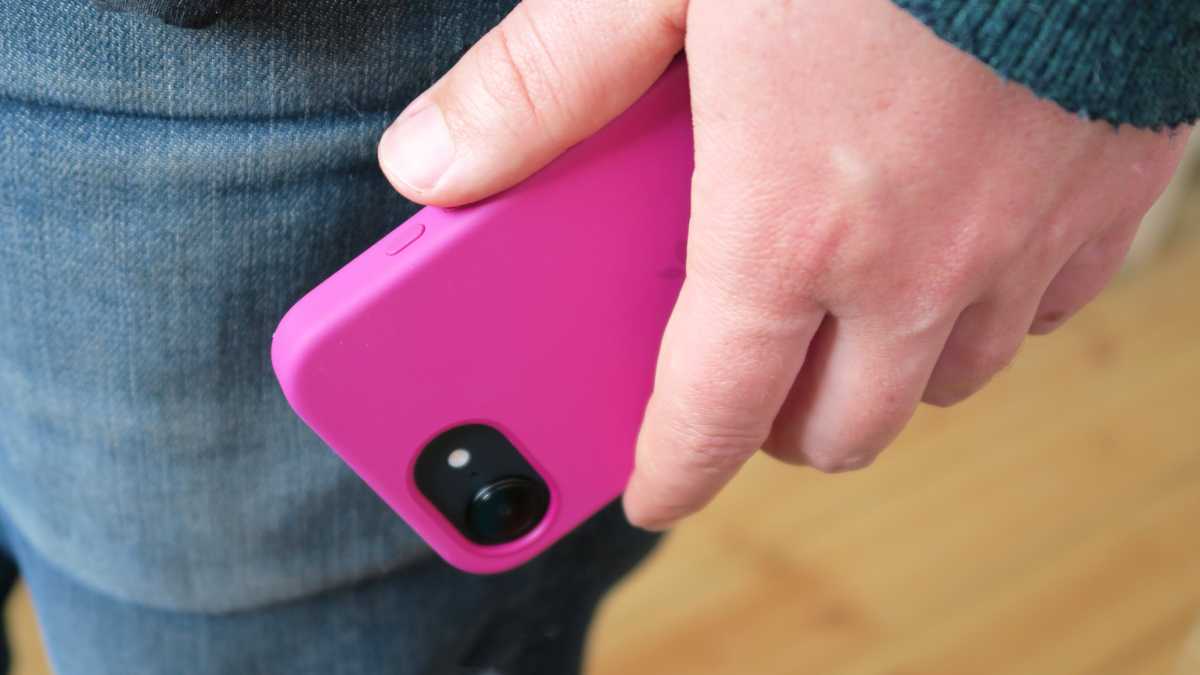
Apple’s official silicone case sells for £39/$39, coming in five colours (pictured here in Fuchsia), and it’s the only way to make the 16e stand out beyond phone charms and stickers.
One of the big differences compared to almost every other iPhone released since the iPhone 12 is the lack of MagSafe. It’s perhaps one of the most unusual and disappointing omissions on the 16e, with the silver linings being that the phone does retain basic Qi wireless charging and MagSafe’s absence contributes to the phone’s pleasingly featherweight feel.
MagSafe isn’t just a charging standard, however, it’s the key to an ever-expanding ecosystem of magnetic accessories, from docks to chargers, car mounts to gimbals, so it’s a shame that the 16e didn’t at least retain the magnetic aspect of MagSafe.
While Apple only sells the one case for the 16e, third-parties do sell MagSafe-compatible cases, which can add magnets back to your 16e experience, for a little extra cash, so there is a way around it of sorts.
One notable hardware improvement that Apple should be praised for (albeit begrudgingly) is the promise of improved repairability. Not only is the battery more readily user-replaceable – ditching pull tabs and stubborn glue for a much cleaner electro-chemical release mechanism – but parts pairing has been eased too.
This means you should be able to swap broken or failing parts of your 16e with official replacement parts without issue – something that Apple hasn’t historically allowed.
Screen & Speakers
- 6.1-inch Super Retina XDR OLED display
- 800nits (High Brightness Mode or HBM), 1200nits (peak)
- Notch with Face ID
- No Dynamic Island
Coming from the previous iPhone SE, there’s no denying that the screen on the 16e will feel like an outstanding upgrade, as it’s significantly larger, sharper and brighter.
Switching from practically any other recent phone – especially those from the Android camp – the viewing experience is a lot more pedestrian.
Foundry | Alex Walker-Todd
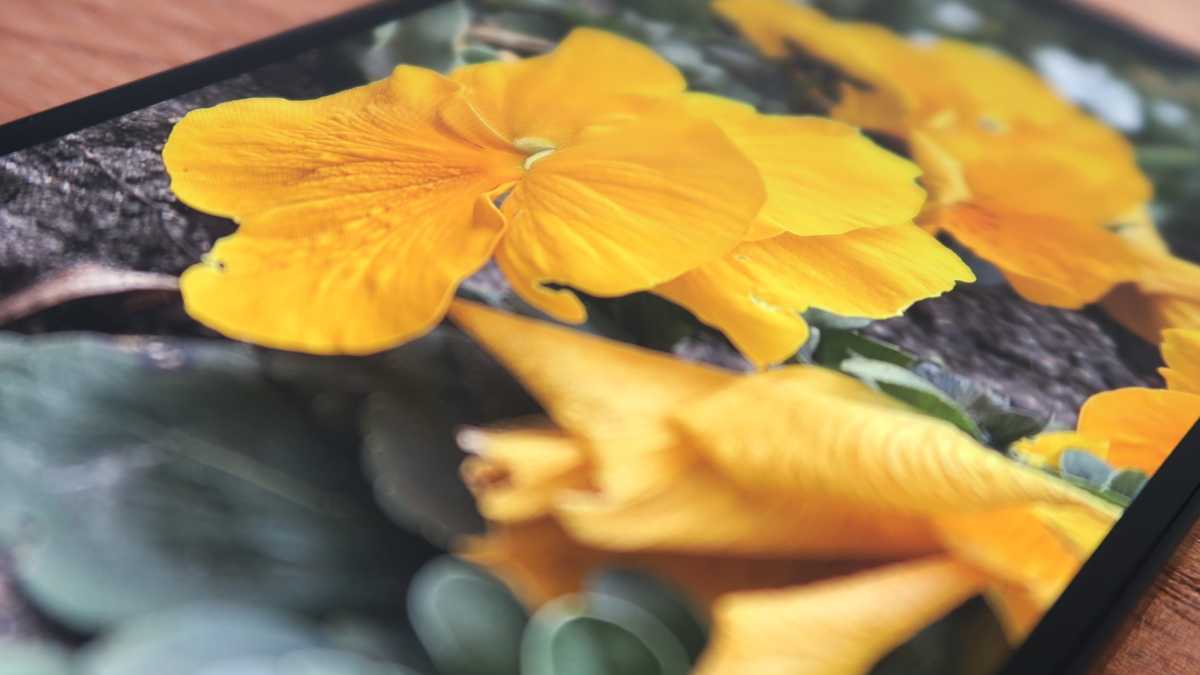
It’s great that Apple has finally ditched LCD for OLED tech on its latest lowest-tier model. This brings with it all the established advantages of the technology, such as true blacks and better contrast, more vibrant visuals and lower power consumption. But even with the lower asking price, the fact that this £600/$600 phone still only possesses a 60Hz refresh rate panel in 2025 is, frankly, insulting.
It’s a trait shared with the base iPhone 16 and something Apple has committed to for several generations at this point, so in spite of many a journalistic protestation, 60Hz appears to be here to stay, unless you cough up extra for the 16 Pro’s 120Hz ProMotion tech.
To hammer the point home, just look at our rundown of the best mid-range phone, they’re all more affordable compared to the 16e and in almost every case, boast better brightness and higher refresh-rate displays. Even some handsets in our best budget phone chart offer 120Hz for Pete’s sake.
As the 16e is using what appears to be the iPhone 14’s display, it comes with the same brightness limitations too, which makes outdoor viewing in bright environments challenging; especially compared to similarly-priced rivals. The new Google Pixel 9a, for example, boasts a 120Hz panel that’s more than twice as bright (1800nits in HBM with a 2700-nit peak).
Foundry | Alex Walker-Todd
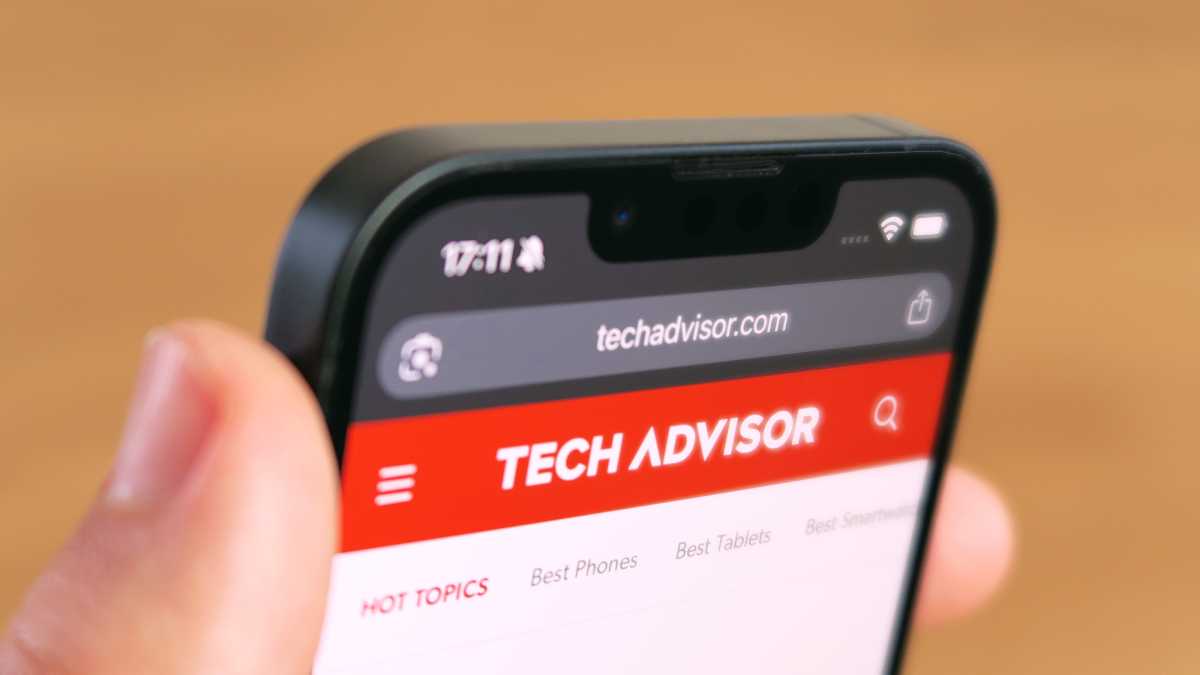
It’s also why the 16e is the only member of the family without the Dynamic Island, which Apple introduced on 2022’s iPhone 14 Pro series. Instead you get a notched display, which looks dated by modern smartphone standards, but at least Apple’s Face ID tech (the key components of which reside within the notch) remains one of the best alternatives to fingerprint login; in terms of biometric security on a phone.
You can expect clear sound throughout the phone’s volume range, from its earpiece and down-firing speaker pair, but middling bass response means there’s little depth to sound or much discernible stereo separation.
Specs & Performance
- 3nm Apple A18 chipset (4-core GPU variant)
- Up to 512GB storage
- First iPhone with Apple C1 modem
The move to Apple’s latest A18-series silicon means the 16e runs on one of the best mobile chips out there right now (even if MediaTek and Qualcomm’s latest wares have eroded Apple’s once-long lead).
As such, you can expect flagship-class performance from this little pocket rocket, which is officially 40% faster than the Apple A15 Bionic that powered the iPhone SE (2022).
How much value you put on the company’s latest tentpole feature may be the deciding factor surrounding whether the iPhone 16e is the right model for you or not.
Foundry | Alex Walker-Todd
While close to the base A18 chip inside the standard iPhone 16, the 16e’s version does come with one slight tweak; one fewer GPU core (four instead of five). However, the practical differences are difficult to spot.
What’s more, those serious about mobile gaming (or other graphically intensive apps/tasks) on iPhone should save for the A18 Pro (with its six-core GPU) inside the iPhone 16 Pro and iPhone 16 Pro Max, anyway.
In testing, benchmarks place it, as expected, on the level with the standard iPhone 16, and with that 60Hz display capping frame rates, the phone is more than comfortable running high-fidelity titles like Zenless Zone Zero with high graphical settings (and 60fps) enabled, with consistent performance.
Apple iPhone 16e benchmarks
This choice in chip (paired to 8GB of RAM) is really in service of facilitating Apple Intelligence support – something the base iPhone 15 and 15 Plus missed out on, due to hardware limitations. How much value you put on the company’s latest tentpole feature may be the deciding factor surrounding whether the iPhone 16e is the right model for you or not.
You’re also given the same storage tier options as the standard iPhone 16: 128-, 256- and 512GB, with 1TB remaining reserved for the 16 Pro line.
Where the 16e does stand out from any iPhone before it, is that it’s the first of the series to debut Apple’s C1 modem. The company has been working on ways to break free from its reliance on Qualcomm’s cellular tech for generations now, and the C1 is the first step on that path. Independent testing shows comparable 5G performance to the Qualcomm-made modems found inside the other iPhone 16 models, albeit with a couple of compromises; namely no mmWave 5G and no WiFi 6E/7 future-proofing.
It’s these notable compromises that are the likely driving force behind Apple’s decision to launch the C1 inside its new entry-level iPhone, instead of its top-shelf uber-flagships.
As with the move from Intel to Apple Silicon inside the company’s laptops, however, bringing the modem in-house does have additional benefits in terms of efficiency, with Apple theoretically able to optimise interactions between that A18 chip and the C1 for better power management and performance in a way it was never able to with third-party components like Qualcomm’s modems.
Cameras
- 48Mp f/1.6 main w/ OIS
- Lossless 2x zoom
- 12Mp f/1.9 selfie camera
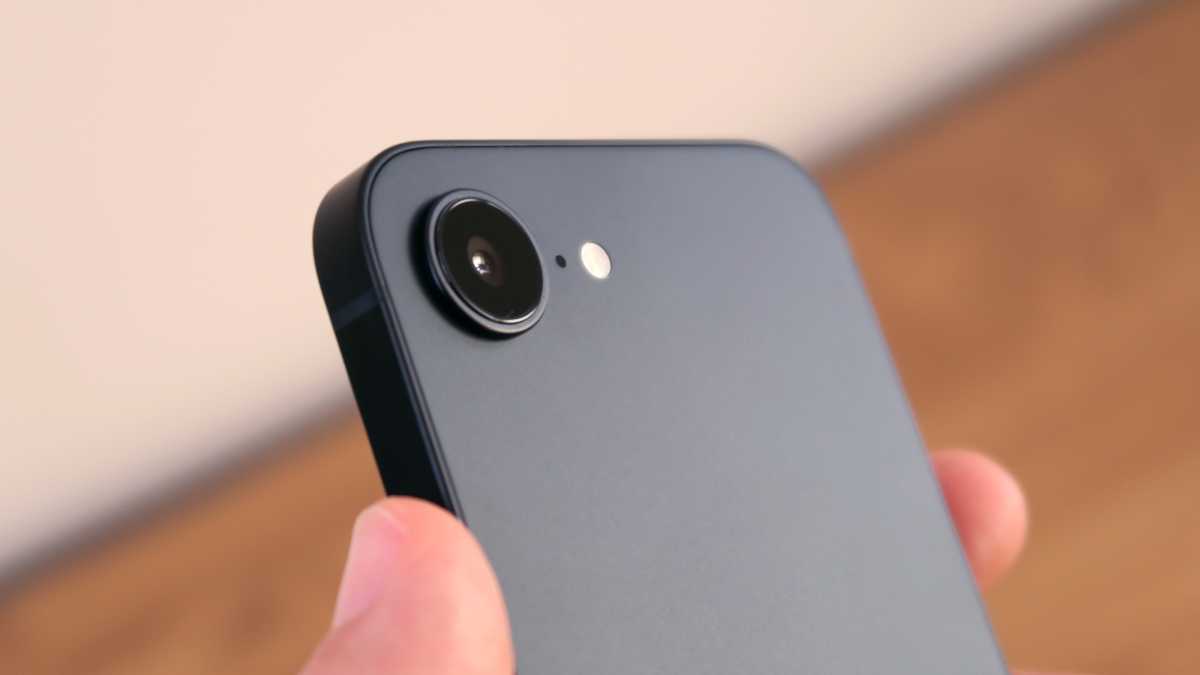
If there was any confusion in your mind over the iPhone 16 family’s hierarchy, all you need to do is count the cameras on the back. The 16 Pro line has three, the 16 has two and the 16e has just one.
You might think that it runs with the same 48Mp lead snapper as its more premium sibling – the standard iPhone 16 – but that’s not quite the case
Foundry | Alex Walker-Todd
The 16e features a sole 48Mp Fusion camera on the back, which shoots 24Mp stills by default and uses sensor cropping to capture 12Mp 2x zoom shots, without a loss in optical quality.
You might think that it runs with the same 48Mp lead snapper as its more premium sibling – the standard iPhone 16 – but that’s not quite the case. While the megapixel count, aperture and focal length are the same, the 16e runs with a much smaller sensor (1/2.55-inch, compared to 1/1.56-inch), meaning it can’t take in as much light; affecting detail, dynamic range and low light performance.
That comes paired to more basic optical image stabilisation (OIS) too; the 16 uses superior sensor-shift OIS (first introduced on the iPhone 12 Pro Max), which grants it superior detail and light-gathering abilities, compared to the 16e.
Even though this all means the 16e’s camera is comparatively hamstrung, you can still expect to capture nice shots when light is plentiful, they just look more obviously as though they’ve been taken on a smartphone; with less prominent depth when not shooting in portrait mode. Speaking of which, Apple’s imaging pipeline and subject separation edge detection are still pretty good, especially when shooting portraits on the 16e.










That smaller sensor and weaker OIS does make low-light shooting trickier, with the phone more readily resorting to Night mode when the sun starts to set; softening detail in shots and introducing a greater likelihood of subject blur.
The more nuanced run of 19 adjustable photographic styles – available on the existing iPhone 16/16 Pro line – doesn’t carry across to the 16e’s camera experience, with only the five uniform styles from previous runs of iOS being available.
You do get up to 4K/60fps video capture, but don’t expect Apple ProRes support or the like from the shooting experience – not to mention the same shortcomings across stability and detail in low light shooting.
Dropping back down to a single rear sensor does also remove dedicated Spatial Video, macro and Cinematic Mode support, while the 16e also lacks its siblings’ physical Camera Control, although I don’t think many would argue this as a huge loss.
All in all, both the imaging hardware and software is much simpler than what you’ll get from the rest of the iPhone 16 family as well as Android rivals of a similar or cheaper price.
Battery Life & Charging
- 4005mAh battery
- Around 25W wired charging
- No MagSafe, Qi wireless charging only
Let’s get the ‘bad’ out of the way first. Of all the things Apple trimmed from the 16 to create the 16e, MagSafe is the most petty and frustrating loss as mentioned earlier.
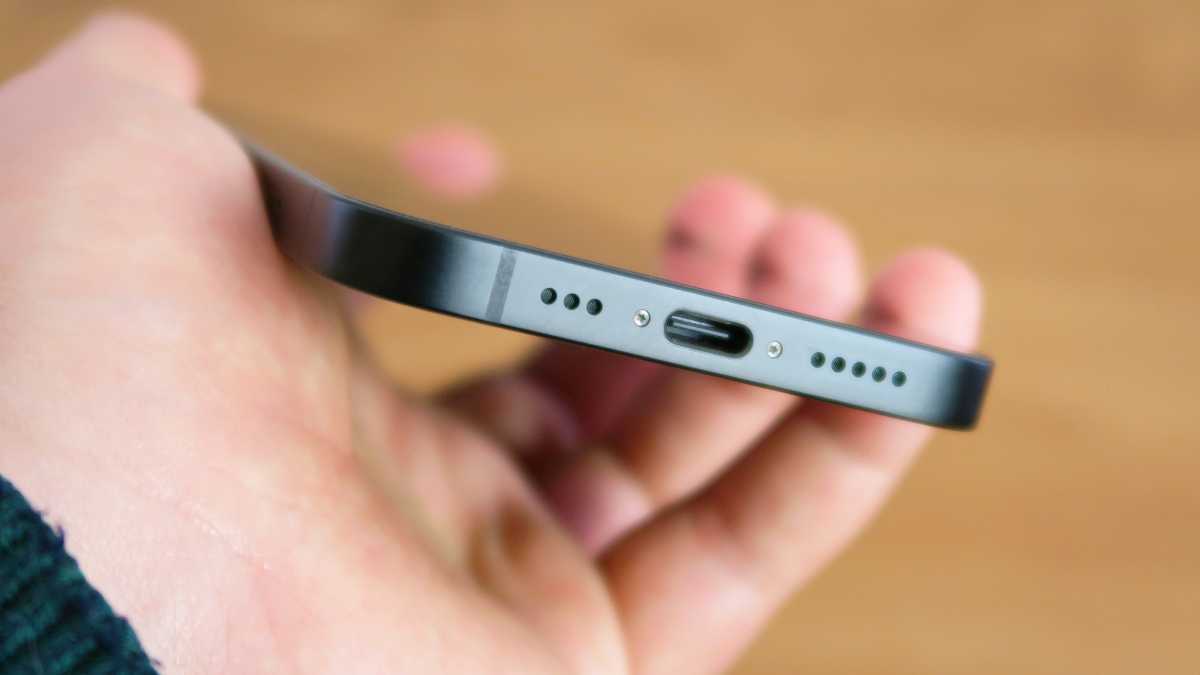
Yes, you do still have Qi wireless charging, but at 7.5W, it’s a last resort. Compare that to its siblings’ support for Qi2 speeds at 15W or, of course, native MagSafe speeds at 25W.
Whichever way you slice it, Apple was already behind the curve when it comes to fast-charging
Despite lacking the additional components for MagSafe, the 16e likely weighs a similar amount to the standard 16 because Apple has chosen instead to fill the space with a larger battery. At 4005mAh, the 16e actually has the larger cell than both the standard 16 and the 16 Pro (but not Plus and Max models), which paired with that A18 silicon and C1 modem, modest display and iOS’ established power efficiency, delivers great battery longevity.
4005mAh is small among Android phones, but inside the iPhone 16e it consistently delivered around 12 hours of screen-on time per charge, which equates to about two days of normal use, comfortably.
During testing, this even included intensive tasks like downloading big game files and playing intensive titles, like the aforementioned Zenless Zone Zero for 20 minutes, with high graphical fidelity and 60fps mode enabled.
Foundry | Alex Walker-Todd
When it does come time to recharge, while Apple doesn’t cite a specific wattage for wired charging, it clocks in at around 25W, similar to the standard 16. The company promises 50% charge in 30 minutes, which in my testing, the 16e actually surpassed.
The phone reached 53% in 30 minutes, 83% in an hour, and a full recharge took an hour and 35 minutes total.
Whichever way you slice it, Apple was already behind the curve when it comes to fast-charging speeds, but the 16e is even more hampered, by losing out of MagSafe on top.
Software & Apps
- iOS 18 at launch
- Apple Intelligence support
- Programmable Action Button
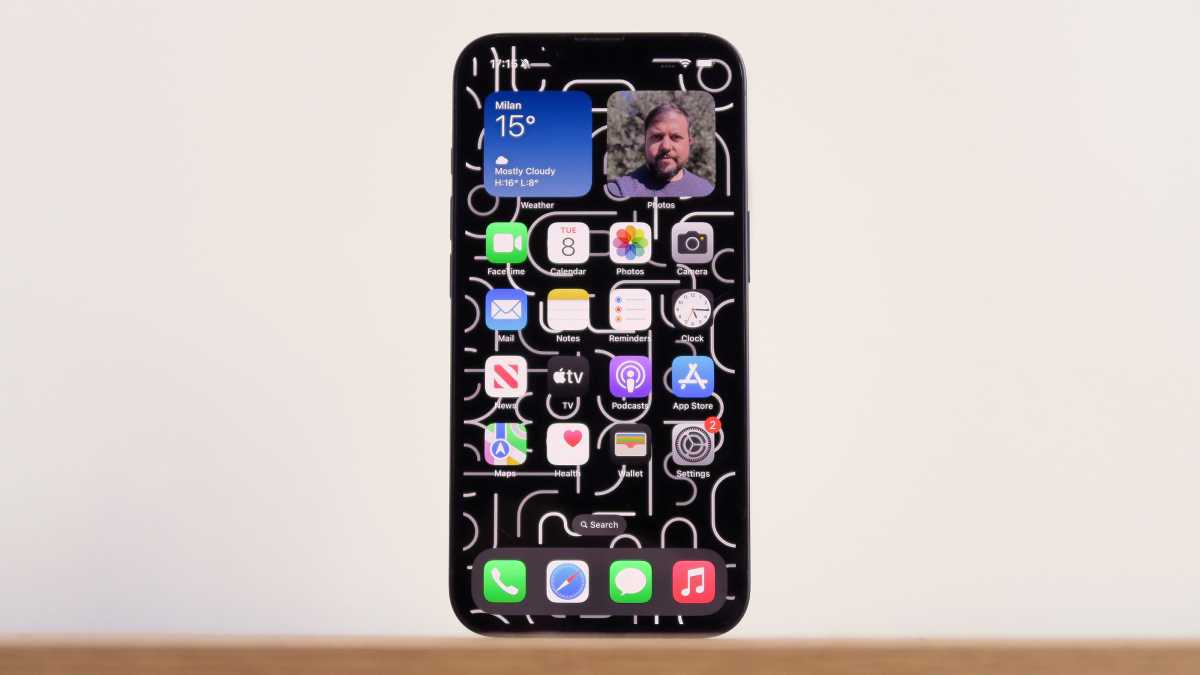
iOS 18, which the 16e runs out the box, marks a pretty seismic shift as far as Apple’s mobile operating system updates go.
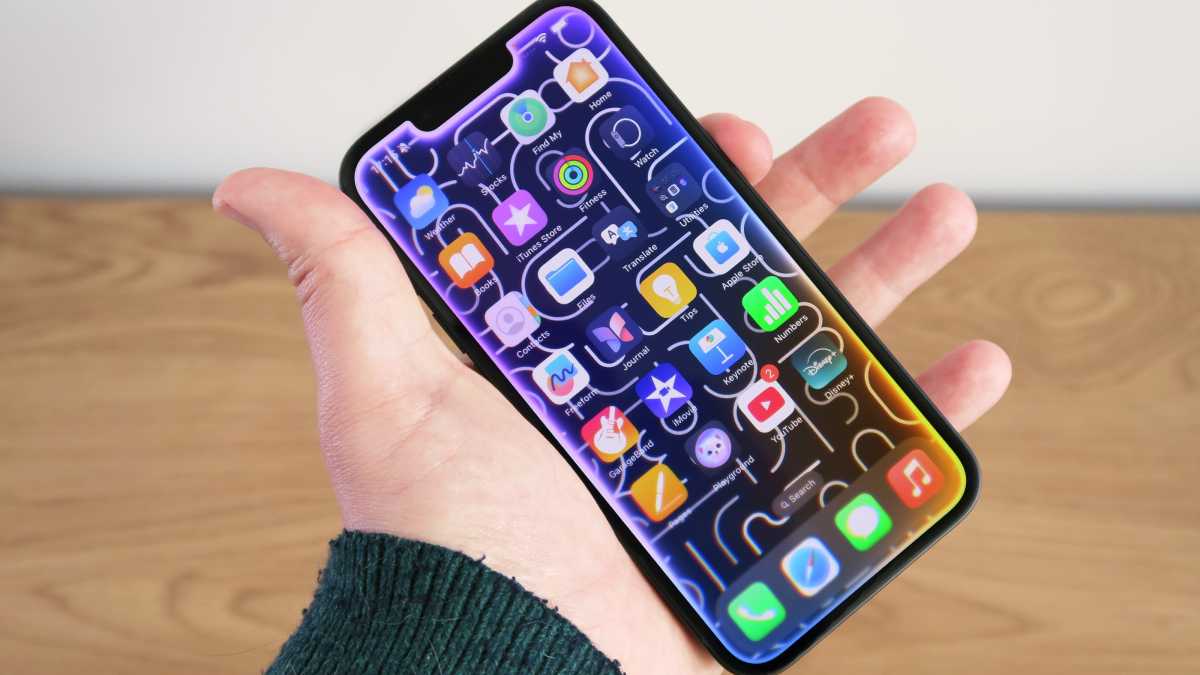
Once concrete rules of the platform – namely app icon style and placement, and the look and behaviour of Control Centre – have been loosened, allowing for far more creativity, customisability and individuality than we’ve ever seen on an iPhone.
Foundry | Alex Walker-Todd
The other big new facet to the iOS experience is Apple Intelligence (yes, “A.I.”). If you’ve been following along (or know people that bought a 16 or 16 Pro for Apple Intelligence), however, you’ll know that the company’s AI efforts have traversed a bumpy road to date; one which doesn’t look as though it’s likely to smooth out any time soon.
Apple Intelligence on the 16e is a lot more complete than the experience first introduced to 16/16 Pro users, with tone alteration and summarisation for writing (processed on-device), text-to-image in Image Playground (plus an emoji-specific version, called Genmoji), object removal in images (which falls short of Samsung’s equivalent tech) and audio transcription. But it still lacks some of the key features promised at launch, not to mention additions Apple’s subsequently advertised.
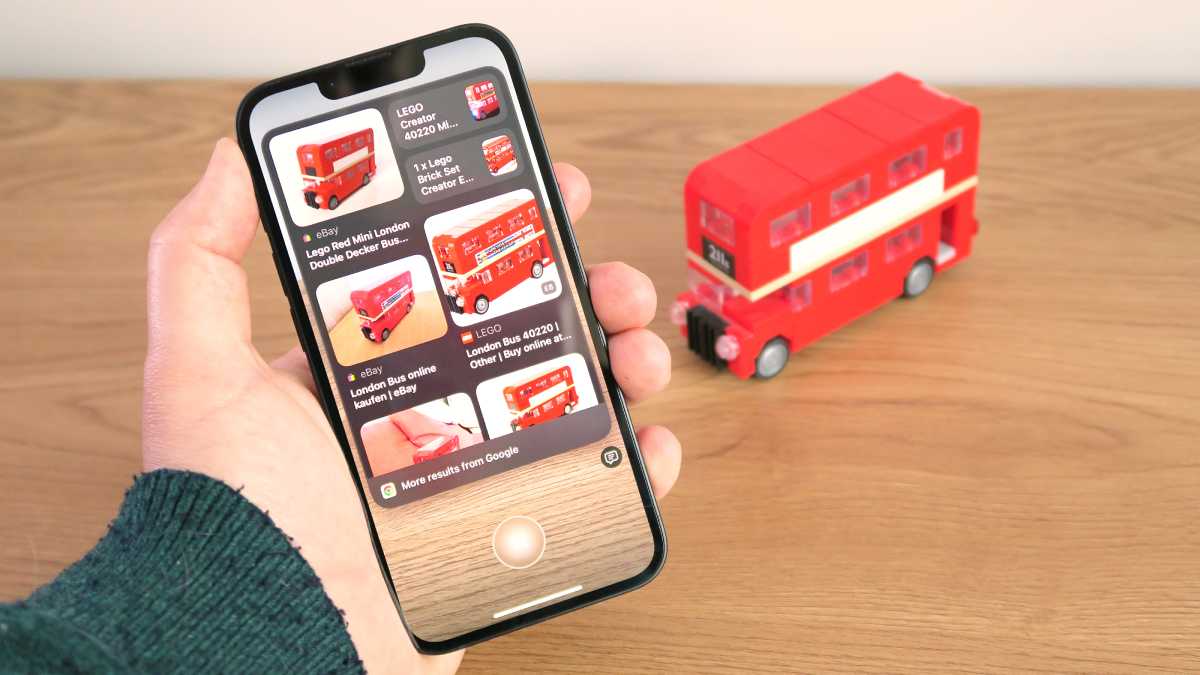
Some of its most powerful features – like an improved Siri with cross-app contextual awareness – have been delayed until at least next year, based on recent reports, while newer additions – like Visual Intelligence (letting you ask about or search things seen with your device’s camera) – defer to Google and ChatGPT for answers, rather than being able to rely on Apple’s in-house technology.
The AI experience on the iPhone 16e is more novel than essential
Although the state of AI on mobile isn’t particularly compelling right now, big names like Google, Honor and Samsung already offer more complete products, whilst also better telegraphing when and what new features users can expect. Apple Intelligence was already later to the party than many of its rivals, and the service continues to miss the mark on features and timing.
Foundry | Alex Walker-Todd
Part of the reason Apple Intelligence seems to be struggling more than competing mobile AI experiences is likely due to the company’s security and privacy standards as it tries to keep the experience secured on Apple servers end-to-end, something nobody else seems as concerned about implementing.
That would all be well and good if only Apple hadn’t been so brazen about promoting Apple Intelligence as the biggest selling point across the iPhone 16 line; it simply isn’t ready yet.
As such, the AI experience on the iPhone 16e is more novel than essential. Based on the timelines industry analysts – and in some cases Apple itself – are talking about, the experience initially promised and the experience the company can deliver likely won’t align until at least the iPhone 17 arrives, if not the iPhone 18 line, in 2027.
Beyond Apple Intelligence, the 16e offers up a far more familiar iOS experience, with plenty of power to run all of the apps and services you’d likely want, while also benefitting from the Action Button, which by default here launches Visual Intelligence.
You can configure it to launch the camera, engage Do Not Disturb, toggle the phone’s flashlight or, in my case, run a Shortcut with the Google app to emulate the experience of Android’s Circle to Search. Sorry, Apple.
Foundry | Alex Walker-Todd
Like charging wattage, Apple doesn’t openly state how many generations of operating system updates it’s phones are promised, but based on recent form, the iPhone 16e will likely be granted access to at least five future iterations of iOS, and potentially more; which helps with the value proposition on the table here.
Price & Availability
Apple launched the iPhone 16e in February 2025. As is customary for the brand, storage is expensive, with the base 128GB version starting at £599/$599, the 256GB model costing an additional £100/$100, and the top-tier 512GB configuration hitting an asking price of £899/$899.
Despite being the most affordable new iPhone, the big shift the 16e brings about is the loss of a truly affordable option within Apple’s portfolio.
For context, an equivalent 128GB 2022 iPhone SE cost £469/$479 and key rivals such as the Google Pixel 9a (review coming soon) and Samsung Galaxy A56 cost £499/$499 and £499, respectively and Samsung gives you 256GB storage as standard to boot.
In the UK, you can buy the iPhone 16e directly from Apple, as well as top retailers like Amazon, John Lewis, Very, Argos, and Currys.
Stateside, you can pick the iPhone 16e up from big names including Apple, Best Buy and more.
Check out the latest deals on iPhone 16e plans below:
Foundry | Alex Walker-Todd
Should you buy the iPhone 16e?
With the unusual hardware and software blend that makes up the iPhone 16e, there’s a fair amount of mental gymnastics needed to justify its purchase to the average phone buyer.
I you want the cheapest new iPhone or the cheapest member of the iPhone 16 to repair, that’s the iPhone 16e. If you care about the camera, display or MagSafe even a little bit, strike up for the iPhone 16 or 16 Pro, and if you’re in the market for an iPhone explicitly because of Apple Intelligence, wait.
Even without waiting for the iPhone 17 series, the 16e might still be the best-value purchase for you, but only once Apple Intelligence is able to deliver on all the things Apple has currently promised, by which time the 16e may have fallen in price at third-party retailers anyway.
There’s also a world in which it’s more valuable as an enterprise device for businesses, where aspects like camera quality (beyond being able to scan documents) and premium features like wireless charging are less essential. In that scenario, a company after iPhones with the latest features, backed up by hardware and software commitment that’ll last, might find the iPhone 16e a great fit.
What really condemns the iPhone 16e’s asking price is the iPhone 15 Pro. After more than a year of discounts, you can find it for around the same price as the 16e, you don’t lose out on Apple Intelligence or the Action Button and you gain faster charging, MagSafe, a more capable triple camera, a nicer, brighter 120Hz display, and the Dynamic Island; to name just a few upgrades.
If you don’t have your heart set on iOS, plenty of the best mid-range phones running on Android offer more for functionality and ability for less than the 16e too.
Specs
- iOS 18 (at launch) w/ Apple Intelligence
- 6.1-inch 60Hz (1170 x 2532) Super Retina XDR OLED
- Apple A18 chipset (four-core GPU variant)
- Apple C1 modem
- 8GB RAM
- 128GB / 256GB / 512GB (NVMe)
- Cameras:
- 48Mp Fusion 1/2.55-inch f/1.6 main w/ OIS
- 12Mp f/1.9 selfie camera
- Face ID sensor
- Stereo speakers
- Nano-SIM + dual eSIM (international) / dual eSIM (USA) / dual Nano-SIM (China)
- Wi-Fi 802.11 a/b/g/n/ac/6
- Bluetooth 5.3
- 4005mAh battery
- 25W (approximate) wired charging
- 146.7 x 71.5 x 7.8mm
- 167 grams
- IP68 certified
- Colours: black, white
Best Prices Today: Apple iPhone 16e
Author: Alex Walker-Todd, Contributor, Tech Advisor

Having covered every smartphone, tablet and wearable worth shouting about over the past ten years, Alex lives and breathes tech.