


At a glance
Expert's Rating
Pros
- Gorgeous design and display
- Superb camera experience
- Brilliant Android 16 software with long support
- The best wireless charging on Android
Cons
- Big and bulky
- 100x zoom is disappointing
- Even more expensive
Our Verdict
Put simply, the Pixel 10 Pro XL is the best all-round phone you can buy right now. It’s big and expensive, but delivers on almost all of Google’s claims, making it easy to recommend. This is a phone without any major weaknesses.
Price When Reviewed
This value will show the geolocated pricing text for product undefined
Best Pricing Today
Best Prices Today: Google Pixel 10 Pro XL

Google’s smartphones have hit double figures, and the company means business.
On paper, the Pixel 10 series is its most accomplished generation yet, fusing ultra-premium hardware with the software polish no other brand can match.
Unless you want a foldable, the Pixel 10 Pro XL sits at the top of that lineup. Google has been cautious with its hardware upgrades this time around, focusing on boosting the battery and charging experience.
But the company has come out swinging on the software side, with several new and potentially game-changing features. And, after a week spent using it as my main phone, I’m ready to declare it the best smartphone of 2025 so far.
Here’s everything that makes it so good, plus the handful of things that I wish Google had done differently.
Design & Build
- Signature Pixel design language
- Durable glass and aluminium build
- IP68 water and dust resistance
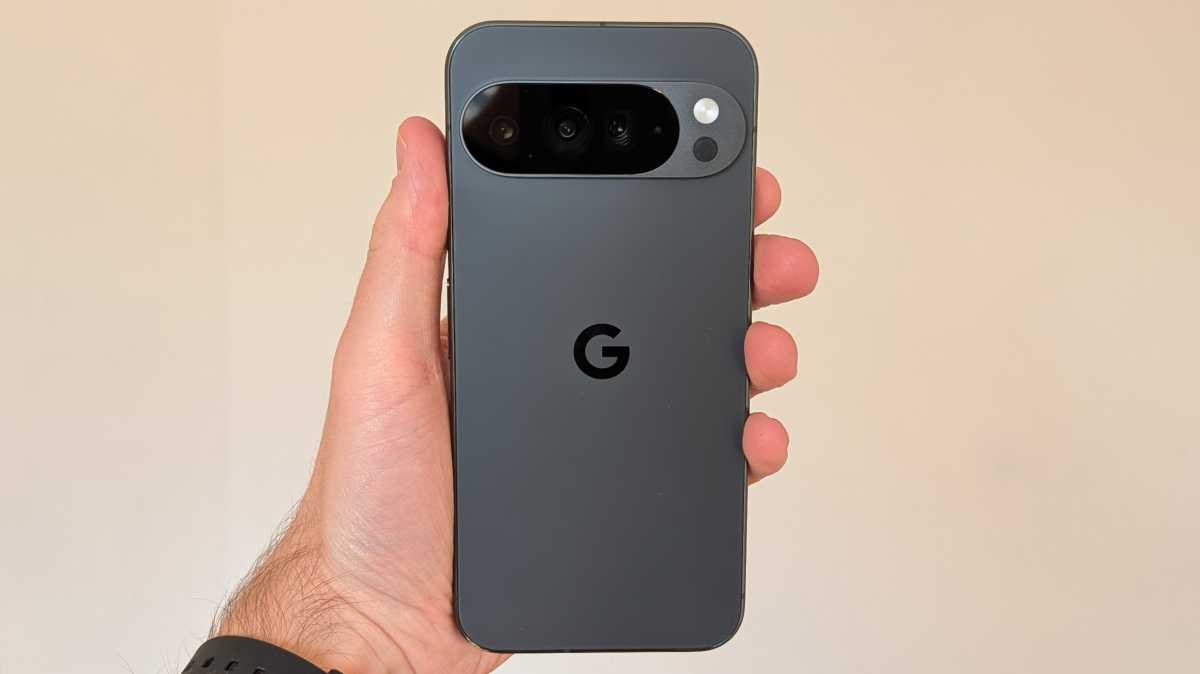
Gone are the days when Pixel owners had to put up with a cheap-looking phone. The Pixel 10 Pro XL is a work of art, combining classic design language with a standout camera module.
The latter continues to divide opinion, but I’m a fan. The pill-shaped design is instantly recognisable and individual, without looking obnoxious or dominating the back of the device. And if you apply one of Google’s official cases, you can eliminate the effects of the camera bump.
Anyron Copeman / Foundry
I’d recommend most people apply a case for grip – the 10 Pro XL feels slippery in the hands otherwise. However, I recognise that it’s easy to say that when I’m testing the rather boring Obsidian model, which is essentially a dark grey.
The phone is also available in Moonstone (light grey), Jade (light green) and Porcelain (off-white). If you go for one of the latter two, you might not want to cover it up. A matt coating on the back of the device avoids visible fingerprint smudges unless light is shining directly on it.
The Pixel 10 Pro XL is a work of art, combining classic design language with a standout camera module
If grip is a little lacking when going case-free, durability certainly isn’t. The glass on both the front and back of the phone is Gorilla Glass Victus 2, which is specifically designed to protect against falls onto hard surfaces.
I inadvertently tested this when I dropped the 10 Pro XL face down onto a wooden floor from about 1m high. I picked it up fearing the worst, but the phone was totally unscathed. That’s impressive.
Another key durability metric is the IP68 rating, which confirms that the device is resistant to submersion in up to 1.5m of fresh water for up to 30 minutes and is protected against all dust particles. It’s nothing new for flagship devices, but still important to mention.
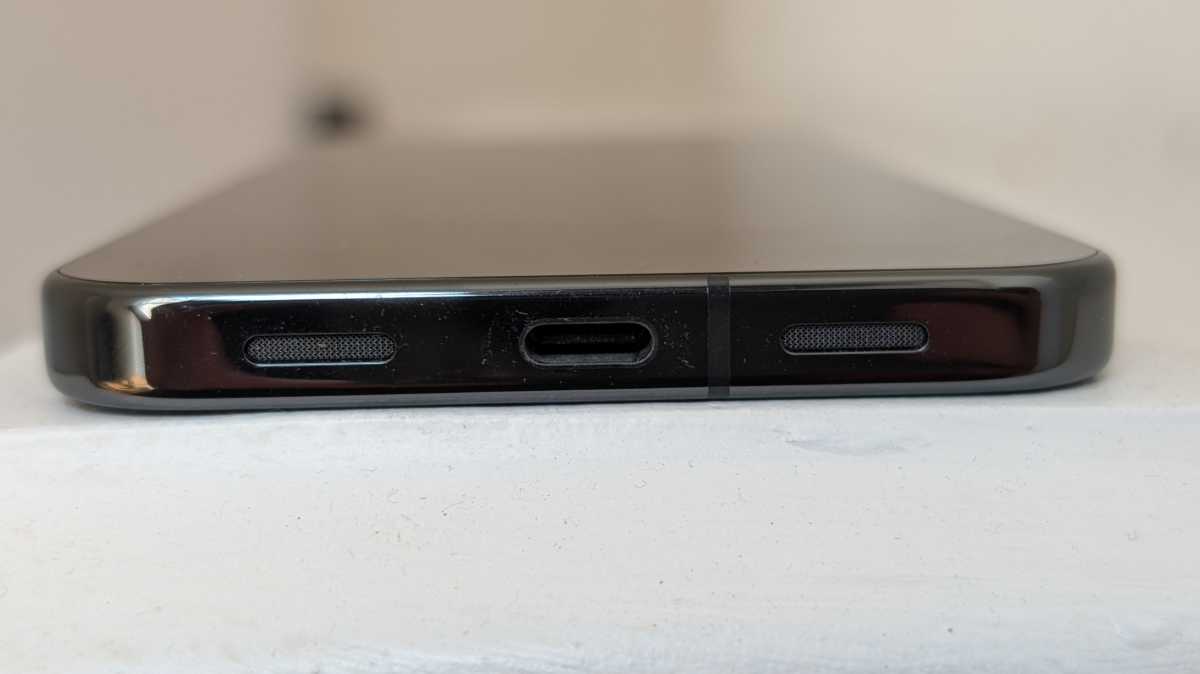
The reflective aluminium frame feels just as robust. That’s where you’ll find the clicky power and volume controls, plus a USB-C port and speakers at the bottom. The SIM tray has moved to the top of the phone, but I doubt anyone will care.
Anyron Copeman / Foundry
However, there’s no doubt that the choice of these premium materials contributes to its overall weight. At 232g, the Pixel 10 Pro XL is significantly heavier than the 221g Pixel 9 Pro XL, and one of the heaviest non-folding phones that you can buy.
Alongside dimensions of 162.8 x 76.6 x 8.5 mm (identical to the 9 Pro XL), make sure you’re happy with a big, bulky device before purchasing. I have quite large hands and can make use of the sizeable pockets on most men’s trousers and shorts, so it’s not a big issue for me.
Screen & Speakers
- 6.8-inch, 120Hz OLED display
- Even better peak brightness
- Punchy stereo speakers
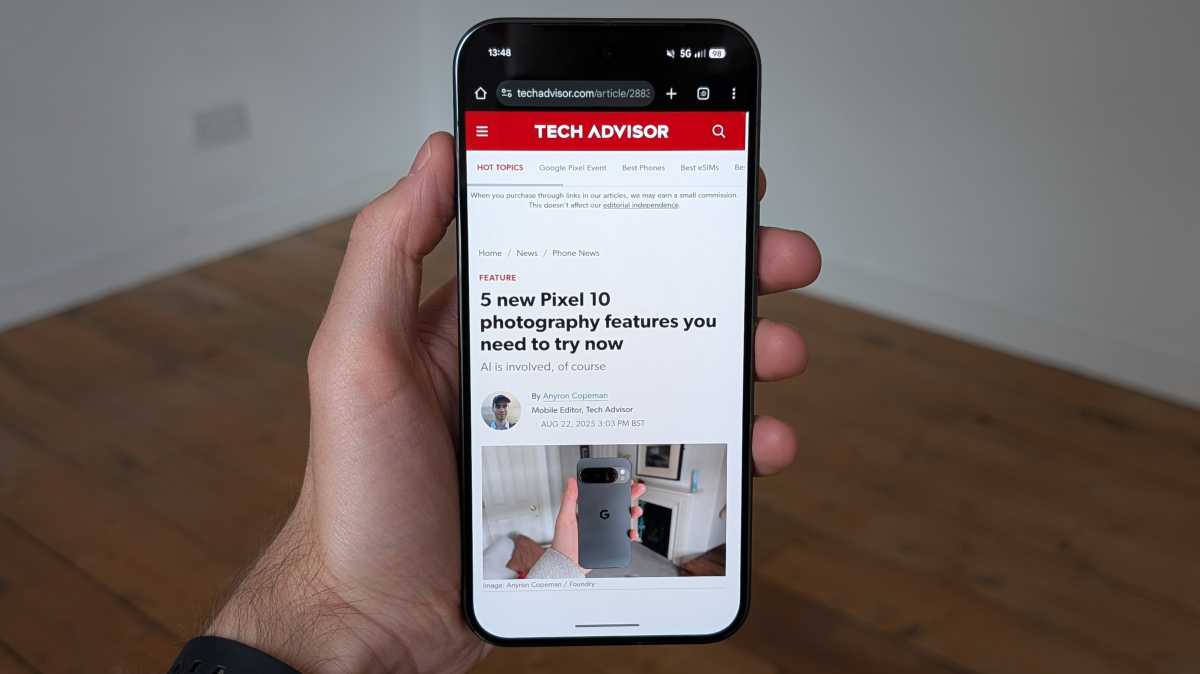
Google hasn’t made any significant changes to the display on the Pixel 10 Pro XL, but it didn’t need to. Last year’s 9 Pro XL already had one of the finest screens on any smartphone, and the same can be said for its successor.
The only upgrade is in its brightness, which now peaks at an impressive 3300 nits. A more relevant figure is the one I recorded at 100% – 948 nits – which makes for excellent outdoor visibility, even in direct sunlight.
Anyron Copeman / Foundry
Elsewhere, it’s the same 6.8-inch OLED panel, which looks stunning in pretty much any scenario. The rich, vibrant colours and deep blacks we’ve come to associate with OLEDs are very much apparent here, making the 10 Pro XL ideal for scrolling social media or watching videos.
The display is also LTPO, meaning it can automatically adjust between 1- and 120Hz refresh rates, depending on what you’re doing. This ensures you get the slick, responsive benefits of 120Hz without the negative impact on battery life.
The FHD+ (1344 x 2992) resolution is nothing special, but detail and clarity are both excellent. It might not be the absolute best display on any phone – that award probably goes to the Galaxy S25 Ultra – but the Pixel 10 Pro XL’s screen excels in all the areas that matter.
As usual, you’ll find a fingerprint sensor within the display. This is an ultrasonic scanner, which is considered superior to the optical version found on most phones, and it shows. Despite only enrolling one fingerprint briefly during setup (a simple process), it was impressively fast and reliable.
The Pixel 10 Pro XL’s screen excels in all the areas that matter
However, I still prefer the 3D face unlock in most situations. It’s even more seamless and secure enough to be used for authenticating payments and logging into apps.
Elsewhere, the Pixel 10 Pro XL’s speaker quality is well above average. Like most flagships, it has a stereo setup, but utilises two grilles at the bottom of the device, plus the earpiece. The result is an impressively full-bodied sound that delivers rich vocals and detailed soundscapes, even if the bass is a little sub-par. Clarity is also strong, until you push the volume up close to maximum, where some distortion is audible.
As usual, connect a speaker or headphones if you’re serious about high-quality audio, but the built-in speakers on the Pixel 10 Pro XL are a solid alternative for casual use.
Specs & Performance
- Google Tensor G5 chipset
- 16GB RAM on all models
- Storage now starts at 256GB
All four of the Pixel 10 phones have been equipped with Google’s new Tensor G5 chipset. It’s a more significant upgrade from the Tensor G4 than the name suggests, with Google moving manufacturing from Samsung to TSMC and upgrading to a 3nm process.
But does it yield a major performance boost on the Pixel 10 Pro XL? Absolutely not. I’ve used the Pixel 9 Pro XL for around five months in total, and I can’t spot a difference between the two.
Anyron Copeman / Foundry
However, that’s not a criticism of the new phone. Performance was already so strong that these minor gains were always unlikely to have a major impact. The Pixel 10 Pro XL is a powerhouse of a phone, handling the complexities of heavy usage days without breaking a sweat.
I’m talking web browsing (with hundreds of open tabs – oops), WhatsApp messages, Gmail, YouTube videos and a lot of photography, including quickly switching between them. Aside from a few hesitations, which I think were software bugs rather than performance limitations, the Pixel 10 Pro XL was a stellar performer.
Gameplay was smooth and responsive, with no noticeable dropped frames
As you might expect, this extends to mobile gaming. I tested the phone on some of the Play Store’s most demanding games, including EA Sports FC Mobile and Real Racing 3. Gameplay was smooth and responsive, with no noticeable dropped frames. And while the back of the phone became warm to the touch after a few minutes, it didn’t negatively impact my experience in any way.
When it comes to storage, Google has ditched the cheapest 128GB model. This makes sense in 2025, although it does give the Pixel 10 Pro XL a higher starting price than its predecessor. You can choose between 256GB, 512GB and 1TB, but make sure you get enough, as there’s no support for expandable storage.
Disappointingly, a dual physical SIM slot is also missing, though the rise of eSIM makes this less of an issue.
Google Pixel 10 Pro XL benchmarks
The Pixel 10 Pro XL has excellent performance, but you wouldn’t necessarily know it from the benchmark scores below, which show it well behind Snapdragon 8 Elite-powered phones in terms of CPU power.
Cameras
- 50Mp main, 48Mp telephoto, 48Mp ultrawide, 42Mp selfie
- Identical camera hardware to Pixel 9 Pro XL
- New Camera Coach and Super Res Zoom features
On the face of it, the Pixel 10 Pro XL’s cameras are unchanged from its predecessor.
The hardware is the exact same, with a 50Mp main lens supported by a 48Mp 5x telephoto and 48Mp ultrawide on the back. On the front, a 42Mp selfie camera also remains.
However, Google has been working hard on the software side, introducing several new features that make the Pixel 10 Pro XL camera experience feel fresh and new.
But let’s start with what Pixel phones are known for: great point-and-shoot photography. In my opinion, the main rear lens is unmatched when it comes to consistently high-quality photos.




No matter the scenario, I can whip the phone out of my pocket, quickly launch the camera and snap away, safe in the knowledge that I’ll get a good result nine times out of 10.
In good lighting conditions, photos are punchy, vibrant and brimming with detail. Dynamic range is excellent, and it handles shadows and complex exposures very well. Colours tend to be a little more saturated than in real life, but that means editing in post is rarely necessary.
Unlike most phones, the 10 Pro XL is equally impressive in low-light conditions. ‘Night Sight’ works wonders
Unlike most phones, the 10 Pro XL is equally impressive in low-light conditions. ‘Night Sight’ works wonders, increasing the exposure time in exchange for a realistic brightness improvement and limited noise. Without adding external lenses, I don’t think smartphone night modes get any better than this.




AI-powered group photo features remain, with ‘Add Me’ allowing the photographer to be added to the image and ‘Best Take’ ensuring that everyone looks their best when you take a burst of photos. The latter can also now be automated, but just as with the Top pick feature in Google Photos, it won’t always choose the best one.
A lot of my testing of the 10 Pro XL came at a music festival, where the 48Mp periscope telephoto lens came into its own. The 5x optical zoom was ideal for capturing artists in full flow on stage without any noticeable drop-off in quality.

Anyron Copeman / Foundry
Anything up to around 10x looks pretty good, but quality quickly declines once you go beyond that. At anything above 30x, Google’s new ‘Pro Res Zoom’ kicks in, using generative AI to boost the quality of the otherwise blurry images.
In theory, anyway. In my testing, it generally worked well on landscapes and architecture, albeit with some artificial-looking elements. But images of people were a total disaster, with unrealistic faces that barely resembled a human being. I’d highly recommend sticking with good old-fashioned digital zoom, at least for now.

Anyron Copeman / Foundry
The 10 Pro XL also utilises the telephoto lens for portrait photography, another key strength of Pixel phones. On the sample photos I captured, skin tones are impressively accurate and the separation between subject and background is very realistic.
When taking a portrait photo, I enlisted the help of ‘Camera Coach’, another new Pixel 10 feature. It uses AI (of course) to analyse the frame and suggest ways in which you could improve the final image. It takes a few seconds (I wouldn’t recommend trying it on a busy tube platform), but the end result was a genuine improvement. I’m impressed.


Another key strength of the Pixel 10 Pro XL camera experience is the 48Mp ultrawide, which ensures that you can get a wider, 123-degree field of view without a noticeable drop-off in quality. Colour accuracy, dynamic range and exposure all remain strong, with only a slight variation in sharpness around the edges of the image.
Without a doubt, the 10 Pro XL’s 42Mp selfie camera is my favourite on any phone. Its superb selfies or groupfies (as they’re supposedly known – ‘groupies’ understandably not being an option), offering class-leading detail, skin tone accuracy and vibrancy. It’s a joy to use.



Sadly, the Pixel 10’s new ‘Help me edit’ feature isn’t available in the UK at the time of writing, so I haven’t been able to test it. In theory, it should make AI editing much easier, allowing you to just ask using natural language, rather than find and apply the tools yourself.
I wouldn’t normally talk much about smartphone video quality, but attending a music festival gave me plenty of opportunities to test it out. The Pixel 10 Pro XL can capture 4K at 60fps, but the default 1080p at 30fps is just fine for most people.
In general, footage from the phone is crisp and detailed, with OIS (optical image stabilisation) on the main and telephoto lenses ensuring footage remains relatively steady.
Without a doubt, the 10 Pro XL’s 42Mp selfie camera is my favourite on any phone
But ‘Night Sight video’ (still a Pro exclusive) is what really impressed me. It enables low-light video that’s as good as anything you’ll get on an Android phone, avoiding the common exposure and noise pitfalls. Just be patient, though, as it requires an internet connection and a few hours to fully process.
Sadly, the microphone quality isn’t quite up to scratch, meaning the impact of booming vocals and throbbing bass is somewhat lost. This is an area in which I’d really like to see Google improve.
However, when it comes to pure image and video quality, the Pixel 10 Pro XL is right up there with the very best. Unless you’re a photography enthusiast who enjoys manually tweaking various settings, you’ll be more than satisfied with the overall camera experience.



Battery Life & Charging
- 5200mAh battery
- 45W wired charging
- 25W Qi2 wireless charging
This is where the biggest hardware upgrades can be found on the Pixel 10 Pro XL.
Let’s start with the battery itself, which has increased from 5060mAh to 5200mAh. It’s a modest increase, but it ensures the 10 Pro XL has the biggest battery of any Pixel phone to date.
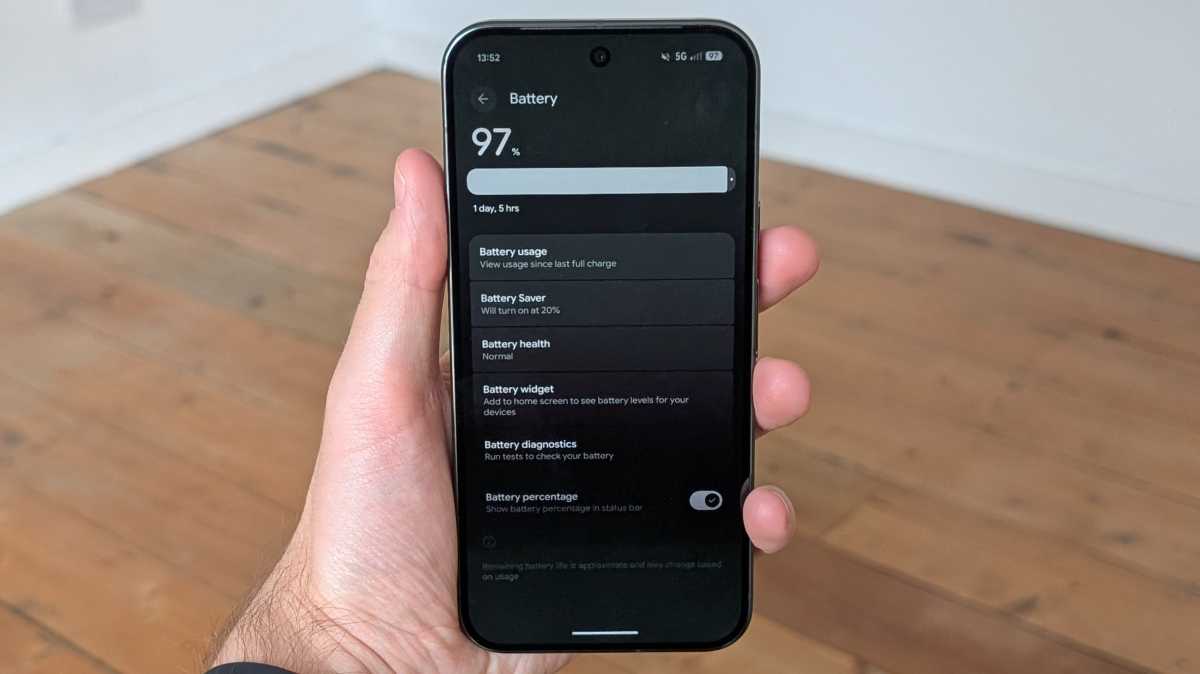
The result? Battery life that’s fine, but nothing to write home about. It will almost always get you through a full day, but there might be some anxious moments if you’re arriving home late.
Anyron Copeman / Foundry
For a more extreme example, a single charge on the 10 Pro XL had to last me over a day and a half at a music festival. My portable power bank gave up after just a few minutes, so I went from Friday evening to Sunday afternoon with 90% battery and a brief top-up at a charging point.
By Sunday morning, some intense power-saving was required to ensure it didn’t run out of charge, as I needed it to show my train ticket. But this was after many hours of high brightness, mobile data and GPS use in a busy environment. Provided you have a decent power bank, the Pixel 10 Pro XL’s battery life is undoubtedly festival-proof.
However, a 14-hour trip to London caused more issues. I used the device pretty extensively, including four hours and 27 minutes of screen-on time, but I was expecting to have more than 7% charge remaining.
A major factor appears to be the high background use of several apps, which contributed to the 10 Pro XL losing a lot of charge while the screen was off. Based on my experience, I think the Pixel 9 Pro XL had battery life than its successor, despite the lower battery capacity.
Back home, the wired charging was a pleasant surprise. Google has finally boosted speeds to 45W, although that requires the separate purchase of a compatible charger.
Google is the first major Android phone maker to build MagSafe-style magnets into the back of its phones
Using one I already had at home, my review sample went from 0-19% in 15 minutes and 38% by the half-hour mark. A full charge took an hour and 47 minutes, but you can definitely do it faster than that.
That’s before we even get to the biggest upgrades: Qi2 wireless charging. Google is the first major Android phone maker to build MagSafe-style magnets into the back of its phones, enabling faster (now 25W) and more secure wireless charging.
A range of ‘Pixelsnap’ accessories are already available, with lots more likely to pop up in the coming months and years. Unfortunately, I haven’t been able to test these and really put the Qi2 through its paces, but it has great potential.
Software & Apps
- Android 16 out of the box
- Includes Material 3 Expressive design
- Seven years of updates
Alongside the other Pixel 10 phones, the 10 Pro XL is one of the first handsets to run Android 16’s new ‘Material 3 Expressive’ software.
Google has pitched this as a big design overhaul to the familiar Android experience, something I was sceptical about. However, when it comes to the apps and tools I use on a regular basis, it turns out that very little has changed.
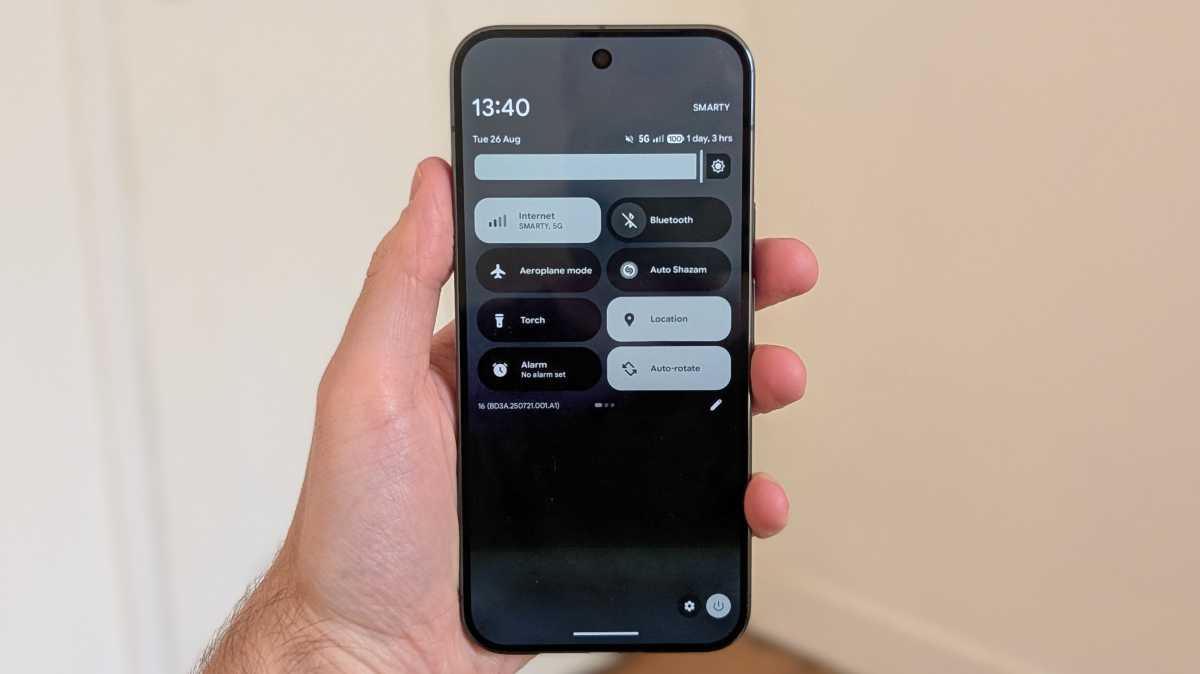
The new Quick Settings panel looks cleaner than before, while the colour-coded organisation in the main Settings app is easier to navigate. It’s pretty much business as usual elsewhere, although I’d argue that’s a good thing.
Magic Cue is my favourite AI addition on the Pixel 10, and it has the potential to be a genuine game-changer
The Pixel take on Android has always been one of my favourites, with an intuitive UI, plenty of customisation options and limited bloatware. However, the list of extra pre-installed apps has grown this year, with the likes of NotebookLM and Pixel Journal. I haven’t used the latter to get any of its AI insights, and I really don’t want to.
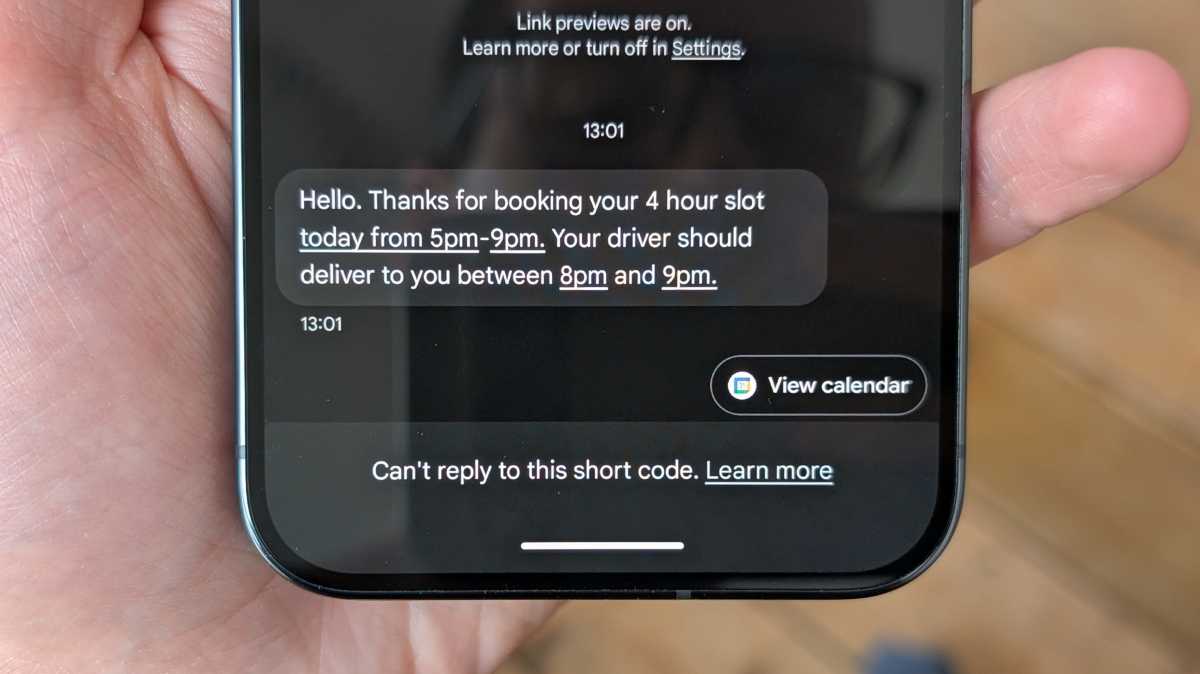
Magic Cue is my favourite AI feature on the Pixel 10, and it has the potential to be a genuine game-changer. Right now, it only works in a handful of scenarios, such as a Calendar prompt or booking confirmation within Messages or suggested images from Google Photos.
It also sometimes takes a while to pop up, by which time you’re already sorting it out yourself. But I can already see its immense potential, especially if third-party app developers get on board. Magic Cue puts AI front and centre in the Pixel experience in a way few others do.
Anyron Copeman / Foundry
My biggest frustration with Pixel software continues to be the home screen, with Google still not allowing you to remove the ‘At a Glance’ widget, search bar or app labels. The range of third-party widgets is also much less attractive than those on Samsung’s One UI 7, so I rarely use them.
However, software updates are a big part of the Pixel 10 Pro XL’s appeal. Google has committed to a full seven years of regular feature and security updates, meaning the device will be safe to use until 2032.
As the maker of Android, Google will also always roll out a new major version to Pixel phones first, meaning you won’t be waiting months to get your hands on the new features. These two factors make it the best all-around software experience of any Android phone.
Price & Availability
The Pixel 10 Pro XL has a £100/$100 higher starting price than its predecessor, but that doesn’t tell the full story.
You’ll have to pay at least £1,099/$1,099 at launch, though you’ll get 256GB of storage instead of 128GB. When comparing the two configurations directly, there’s been no change.
As usual, you can buy the 10 Pro XL from all sorts of different retailers, including Google and Amazon in the UK and Google and Amazon in the US. There’s also widespread network availability in both countries.
At this price, it’s going up against many of the very best phones you can buy, including the Samsung Galaxy S25 Ultra, OnePlus 13 and Xiaomi 15 Ultra. The upcoming iPhone 17 Pro Max is likely to provide strong competition, too.
Should you buy the Google Pixel 10 Pro XL?
Yes, if you want the best all-round phone right now and are willing to pay for it. The Pixel 10 Pro XL is big, bulky and expensive, but if you can deal with all those things, it’s the ultimate 2025 handset in many ways.
A stunning display and durable yet stylish design set the tone for a great smartphone. The cameras on the back provide the best point-and-shoot camera experience around, with more than a hint of AI help. And Android 16 is more polished than ever with its new Material 3 Expressive design.
Battery life is fine in most scenarios, while 45W charging gets you back up and running quicker than any other Pixel. Meanwhile, Qi2 has the potential to revolutionise wireless charging on Android phones.
The Pixel 10 Pro XL is the complete package, both now and into the future. But it might not be right for you, so make sure you’re content with its compromises.
Specs
- Android 16 with seven years of updates
- 6.8-inch FHD+ 120Hz LTPO OLED
- Ultrasonic in-display fingerprint scanner
- Face Unlock
- Google Tensor G5 chipset
- 16GB RAM
- 256GB/512GB/1TB non-expandable storage
- 5200mAh battery
- 45W wired charging
- 25W Qi2 wireless charging
- Reverse wireless charging
- 50Mp f/1.7 main camera
- 48Mp f/1.7 ultrawide camera
- 48Mp f/2.8 5x telephoto camera
- 42Mp f/2.2 front camera
- Dual stereo speakers
- USB-C
- 5G
- NanoSIM + eSIM
- Wi-Fi 7
- Bluetooth 6.0
- IP68
- Gorilla Glass Victus 2 (front and back)
- 162.8 x 76.6 x 8.5 mm
- 232g
Best Prices Today: Google Pixel 10 Pro XL
Author: Anyron Copeman, Mobile Editor, Tech Advisor

Anyron is Mobile Editor at Tech Advisor, where he’s been a mainstay of the editorial team since 2019. In his current role, Anyron is responsible for all smartphone, tablet and mobile network coverage on the site. A BA Journalism graduate, he has experience with a wide range of consumer tech products and services, including smartphones, tablets, foldables, wearables and more.