

At a glance
Expert's Rating
Pros
- Attractive design
- Rich, elegant user experience
- Big screen with fast refresh rate
- Fast charging
Cons
- Some downgrades vs predecessor
- Rivals offer better value performance
- Lost stand-out metal chassis
Our Verdict
The OnePlus Nord 5 is a nice refinement on its predecessor, focused on ushering the company’s newest AI efforts into the market. It’s an elegant mid-ranger with respectable hardware and software that works in a bubble, but rivals like Poco raise questions about just how much value is on offer here, depending on what’s important to you.
Price When Reviewed
This value will show the geolocated pricing text for product undefined
Best Pricing Today
Best Prices Today: OnePlus Nord 5

OnePlus is currently in its AI era. Alongside launching some of the best phones and best tablets on the market, the company has spent most of 2025 building out its ecosystem’s AI capabilities.
Although the recently-released OnePlus 13s serves as a poster child for this fresh epoch of ‘OnePlus AI’, the phone’s exclusivity to the Indian market has left fans of the brand across Europe and beyond wondering when they might get a new device of their own toting these latest hardware and software upgrades. And with the arrival of the new OnePlus Nord 5, that time is now.
The Nord 5 may have shirked its predecessor’s key design differentiator, but in exchange, it promises a more premium user experience, laced with OnePlus’ latest AI talents, alongside a high-end chipset, and improved low light photography – both back and front.
Tempted? Read on to find out whether OnePlus’ latest and best mid-range entry has what it takes to go all the way. We also have a full review of the cheaper OnePlus Nord CE5.
Design & Build
- IP65-certified dust and water resistance
- Plus Key instead of Alert Slider
- 211g
If it weren’t for the name, you wouldn’t know that the Nord 5 came from the same lineage as its predecessor.
The OnePlus Nord 4‘s big hook was that it was the industry’s first metal-bodied 5G smartphone. It sported a milled aluminium unibody that spanned the back and sides of the device, with a Pixel 3-esque visor at the top, where the phone’s dual rear cameras sat horizontally (when the phone was held in portrait).
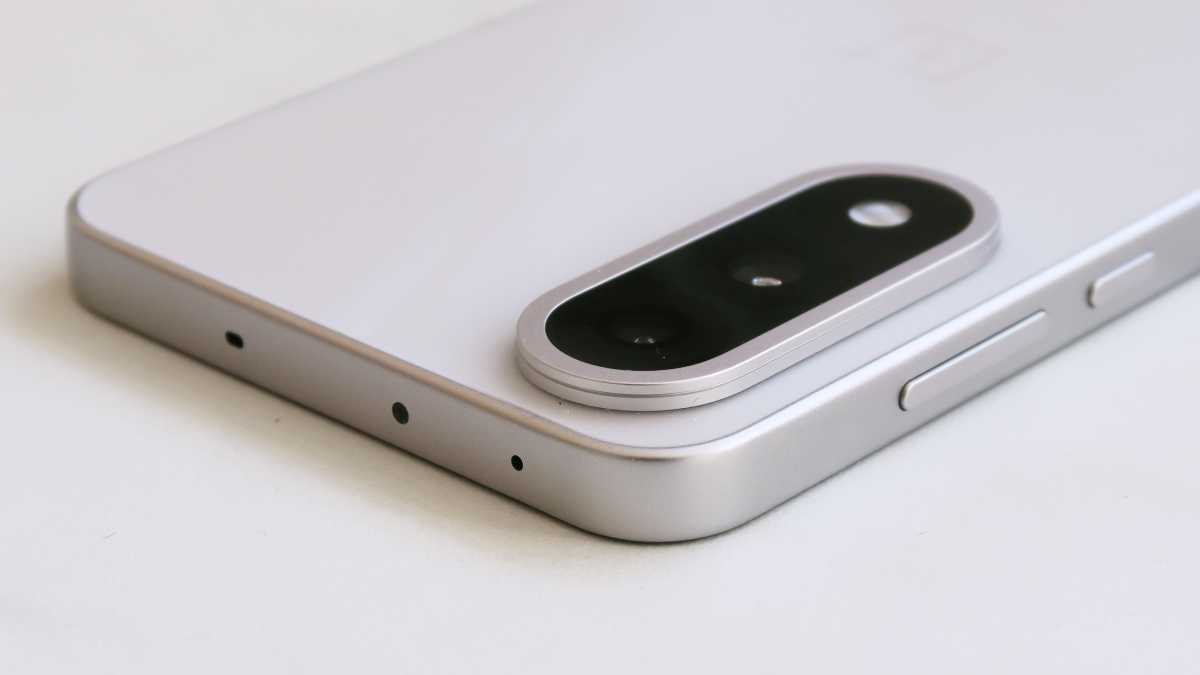
With the Nord 5, the milled metal chassis has gone, replaced by a polycarbonate frame (with a camera surround to match) and an impact-resistant glass back. I was lucky enough to score what is arguably the most eye-catching of the phone’s three sophisticated finishes: Marble Sands.
You can’t fault OnePlus’ execution

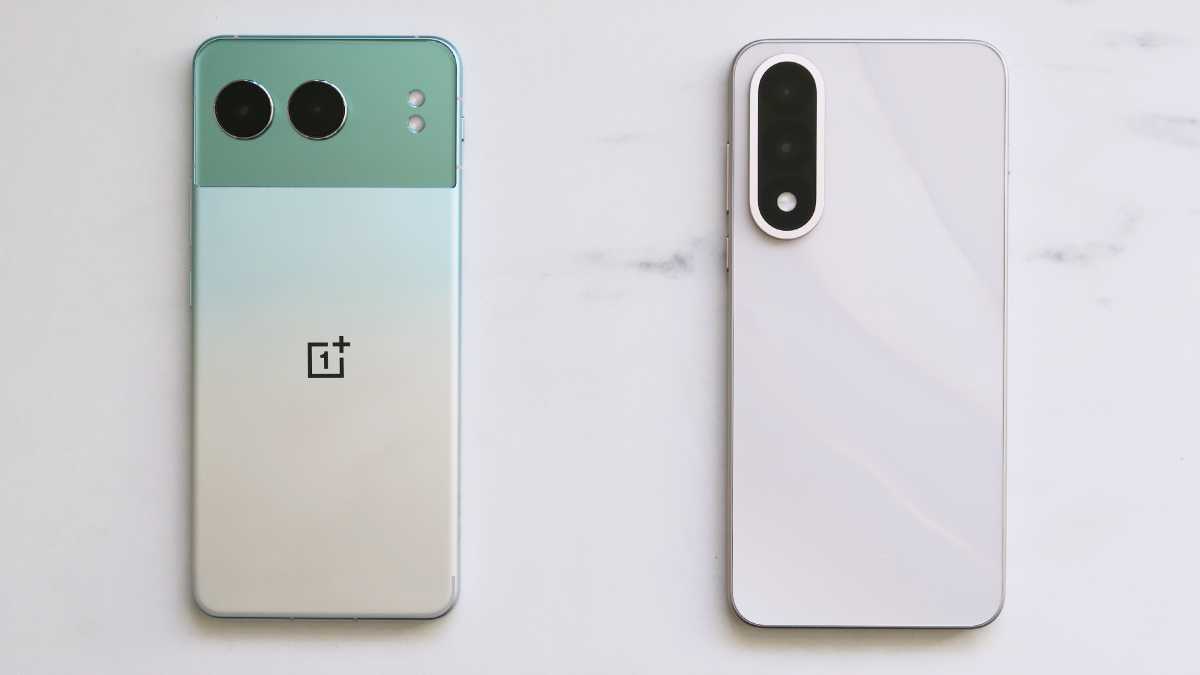
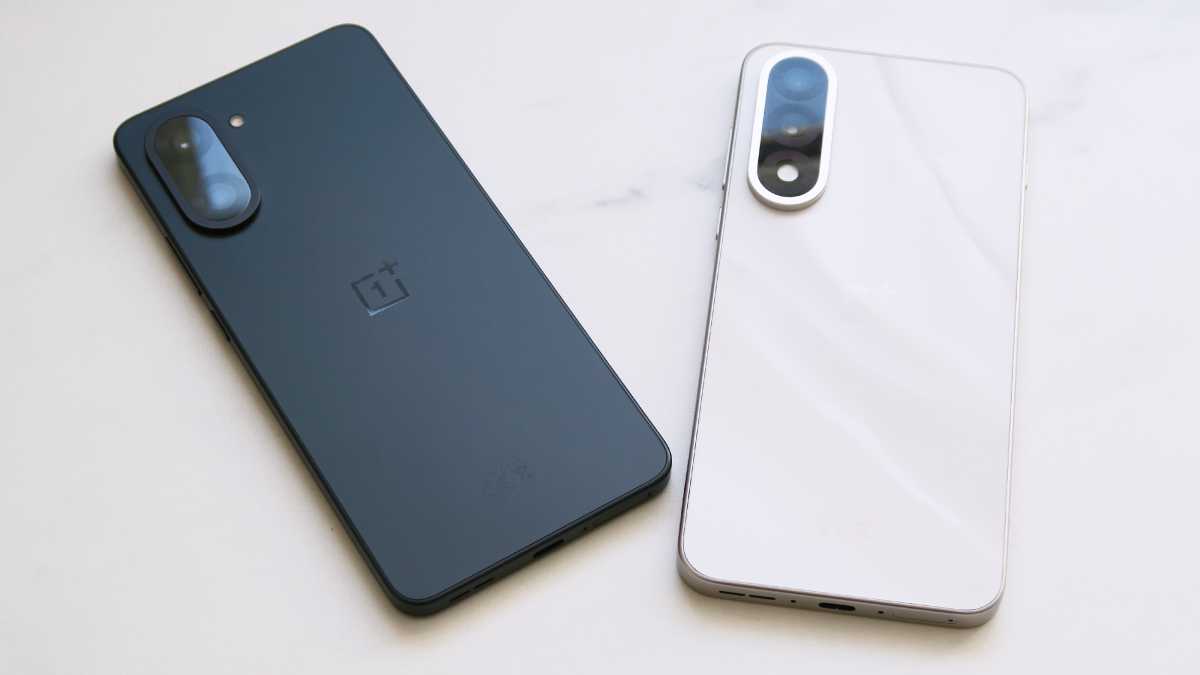
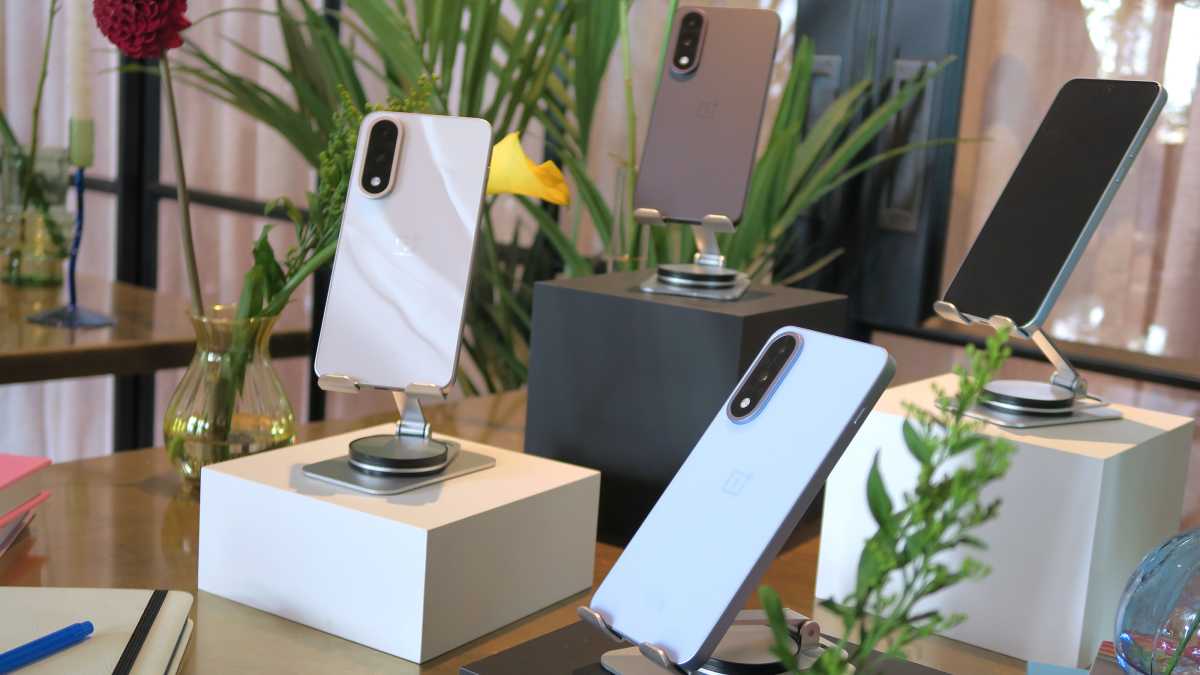
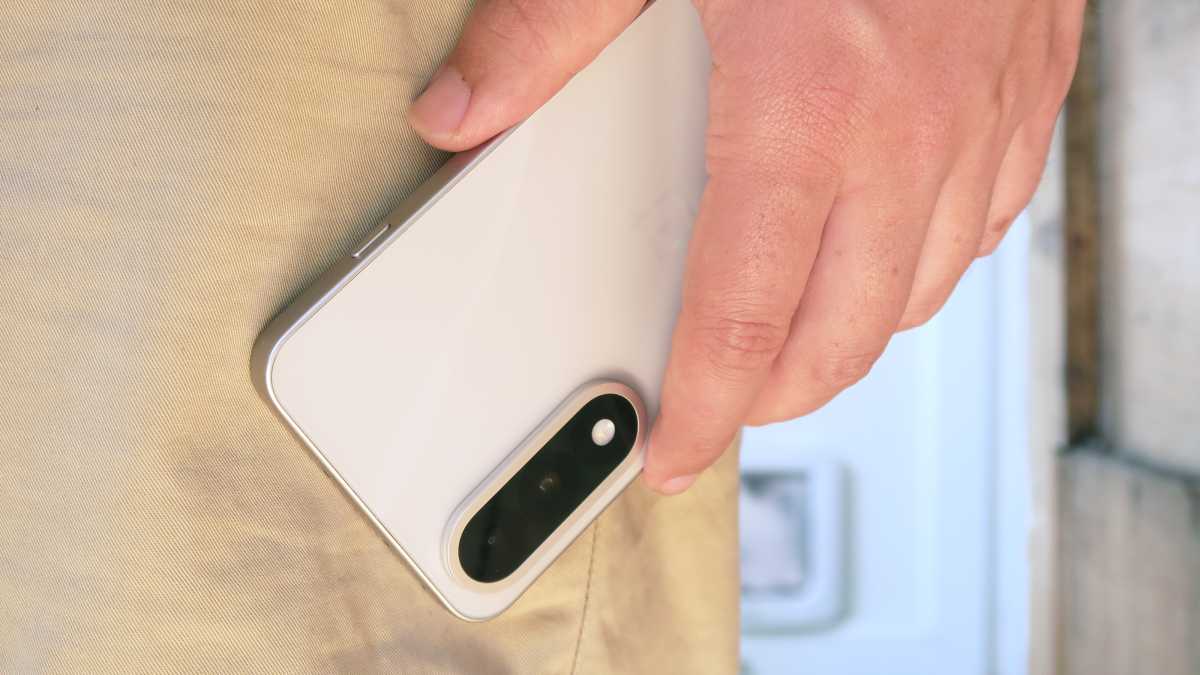
It totes a pearlescent nacre-like effect which reacts against the light, sporting a sandy tone that’s subtly contrasted by the colourway’s warm silver, lightly-textured surround. The light blue of Dry Ice is more understated but attractive, while the matte qualities of the Phantom Grey version are perfect for those who trend towards black phones, but want a little more interest.
Although the general form of the Nord 5 is more generically on-trend than its standout predecessor, you can’t fault OnePlus’ execution.
The phone looks and feels well crafted, and reassuringly solid, bolstered by the same IP65-rated as the previous lead Nord. That’s not flagship-grade ingress protection, but it should cover most people in day-to-day use against dust and water.
Foundry | Alex Walker-Todd
In truth, I had to rewrite the above few paragraphs after fact-checking with OnePlus. Sure, the frame is polycarbonate and not a more premium metal, but I truly struggled to tell. Even the feel and temperature had me thinking it was aluminium; it feels nice and looks really good.
OnePlus also claims to have worked with Corning on the Gorilla Glass 7i used to protect the display (it boasts the same scratch resistance as Corning’s higher-end Victus 2 glass), but on top of that, the Nord also comes with a pre-fitted (plastic) screen protector, which itself hasn’t shown any noticeable wear, despite 2.5 weeks of use (at the time of review).
Is the Plus Key a suitable replacement?… begrudgingly, also yes
Despite a slight increase in size year-on-year, the subtle rounding on that frame means the Nord 5 is still pleasant to hold, although smaller-handed users might struggle with the sheer scale of this phone. In spite of that expansive display, it isn’t too heavy, but at 211g, it’s over the threshold where wrist ache can set in after prolonged use.
One other big change is the loss of the brand’s iconic three-stage physical alert slider, and this time, I think it might be for good. While the Nord 4 and the company’s current flagship – the OnePlus 13 – both retain the slider, the company’s renewed 2025 AI push has some hardware implications too.
First seen on the OnePlus 13s and now on the Nord 5, where you’d expect to find that knurled toggle, you’ll now find what OnePlus calls the Plus Key.

Foundry | Alex Walker-Todd
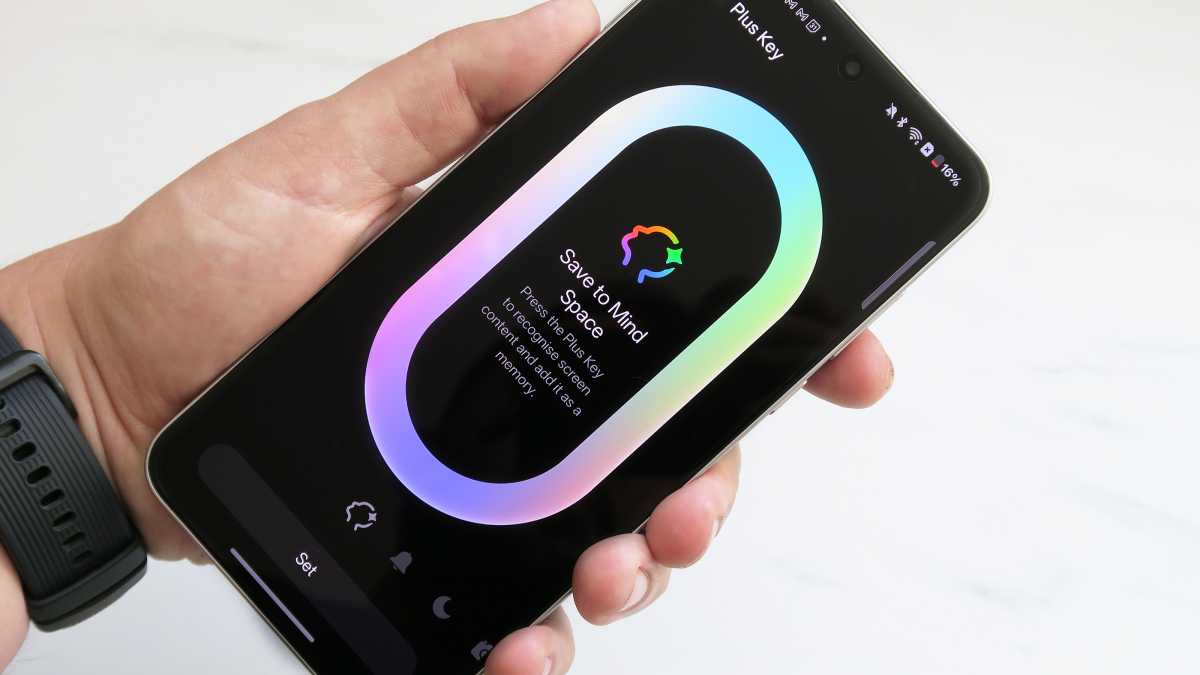
Shorter than the power key on the opposing side, and higher up, the Plus Key is most akin to the iPhone 16‘s Action Button, in that it’s reconfigurable. Out the box, however, it activates the key new OnePlus AI feature that debuted on the 13s: Plus Mind. More on that later.
Will I and many other OnePlus fans lament the alert slider’s departure, yes. Is the Plus Key a suitable replacement? While not as novel to use, practically speaking, it’s less likely to suffer from mechanical failure, will better uphold the phone’s water resistance, and is functionally more versatile. So begrudgingly, also yes.
Screen & Speakers
- 6.83-inch 144Hz Swift AMOLED display
- 1400nits (High Brightness Mode), 1800nits (peak)
- Optical in-display fingerprint sensor
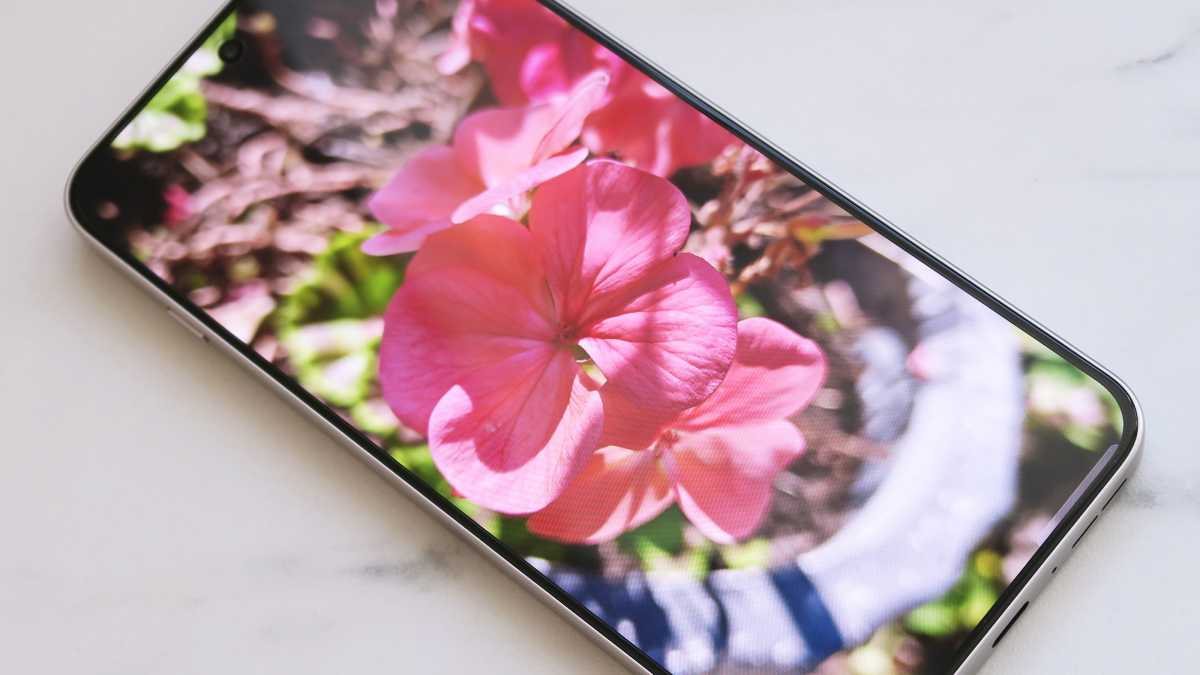
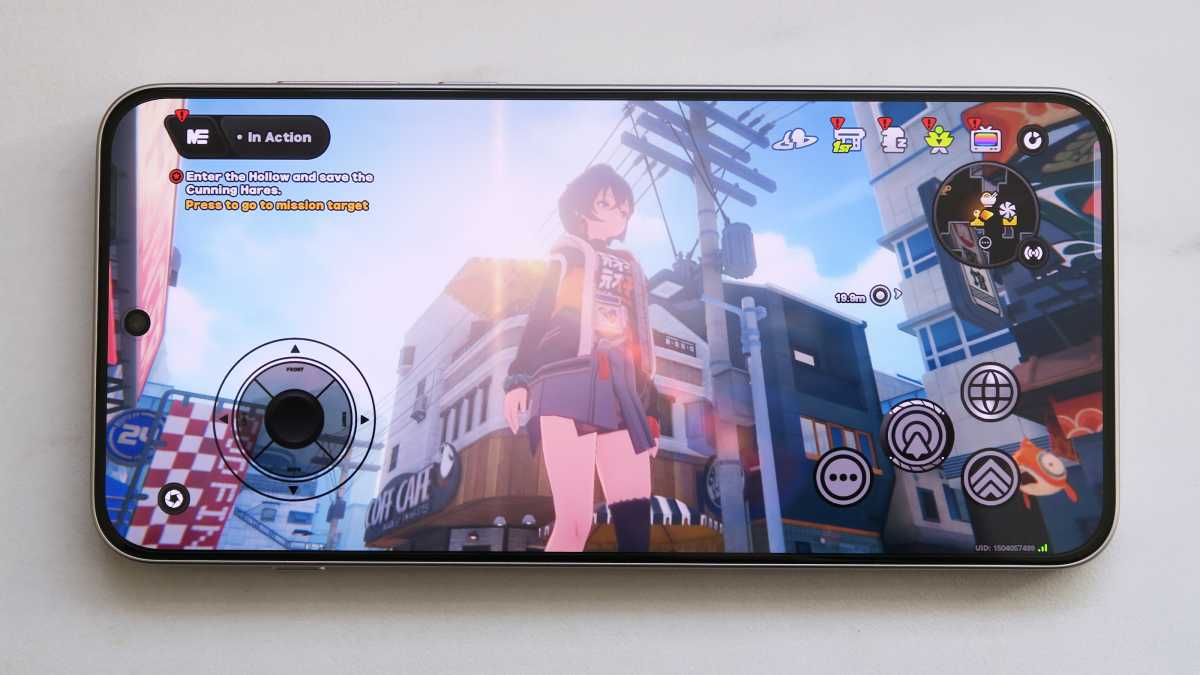
This is the first of OnePlus’ phones I’ve handled to attach the new ‘Swift’ branding to its display. Why ‘Swift’? Because the Nord 5 boasts the fastest screen on a OnePlus phone to date, at 144Hz (up from 120Hz on the Nord 4), added with gaming in mind.
Until now, only OnePlus’ tablets, like the recently launched OnePlus Pad 3, have been as quick. There’s a problem, however.
As a refresh rate this high is still rare in the smartphone space, finding apps and games that actually support the feature proved next to impossible during review; with the UI running at (a still-respectably smooth) 120Hz, while games like Asphalt Legends Unite capped at 90Hz.
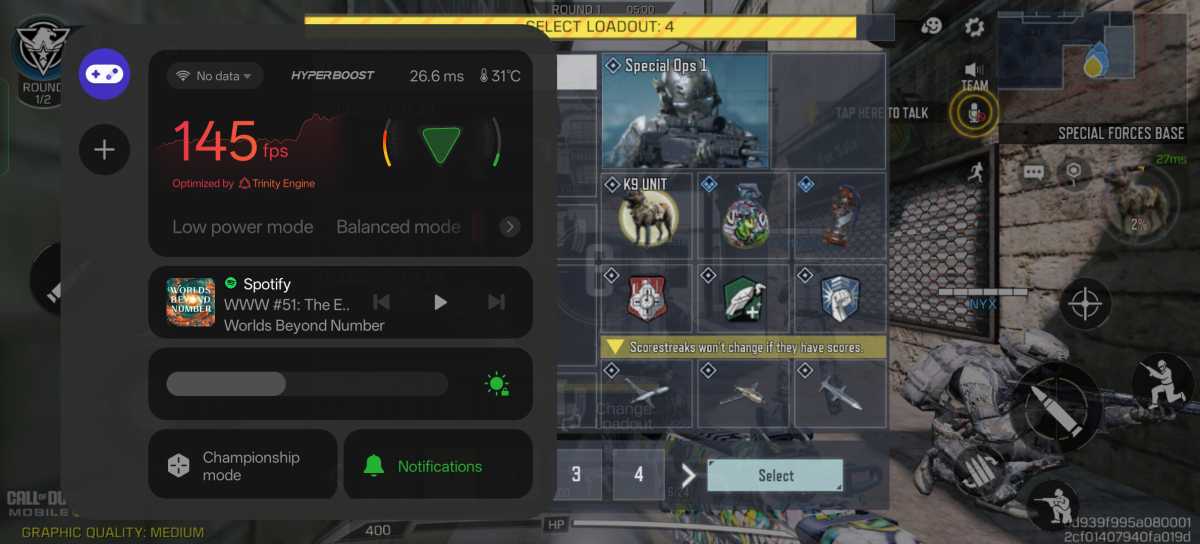
Even when maxing out in-game frame rate settings, enabling the phone’s dedicated performance mode and diving into the display settings to force the maximum available refresh rate for a given app or game, I was only able to reach the Nord 5’s lofty 144Hz ceiling with Call of Duty Mobile.
Foundry | Alex Walker-Todd
OnePlus specifically mentioned to me that the highly-popular online FPS (first-person shooter) was one of the only games capable of delivering on the display’s promise of a super-high refresh rate, but I didn’t realise it was inaccessible to other titles. Battle royale, Free Fire is also reportedly supported, using frame interpolation to hit that lofty fps cap.
As more devices embrace the standard, perhaps there’ll be more software experiences that’ll utilise the Nord 5’s display to the fullest, but right now, between OnePlus and developers, more work needs to be done to make this a feature worth shouting about.
the improvement is subtle, but undeniable, and progress is progress where visibility is concerned
Foundry | Alex Walker-Todd
Despite its nice fit and finish, as I said earlier, this is a big phone. OnePlus has moved from a 6.74-inch to a 6.83-inch panel between generations; that’s only a hair behind two of the largest-screened phones on the market: Apple’s iPhone 16 Pro Max and the Samsung Galaxy S25 Ultra, both of which sport vast 6.9-inch panels.
Provided that’s not a problem (or you’re used to using Android’s native one-handed mode), you’re otherwise getting a great viewing experience, especially in the mid-range space. OnePlus has tweaked the aspect ratio and increased the resolution to ensure that the Nord 5’s screen is just as sharp as the Nord 4’s (around 450ppi), but this year, you can expect better outdoor visibility with a panel-wide brightness ceiling of 1400nits (up from 1100nits).
Having the Nord 4 to compare side-by-side, the improvement is subtle, but undeniable, and progress is progress where visibility is concerned.
Foundry | Alex Walker-Todd
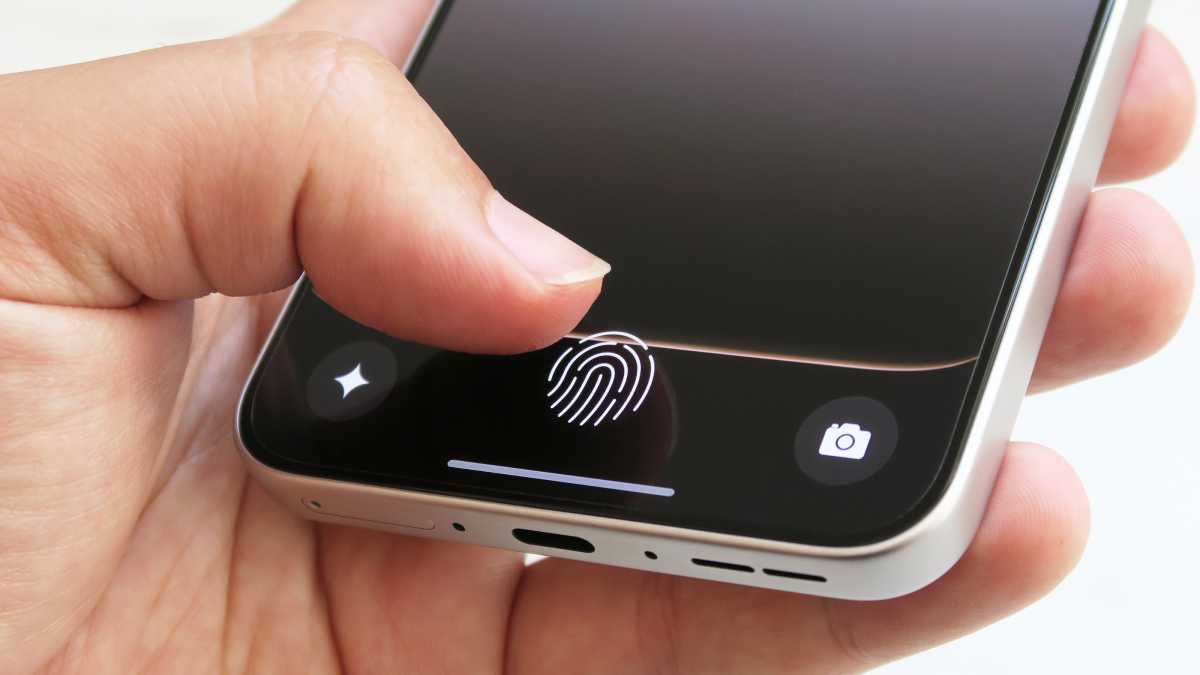
There’s an optical fingerprint sensor set just above the bottom bezel on the Nord 5’s display. Registering multiple fingerprints is a breeze and it proved consistent and responsive, even with damp fingers (OnePlus AquaTouch tech is also on-hand to ensure correct touch input, even if there are water droplets on the display).
I love that you don’t have to wake the device before pressing a thumb against it to unlock the Nord, but the fact it’s even closer to the bottom bezel and lower down than the previous entry’s sensor placement means it’s not the most comfortable to use.
The phone’s dual speaker setup splits audio between the earpiece and a down-firing speaker, with clear stereo separation. At most volume levels, the Nord 5 puts out balanced mids and high frequencies, but bass is lacking.
Maximum volume is impressively loud, with acceptable clarity, but you can hear that the speakers are at their absolute limit, with distortion setting in against higher frequencies.
Specs & Performance
- Qualcomm Snapdragon 8s Gen 3 chipset
- Up to 12GB (LPDDR5X) RAM
- Up to 512GB (UFS 3.1) storage
Although the Snapdragon 8s Gen 4 has just dropped inside the likes of the new Poco F7 and Nothing Phone (3), the previous 8s Gen 3 chipset is still no slouch in the mid-range market. Seemingly a cut above the 7-series Snapdragon chip inside its predecessor, this new Nord packs notably punchier silicon, which should better future-proof the phone over many years of use.
In artificial CPU benchmarking tests, it outpaced the Nord 4 in multi-core performance by 11%, pricier mid-range rival the Google Pixel 9a (which uses the same chipset as the flagship-class Google Pixel 9 XL) by 12%, and its more modest launch-sibling – the Dimensity-powered Nord CE 5 – by a whopping 57%.
AI performance (based on Geekbench AI scores), places it approximately 25% ahead of its predecessor, which is important considering that new AI functionality is among the Nord 5’s key list of upgrades.
Foundry | Alex Walker-Todd
It’s at home with everyday tasks, with only a momentary pause when opening apps (even high-load apps, like the camera), and when I was testing gaming performance with the likes of Zenless Zone Zero, the phone defaulted to ‘high’ graphical settings, while Call of Duty Mobile at medium settings with that maximum frame rate proved responsive even during extended play sessions.
Heat build-up was apparent over a 30-minutes worth of matches, but not to any level that gave cause for concern; likely helped by the fact that the ‘Cryo-Velocity VC’ (short for vapour chamber) cooling system inside this phone is the largest OnePlus has ever squeezed into a Nord device (at 7300mm²).
OnePlus Nord 5 benchmarks
While no longer the fastest industry standard (that’s now LPDDR5T, already in use by the likes of RedMagic), the Nord 5 boasts plenty (up to 12GB) of quick LPDDR5X RAM, and serviceable UFS 3.1 storage.
OnePlus also allows for RAM expansion, allowing you to repurpose storage as additional memory, up to the limit of your particular Nord 5. In the case of the 256GB storage unit used in this review, that’s up to 8GB extra on top of the phone’s inbuilt 8GB, while the 512GB storage model comes with 12GB of RAM and allows for up to an additional 12GB via RAM expansion, to grease the wheels when it comes to multitasking and the like.
OnePlus’ Trinity Engine is also at play behind the scenes, optimising CPU, GPU and memory performance, with a new, clearer dashboard that sheds a little bit more light on what it’s up to and how it’s optimising the phone’s systems, while wireless reliability should prove more consistent and reliable, thanks to a revised three-antenna design, which OnePlus claims has been optimised for portrait and landscape use.
Cameras
- 50Mp f/1.8 main with OIS
- 8Mp f/2.2 116º ultra-wide
- 50Mp f/2.0 front camera
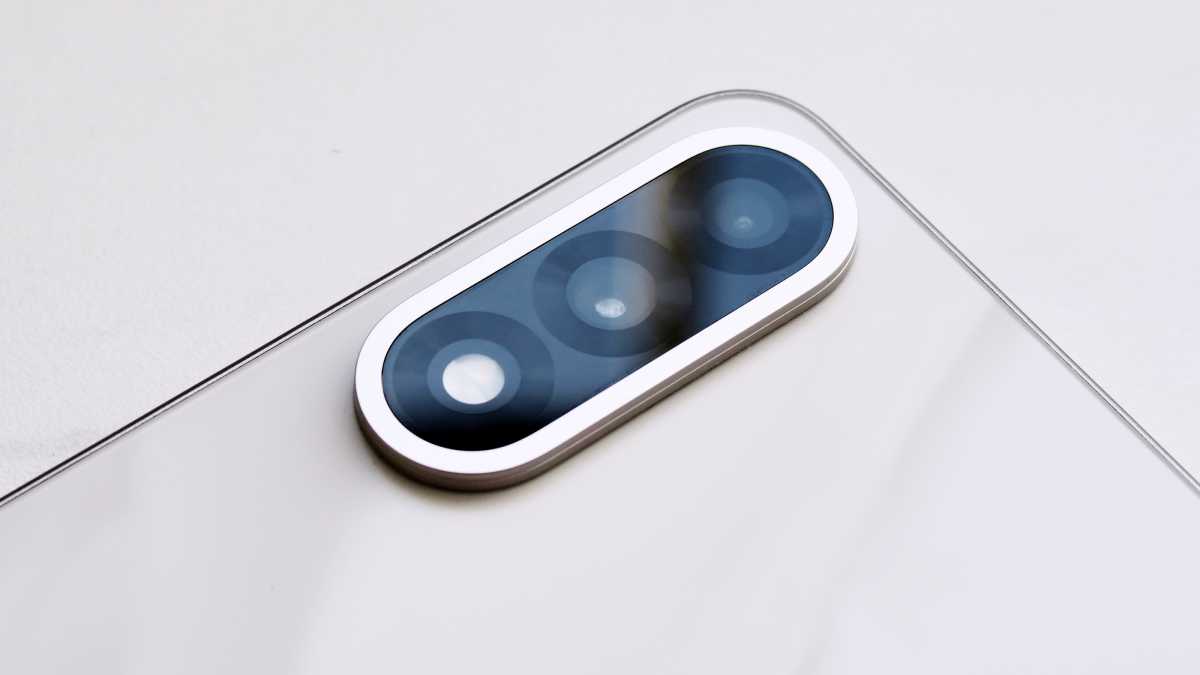
Like the OnePlus 13R, which sits above it, the Nord 5 moves to a larger 1/1.56 Sony LYT-700 sensor, paired to the same image processing algorithms used by the flagship OnePlus 13. It also uses the same 50Mp Samsung JN5 as on the 13R, although here it’s used as a significantly higher resolution 50Mp selfie snapper to the Nord 4’s 16Mp offering, complete with autofocus.
That main sensor is accompanied by an 8Mp ultra-wide, although it has a marginally broader field of view than the equivalent camera on the Nord 4 (116º versus 112º).
This revised camera hardware is unquestionably a step up
Foundry | Alex Walker-Todd
This revised camera hardware is unquestionably a step up, and OnePlus’ UltraHDR algorithm helps grant shots more depth and dynamism than you might expect from a mid-ranger. Increased dynamic range would have been nice, but shots are otherwise comparable to rivals, like the Samsung Galaxy A56.
Despite a camera array similar in style to that of Samsung’s, though, the Nord 5 sports only a pair of rear sensors, with zoom shots relying solely on OnePlus’ image processing to hold onto as much detail as possible. It does this inconsistently, especially as you approach the phone’s 20x (digital-only) zoom limit and when available light diminishes.














However, in most environments, I was impressed by the Nord 5’s colour reproduction; with accurate white balance and a pleasing degree of vibrancy, without being overbearing.
As for low-light shooting, although there are signs of noise and grain creeping in, in the darkest areas of a scene, most of the time, such ailments are kept in check. Even with similar exposure times, it’s also worth turning on the dedicated Night Mode, as it delivers sharper details than the standard Photo Mode in dim environments.




Side-by-side comparisons with low-light shots from the Nord 4 show huge gains in detail retention; however, it’s surprisingly how much smaller that advantage becomes in brighter scenes.


Portrait mode is actually where I’d say the most work needs to be done. While being able to adjust the virtual aperture (and thus the amount of bokeh or background blur) both at and after capture, edge detection stumbles all too easily, leaving blocks around hair and similar features unblurred when they should be, and vice versa.
Nonetheless, the Nord 5 boasts one of the more confident mid-range cameras at this price point.
Battery Life & Charging
- 5200mAh battery (as reviewed)
- 80W SuperVOOC / 33W PPS / 18W PD wired charging
- Now supports bypass charging
Despite its larger physical size, the Nord 5 actually sports a smaller, slower-charging battery than its predecessor. OnePlus hasn’t spoken on why this is, but it’s a mild disappointment. It is worth stating that the Indian variant does get a capacity upgrade, but without explanation, this just makes its international reduction all the more frustrating.
Nonetheless, you’re still getting a sizeable 5200mAh cell (down from 5500mAh on the Nord 4), paired with pleasingly rapid 80W SuperVOOC wired charging (down from 100W).
One of the lesser-known benefits of moving from a 7-series to an 8-series Snapdragon chipset is added support for the AV1 codec, which apps like YouTube favour. This means better power efficiency during playback when watching supported content within supported apps like these.
It’s a small distinction, but one that further justifies the newest Nord’s choice of silicon, especially if you watch a lot of YouTube, Netflix or Amazon Prime Video on the go.
One battery upgrade I welcome, however, is the addition of bypass charging
Foundry | Alex Walker-Todd
In testing, the 6.75 to 7 hours of screen-on time the Nord 5 averaged falls in line with OnePlus’ promise of a day and a half of use per charge, although I was hoping for a little more; with the Nord 4 able to meet or beat that figure by an extra half hour.
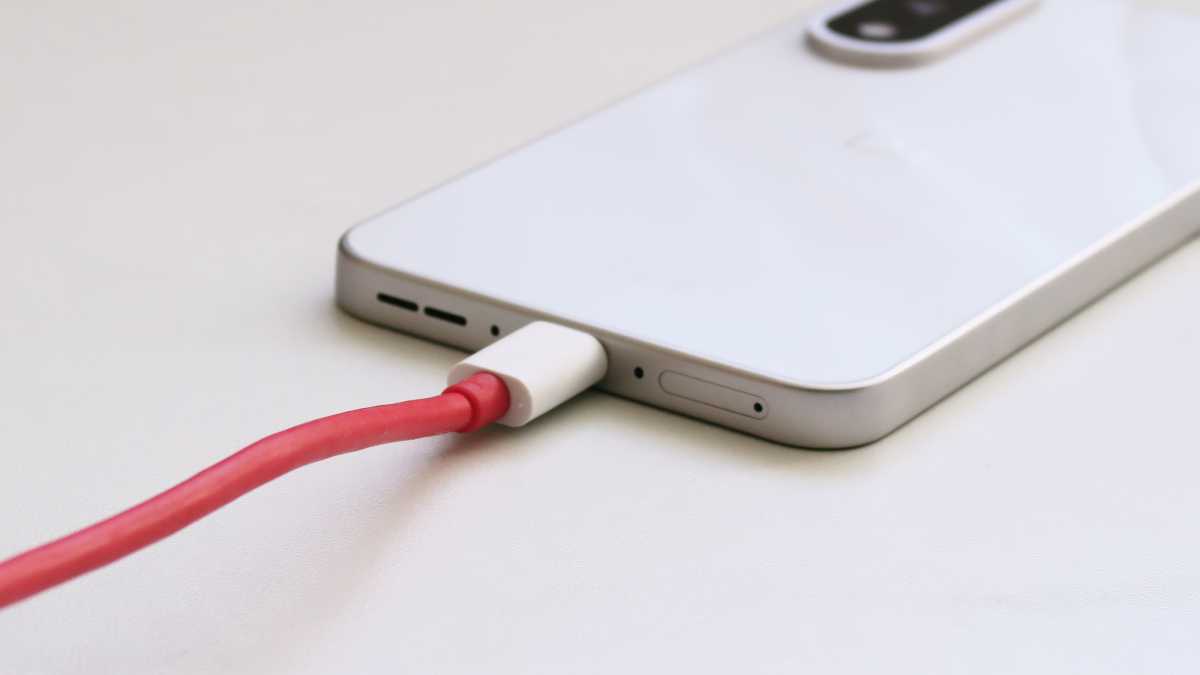
One battery upgrade I welcome, however, is the addition of bypass charging (sometimes called ‘pass-through charging’). Once a trait exclusive to dedicated gaming phones, bypass charging lets you keep your phone powered, without actually charging the battery.
“Why would you want to do this?” you might be wondering. It’s ideal for gaming, allowing for longer play sessions without unnecessarily power-cycling the battery (and thus reducing its lifespan) or causing additional heat build-up. It’s a trait that both the Nord 5 and the new Nord CE 5 benefit from, and I hope to see it on more phones going forward.
There’s unfortunately no power adapter in the box, so if you want to get the best recharge speeds with your Nord 5, you’ll have to fork out for a compatible SuperVOOC charger from OnePlus or Oppo (OnePlus’ USB-A 80W SuperVOOC charger sells for £39.99 in the UK, at the time of writing). Save for its last few flagship entries, no other OnePlus phones support wireless charging.
If you don’t have a SuperVOOC charger but you do have a standard PD USB-C charger, speeds peak at 18W, while a PD charger with PPS support can top out at 33W.
Software & Apps
- OxygenOS 15.02 atop Android 15 at launch
- AI upgrades, including Plus Mind
- 4 years of OS updates + 6 years of security
Perhaps the biggest driving force behind the Nord 5’s existence is as a way to bring the latest OnePlus AI experiences down to the mid-range market. The OnePlus 13s helped ring in this next chapter of AI for the brand, but the Nord 5 takes the included experiences international.
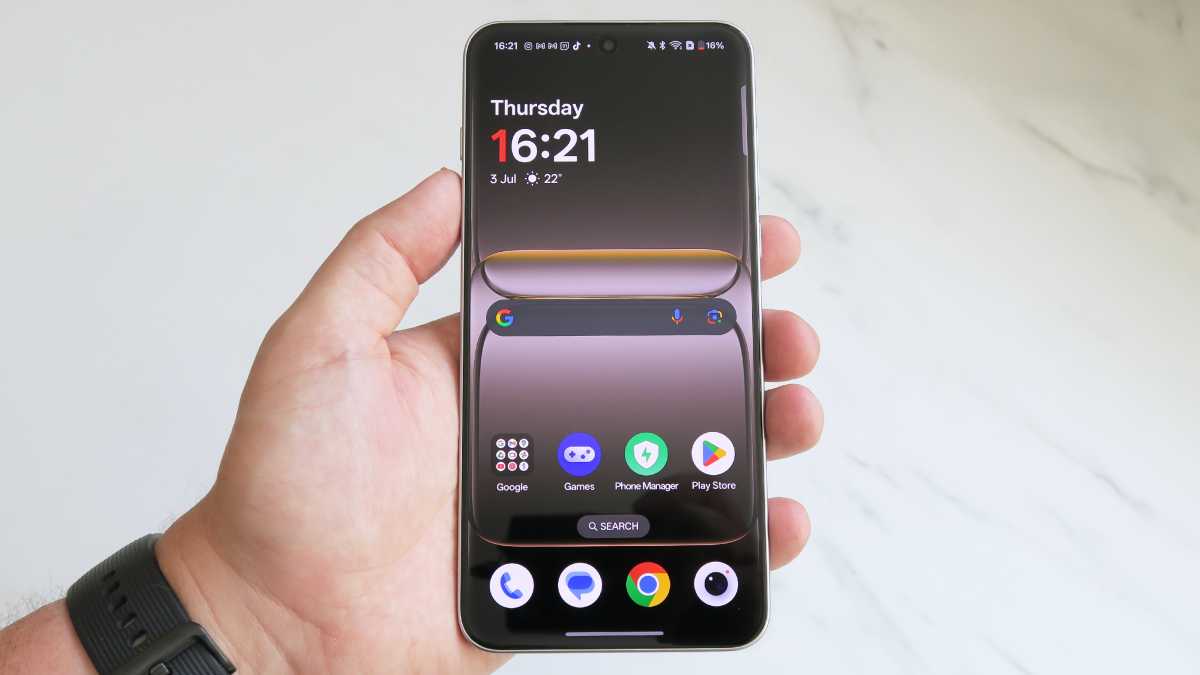
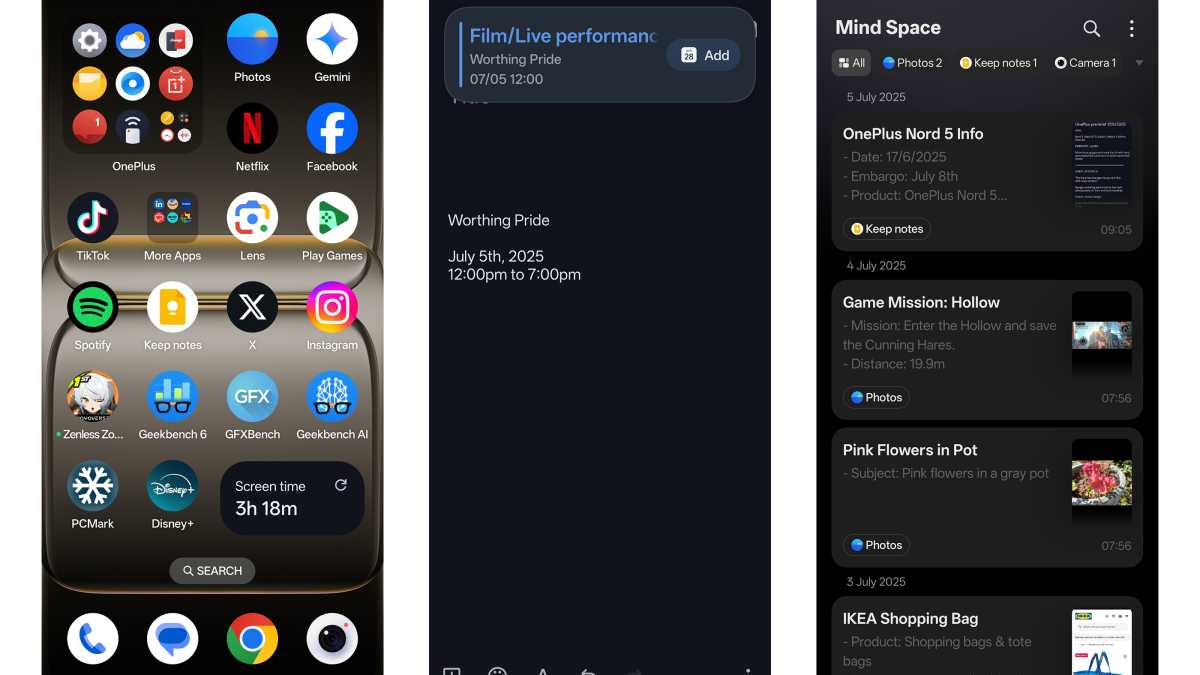
By default, the Plus Key is the fastest way to access what’s ‘new’ within OnePlus’ OxygenOS 15: Mind Space. While I don’t love the name, Mind Space is a dedicated area for the new Plus Mind AI feature set.
If you’ve used (or read about) the recent Nothing Phone (3a) or newer, you’ll know of Essential Space, Mind Space is a similar, but I’d argue, better variation on a theme.
Foundry | Alex Walker-Todd
It’s a repository of screenshots (kept separate from conventional screenshots you’d find in the phone’s native Photos app) that are analysed by OnePlus’ AI in order to extract information. In some cases, it can even offer further actions, like scheduling calendar appointments with a single tap, based on an invite message within WhatsApp or the like.
While I think the general concept of an AI-backed ‘second memory’ like this has value, there’s obvious room for improvement when it comes to OnePlus’ particular approach.
Foundry | Alex Walker-Todd
Recall, summarisation and context (you can tap on a captured screenshot to view it fullscreen again) are all meaningful aspects of the experience, but an inability to synchronise or transfer captured Mind Space content between devices (likely driven the added security provided by OnePlus’ new PCC – Private Computing Cloud layer) stifles its everyday and long-term value, for the time being.
Thankfully, I was already impressed by the implementation of AI elsewhere within OxygenOS (having tested most of it when reviewing the OnePlus 13, earlier in 2025), with context-aware tools dynamically surfacing themselves on the ever-present Smart Sidebar – swiped out from the top-right of the screen.
Additions like a dedicated Translate app (which consolidates relevant tools for common use cases) and the AI-backed universal search are nice extras too.
Foundry | Alex Walker-Todd
OxygenOS, as it appears on the Nord 5, is otherwise a pleasing and elegant augmentation of the stock Android 15 experience. Not everyone will use features like The Shelf (a dedicated space for widgets), and there’s a degree of app duplication (OnePlus and Google’s browsers both come pre-installed, for example), as well as pre-loaded bloat (such as AliExpress and Booking.com), putting it in a similar group as the Poco F7.
That said, the clean, customisable and functional user experience OnePlus has cultivated makes for a well-balanced alternative to the more stripped-back user experience served up by Google’s Pixels, or the overburdened OneUI and HyperOS 2.0 instances on Samsung’s and Xiaomi’s equivalent smartphones.
The promise of four years of OS updates and six years of security updates, is about middle-of-the-pack in the smartphone space, but should prove ample for most Nord 5 owners, who want to know that their devices will actually improve over time, based on whatever the company’s plans for OxygenOS 16 and beyond are.
Price & Availability
The OnePlus Nord 5 has launched internationally in two models: 8GB RAM paired to 256GB of storage for £399 in the UK (€449 in Europe), and a version with 12GB of RAM and twice the storage for £499 (€549 in Europe).
As ever, OnePlus’ US strategy differs enough that the Nord 5 is unlikely to launch in the region, with the phone serving the UK, Europe, India and APAC (excluding China) first and foremost.
For the price, the Nord 5 goes up against some tough competition, slotting in between the likes of the Nothing Phone (3a) and Nothing Phone (3a) Pro, undercutting the Google Pixel 9a and Galaxy A56 (although the latter is seeing some notable reductions online, at the time of writing).
At the same time, it’s massively undercut by the aforementioned Poco F7, which boasts more power, faster storage, a notably larger battery and the same 4+6 years of software support. You’d just have to be OK with Xiaomi’s middling HyperOS 2 experience, over the superior elegance of OxygenOS.
In the UK, you can buy the Nord 5 directly from OnePlus, as well as top retailers like Amazon.
Should you buy the OnePlus Nord 5?
Design, enduring performance and improved low light photography: these are the areas of focus the company was aiming at when producing the OnePlus Nord 5, and, for the most part, it hits its mark.
While I love the phone’s aesthetics and premium feel, I would have liked more premium materials in its construction, especially when the Nord 4 stood out in this area.
The battery life and fast charging, relative to the phone’s performance, meet expectations, but don’t really beat them, and photography is incrementally but undeniably improved over the Nord 4, especially in low light.
Why some markets receive a device with a smaller battery and slower charging than the previous Nord is frustrating and unclear, considering the jump in price, but performance in these areas is still respectable.
As a means of showcasing a new wave of AI functionality within OxygenOS, the Nord 5 is a great demonstration, and the Plus Key, although unoriginal, does feel like a more useful inclusion over the alert slider.
As touched on multiple times throughout this review, this high-quality mid-ranger generally impresses, but with Xiaomi’s fresh-faced Poco F7 operating in most of the same markets and offering all that it does; matching the Nord 5 on software support and showing strides in camera performance to narrow the gap between these two, where you put your money truly falls to the software.
Both phones serve up an AI-supported experience, but OnePlus’ approach is cleaner, more elegant and better implements its AI functionality. If you’re unfussed by such a distinction, the F7 is the better buy overall.
After other alternatives? Check out our rankings for the best mid-range phones.
Specs
- OxygenOS 15 atop Android 15 (at launch)
- 6.83-inch 144Hz (1272 x 2800) LTPS Swift AMOLED
- Qualcomm Snapdragon 8s Gen 3 chipset
- 8GB / 12GB RAM (LPDDR5X)
- 256GB / 512GB (UFS 3.1)
- Cameras:
- 50Mp Sony LYT-700 1/1.56-inch f/1.5 main w/ OIS
- 8Mp f/2.2 116º ultra-wide
- 50Mp Samsung JN5 1/2.75 f/2.0 90º selfie
- Optical fingerprint sensor
- Stereo speakers
- Dual nano-SIM slot
- Wi-Fi 6 802.11 a/b/g/n/ac/ax
- Bluetooth 5.4
- 5200mAh battery
- Up to 80W wired charging
- 163.4 x 77 x 8.1mm
- 211g
- IP65 certified
- Colours: Marble Sands, Dry Ice, Phantom Grey
Best Prices Today: OnePlus Nord 5
Author: Alex Walker-Todd, Contributor, Tech Advisor

Having covered every smartphone, tablet and wearable worth shouting about over the past ten years, Alex lives and breathes tech.