


At a glance
Expert's Rating
Pros
- Top-tier performance
- Gorgeous display
- Superb software experience
- Useful AI features
Cons
- Supporting cameras could be better
- Charging still only 45W
- Qi2 wireless charging needs a case
Our Verdict
The S25+’s lack of upgrades makes it feel like a real missed opportunity for Samsung. However, it still offers the best balance of hardware, software and price of any flagship phone right now.
Price When Reviewed
This value will show the geolocated pricing text for product undefined
Best Pricing Today
Best Prices Today: Samsung Galaxy S25 Plus

As we’ve come to expect, Samsung kicked off 2025 with a bang with the launch of its Galaxy S25 series of flagship phones.
Or at least, it should have done. The Galaxy S25, S25+ and S25 Ultra are all extremely similar to their predecessors, with Samsung opting for the bare minimum when it comes to upgrades.
Understandably, many people are disappointed with the company’s apparent lack of ambition. But if you’re seriously considering the Galaxy S25+, you probably don’t already own the Galaxy S24+. (If you do, we can tell you right now: don’t waste your money on the new phone.)
Instead, you’re likely to own a phone that’s at least three or four generations old, making the S25+ a much more significant step up. But when you’re paying at least £999/$999.99 outright, are there better flagship options out there? Here’s my full review.
Design & Build
- Premium yet durable design
- 190g
- IP68 water and dust resistance
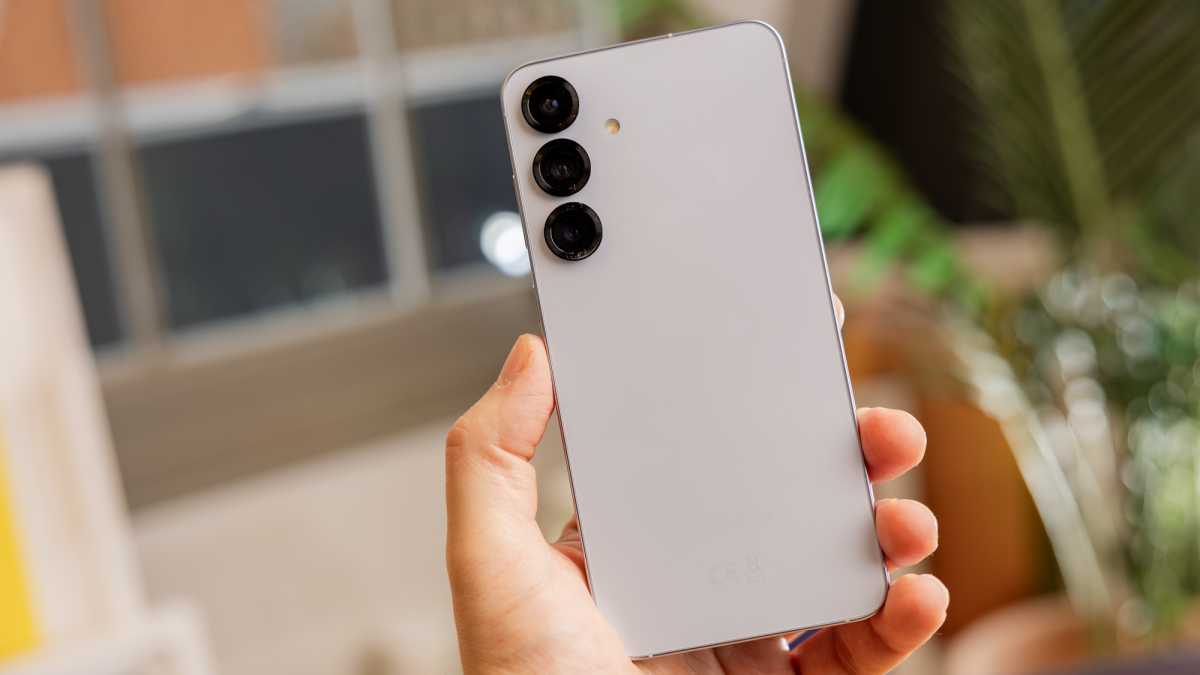
The Galaxy S25+ has a simple yet very effective design.
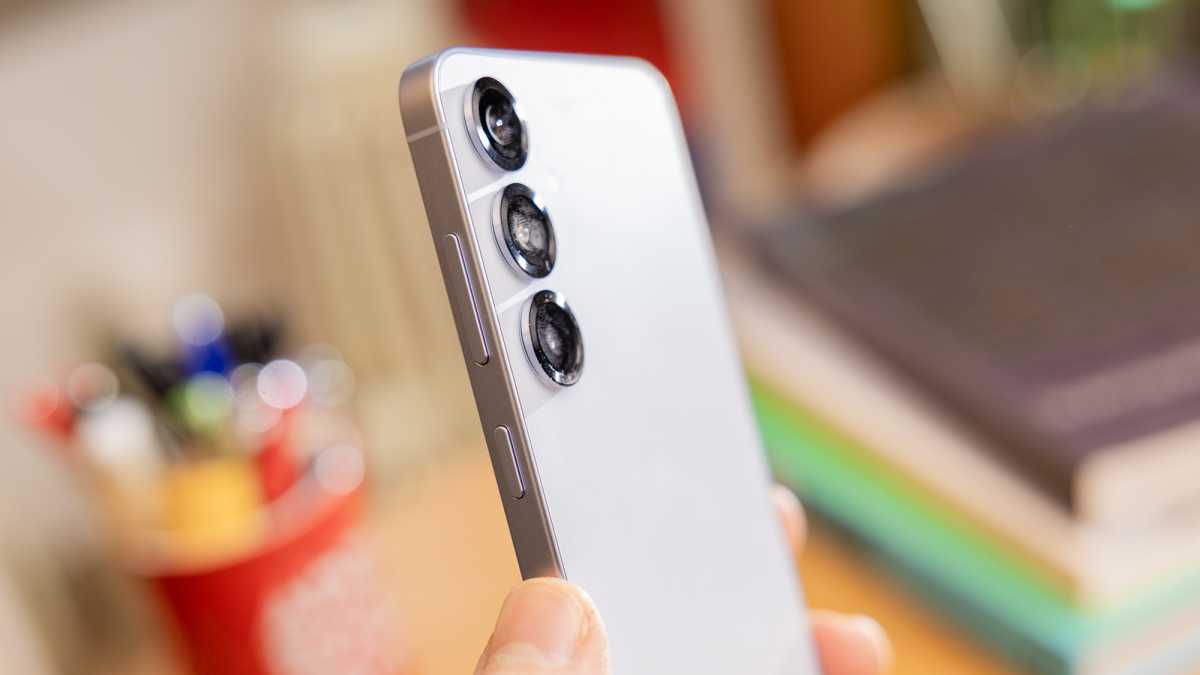
It’s what we’ve come to expect from Samsung: a glass front and back (both equipped with tough Gorilla Glass Victus 2), an aluminium frame and three individual camera lenses. The brand also keeps physical buttons to an absolute minimum – all you get here is a volume rocker and power button.
Some people will call the design boring, especially if you don’t choose one of the more vibrant colour options (there are seven in total, including three that are exclusive to the Samsung website). The ‘Silver Shadow’ version I tested certainly doesn’t stand out.
Dominik Tomaszewski / Foundry
However, I think that misses the point of what most people are looking for in a flagship phone. An unorthodox design is cool in the beginning but can quickly become tiresome. Something more low-key like this will stand the test of time.
The S25+ is a well-built phone that feels impressively durable. Yet at 190g, it’s slightly lighter than the S24+ and doesn’t make my hand ache like the 221g Pixel 9 Pro XL can.
The S25+ is a well-built phone that feels impressively durable
However, I’d recommend adding a little extra weight in the form of a case. I’ve been without one throughout my testing and was often worried about it slipping off a table or out of my pocket. A little extra grip is necessary.
Dominik Tomaszewski / Foundry
Nonetheless, you don’t have to worry about the S25+ being exposed to the elements. Its IP68 rating means it’s fully protected against dust and can survive immersion in up to 1.5m of fresh water for up to 30 minutes. The sea, however, is a different story.
The only other thing to mention here is the vibration motor, which delivers some of the best haptic feedback I’ve seen on any phone. I’m not usually a fan of haptics, but I can’t deny how realistic and satisfying the response feels when typing, multitasking and gaming.
Screen & Speakers
- 6.7-inch, 120Hz, 1440p AMOLED
- Missing the S25 Ultra’s anti-reflective coating
- Stereo speakers
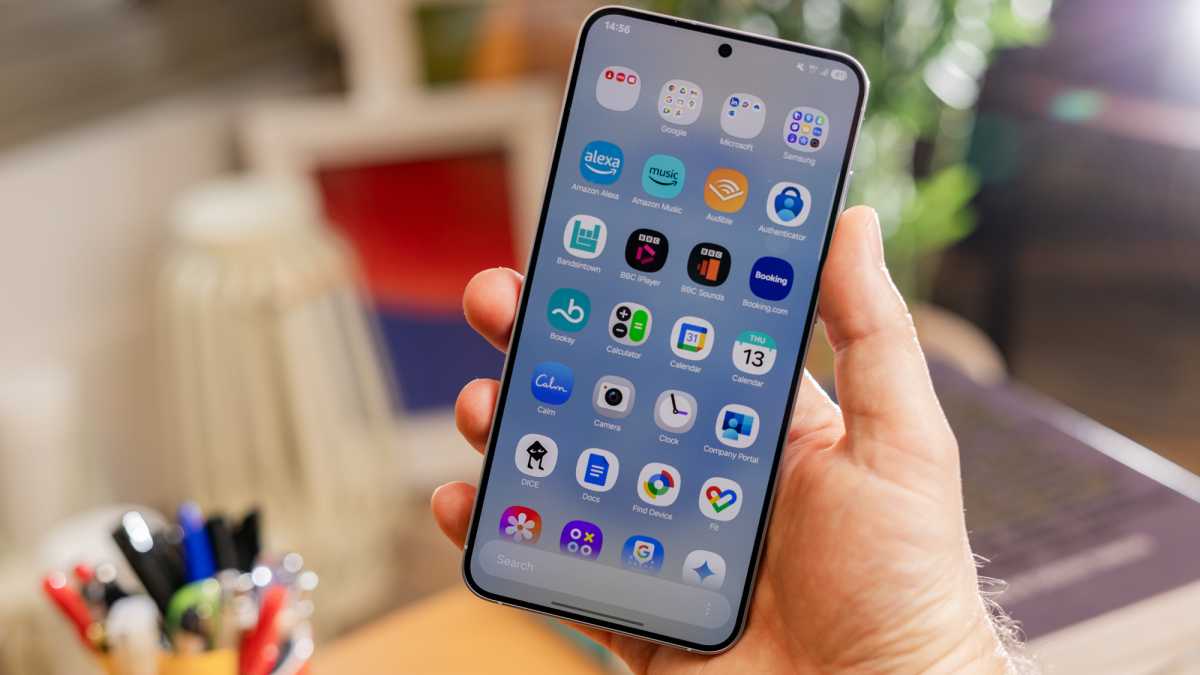
The display was one area of the S25+ that didn’t need any attention. The S24+’s 6.7-inch, 1440 x 3120 panel was already one of the best phone screens available, so Samsung decided against any changes this time around.
Dominik Tomaszewski / Foundry
While that’s largely a good thing, it means the S25+ misses out on the Ultra’s anti-reflective display coating, which combines improved visibility with better scratch and impact resistance.
With 2600 nits of peak brightness, using the S25+ outside on a bright sunny day shouldn’t be an issue (a very grey February in the UK meant I couldn’t test this for myself), but the reflections can be annoying sometimes.
The display was one area of the S25+ that didn’t need any attention
However, that’s one minor downside to an otherwise superb display. On the ‘Natural’ mode I chose, the content looks incredibly crisp, clear and true-to-life. Swapping to ‘Vivid’ adds a hit of contrast and saturation that makes movies and TV look even better. Having both means the S25+’s display is extremely versatile.
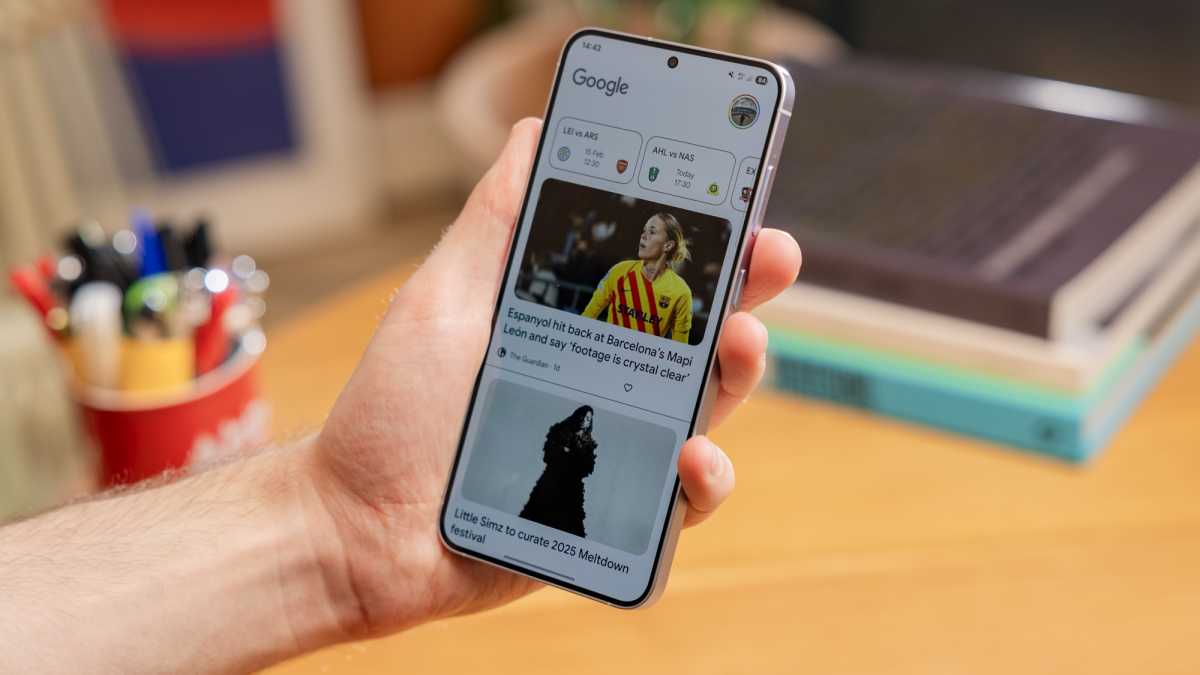
That’s before we even get to the 120Hz refresh rate. It might be standard on most Android phones these days, but the fluidity and smoothness here are up there with the very best. The default ‘Adaptive’ mode can automatically drop as low as 1Hz, meaning you get the benefits without unnecessary battery drain.
Dominik Tomaszewski / Foundry
Within the display is an improved version of Samsung’s ultrasonic fingerprint sensor. It’s generally fast and reliable, but a frustratingly small target area for your finger meant I sometimes missed it when trying to quickly unlock the phone. Face unlock is just as secure these days, so I preferred that.
Samsung has stuck with the same stereo speakers as on the S24+. They offer impressive clarity and avoid audible distortion, but don’t get particularly loud. Of course, if you want a proper hit of bass, you’ll need to connect to headphones or speakers.
Specs & Performance
- Qualcomm Snapdragon 8 Elite for Galaxy
- 12GB RAM on both models
- 256- or 512GB of non-expandable storage
Unlike the Galaxy S24 series, Samsung is using a Qualcomm chipset on all three Galaxy S25 phones everywhere, including the UK and Europe.
It makes the Snapdragon 8 Elite for Galaxy – an overclocked version of Qualcomm’s latest and greatest – a significant upgrade compared to the Exynos 2400 version of the Galaxy S24+. For buyers outside the US, it’s the single biggest improvement from last year’s phone.
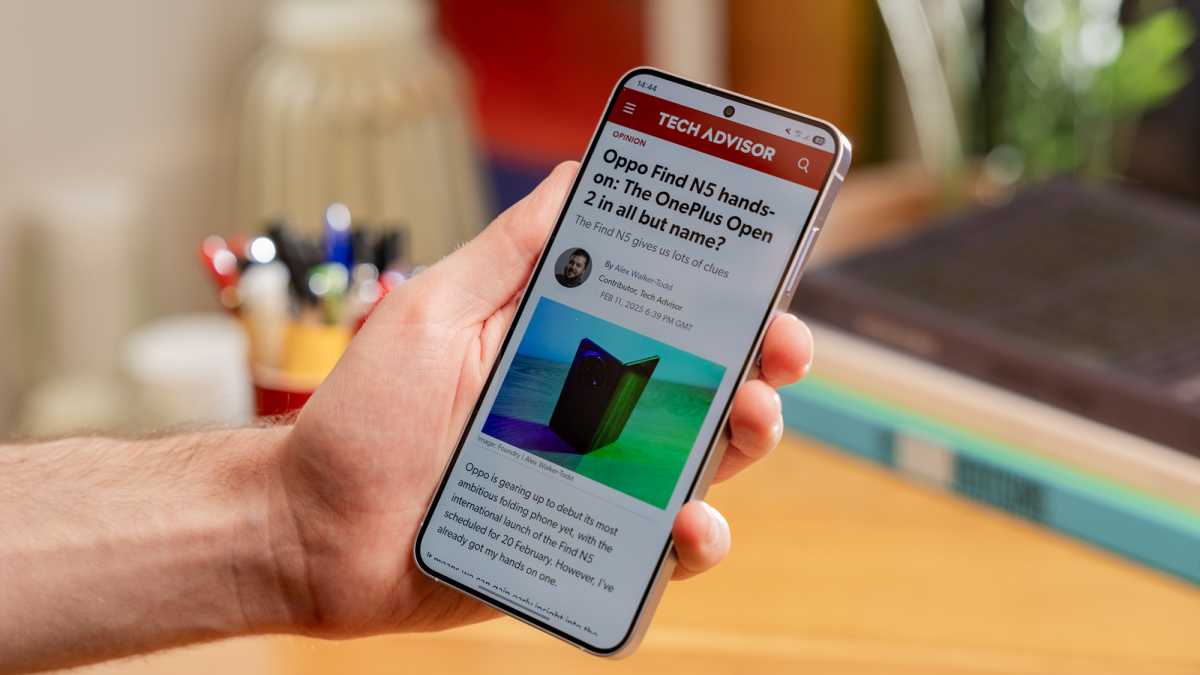
Dominik Tomaszewski / Foundry
What I’m about to say about performance probably won’t come as a surprise. The S25+ is ridiculously fast and responsive, speeding through every conceivable task with ease. Alongside 12GB of RAM across all models, it’s great for web browsing, social media, multitasking and everything in between.
The top-tier specs also mean it’s a potent gaming machine. Fire up Call of Duty: Mobile, PUBG Mobile, Genshin Impact or any other demanding title from the Google Play Store and you’ll get the smooth gameplay you’d associate with dedicated gaming phones.
The S25+ is ridiculously fast and responsive, speeding through every conceivable task with ease
Extended gaming sessions prove more of a challenge, with the S25+ becoming noticeably warm to the touch. But without dedicated cooling systems, that’s understandable. In regular everyday use, there’s no sign of overheating whatsoever.
The S25+ is available with either 256- or 512GB of fast UFS 4.0 storage. Just make sure you get enough because there’s no support for Micro-SD expandable storage.
Samsung Galaxy S25+ benchmarks
Cameras
- 50Mp, f/1.8 main
- 12Mp, f/2.2 ultrawide
- 10Mp, f/2.4 3x telephoto
- 12Mp, f/2.2 selfie
Samsung hasn’t made any meaningful changes to the camera hardware on the Galaxy S25+.
It has the same triple rear setup as its predecessor, consisting of 50Mp main, 10Mp 3x telephoto and 12Mp ultrawide. That means you miss out on the S25 Ultra’s 200Mp main sensor and extra 50Mp 5x telephoto, and it shows.
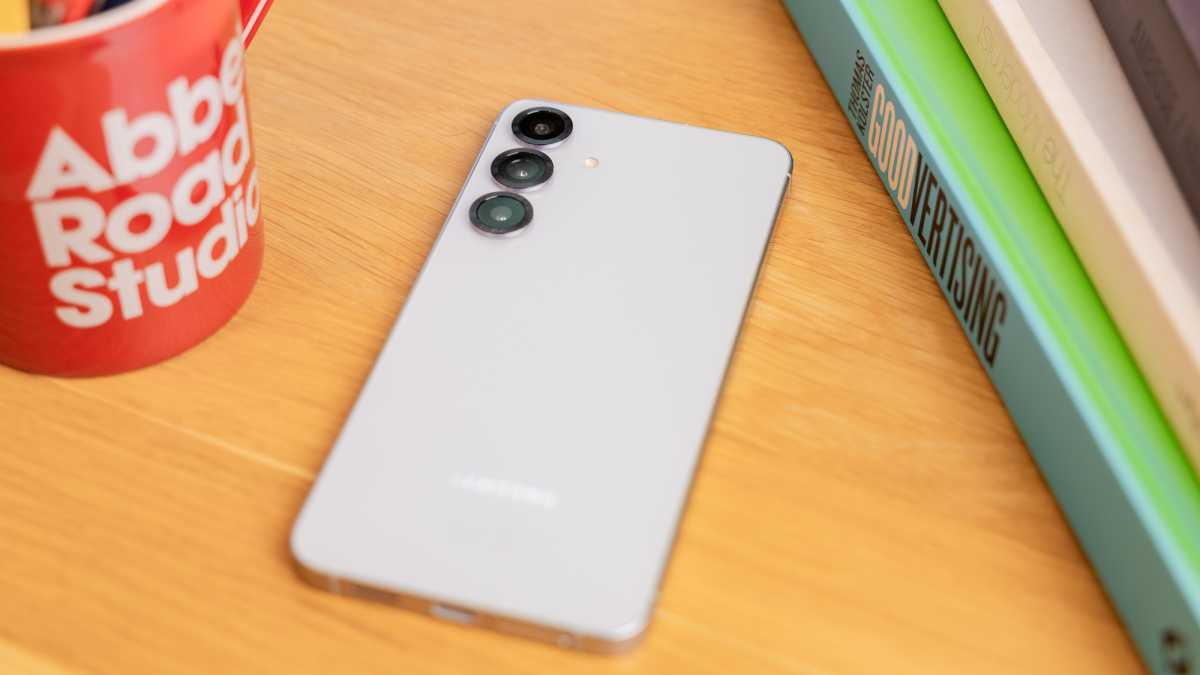
Dominik Tomaszewski / Foundry
General camera performance for stills is still very good, but it’s a noticeable step down from the Ultra and the other best camera phones around, including the Pixel 9 Pro XL, iPhone 16 Pro Max and Xiaomi 14 Ultra.
That’s not apparent from the main 50Mp lens, which consistently delivers great detail and dynamic range. It generally handles shadows well and does a good job of not over- or under-exposing grey skies. I’m also impressed with its colour accuracy – shots are more true-to-life than we’ve historically seen on Samsung phones.
Even in low light, the automatically enabled ‘Night shot’ subtly brightens dark images without looking artificial or introducing too much noise.


I also enjoyed using the main lens for portrait-style photos. It does a good job of separating the subject from the background, and I love that you can adjust the level of background blur before or after the shot is taken.
The main 50Mp lens consistently delivers great detail and dynamic range
Unfortunately, the supporting lenses are a little underwhelming. The 10Mp telephoto is strong in good lighting, and the flexibility of a 3x optical zoom is great, but relying on digital zoom beyond that (up to 30x) means image quality quickly drops.







In low light, the telephoto also struggles to replicate the effect of the main lens. You typically either get a disappointingly dark image or one with visible noise.
The 12Mp ultrawide lens is decent, and I enjoyed having the flexibility of that 120-degree field of view. There are small downgrades to dynamic range and exposure compared to the main lens, but not enough to notice unless you’re comparing them side-by-side. Provided you’re aware of these limitations, it’s well worth using.
On the front, the 12Mp lens is consistent across all the S25 phones. It delivers clear, crisp selfies in a range of environments, including low light. I was particularly impressed with the way it captured skin tones and accurate colours.
See more camera samples in the gallery below:












The S25+ can still capture video at up to 8K, with OIS (optical image stabilisation) on the main and telephoto lenses ensuring everything remains smooth. Alongside crystal-clear dual mics, it’s a great choice for capturing footage from a concert or other live event.
However, the most significant change here is the introduction of a Log recording mode. When enabled, it allows you to film with a flat image profile, and then colour-grade the footage yourself. Combined with the 8K shooting ability, it’s one of the most advanced camera phones for video out there.
Battery Life & Charging
- 4900mAh battery
- 45W wired and 15W wireless charging
- Qi2 wireless requires a compatible case
The S25+ has the same 4900mAh battery as its predecessor. Compared to most flagship phones out there, that’s a little on the small side. I wouldn’t go so far as to say battery life is a weakness, but it’s not a strength, either.
With moderate usage, you’ll comfortably be able to get a full day on a single charge. I averaged around 3 hours per day during testing, and it was usually around halfway through day two before I had to connect to the power.
Dominik Tomaszewski / Foundry
However, on those rare demanding days, I wasn’t so confident. With high brightness, GPS and mobile data all enabled, I lost over half the charge with just two hours of screen-on time. Granted, this included taking lots of photos and videos, but I’d still want a power bank handy just in case.
With high brightness, GPS and mobile data all enabled, I lost over half the charge with just two hours of screen-on time
Frustratingly, the S25+ is still limited to just 45W charging. It’s well behind the likes of the OnePlus 13 (100W) and Xiaomi 14 Ultra (90W), and there’s no charger included in the box.
Using a 65W charger I had at home, the phone went from flat to 25% in 15 minutes, then 53% by the half-hour mark. A full charge took 85 minutes – not bad, but not great either.
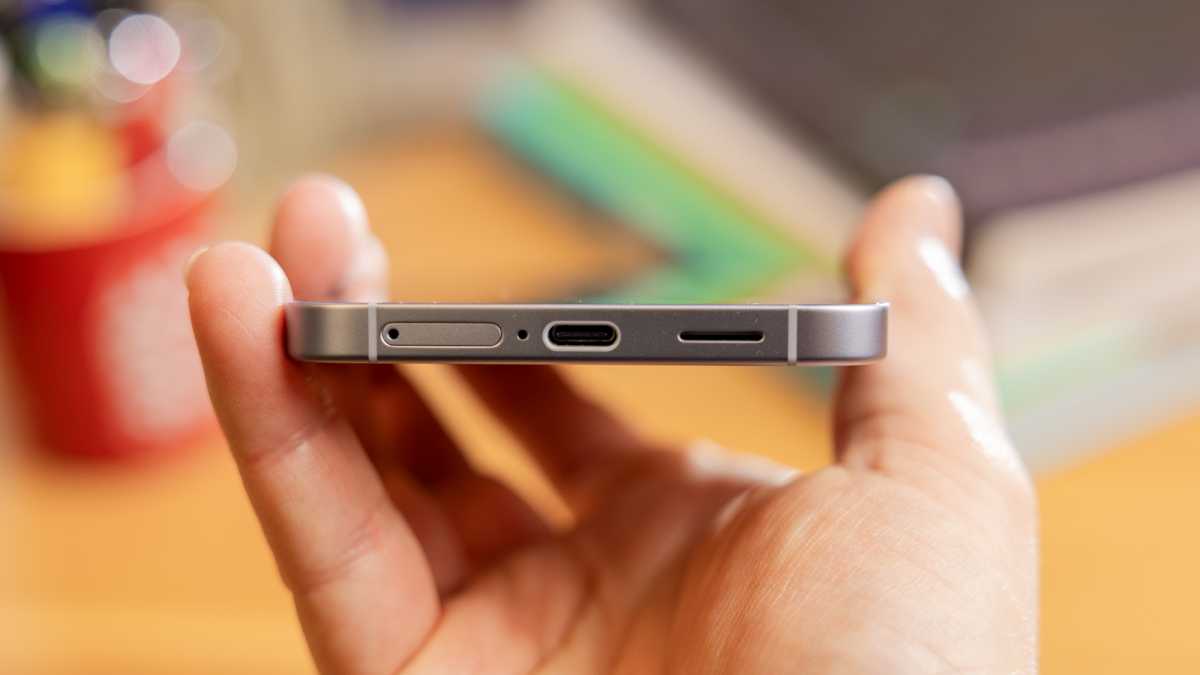
Dominik Tomaszewski / Foundry
Wireless charging remains limited to a much slower 15W, with the MagSafe-style Qi2 standard relying on the separate purchase of a compatible case.
Average battery life and relatively slow charging are the key factors that count against the S25+, but they shouldn’t be dealbreakers for most people.
Software & Apps
- One UI 7 over Android 15
- New Galaxy AI features
- Seven years of OS and security updates
Just like the other Galaxy S25 phones, the S25+ runs Samsung’s One UI 7 out of the box. While based on Android 15, it has a very different look and feel to the version on Google’s Pixel phones.
And I never expected to say this, but One UI 7 is my favourite version of Android ever. It’s easy to use, looks great and integrates genuinely useful AI features.
I love how customisable it is, allowing me to create a home screen, lock screen and quick settings menu that is perfectly tailored to my preferences.
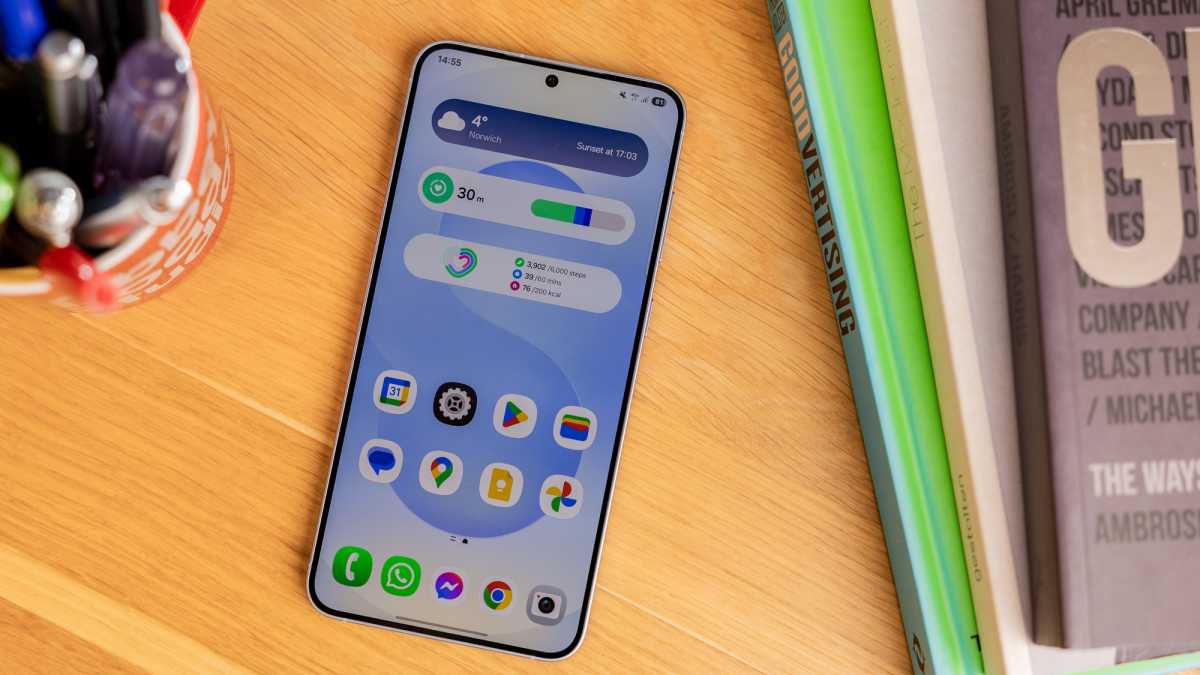
Dominik Tomaszewski / Foundry
The latter is now split from the notification tray depending on where you swipe down, just like iOS, but I prefer it to the version on the iPhone. And unlike the Pixel, a single tap can toggle Wi-Fi or mobile data on and off, which makes a big difference for me.
One UI 7 is my favourite version of Android ever. It’s easy to use, looks great and integrates genuinely useful AI features
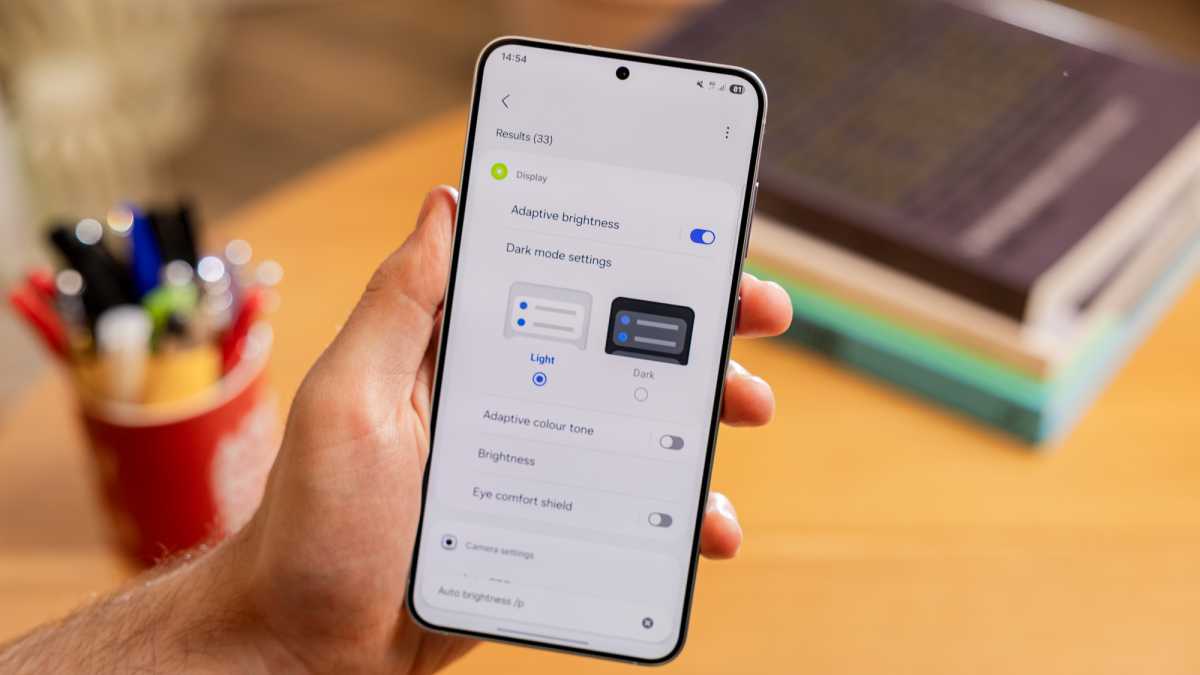
There are examples of AI throughout One UI 7, but my favourite implementation is in search. When you’re trying to find something in the app drawer or Settings, you can use natural language and it’ll find just what you’re looking for. When the auto brightness feature is known as ‘Adaptive brightness’ and the refresh rate is ‘Motion smoothness’, it makes a big difference.
Dominik Tomaszewski / Foundry
One UI 7 also get the most powerful version of Google Gemini on any phone right now. A long press of the power button brings up the regular assistant-style version, which can be swapped for Gemini Live for a human-like conversation. Both modes work very well.
Gemini can also be used to interact with some Samsung stock apps, whether it’s creating an event in the Calendar or adding something to Notes. However, this specific feature works best if you’re already invested in the Samsung ecosystem.
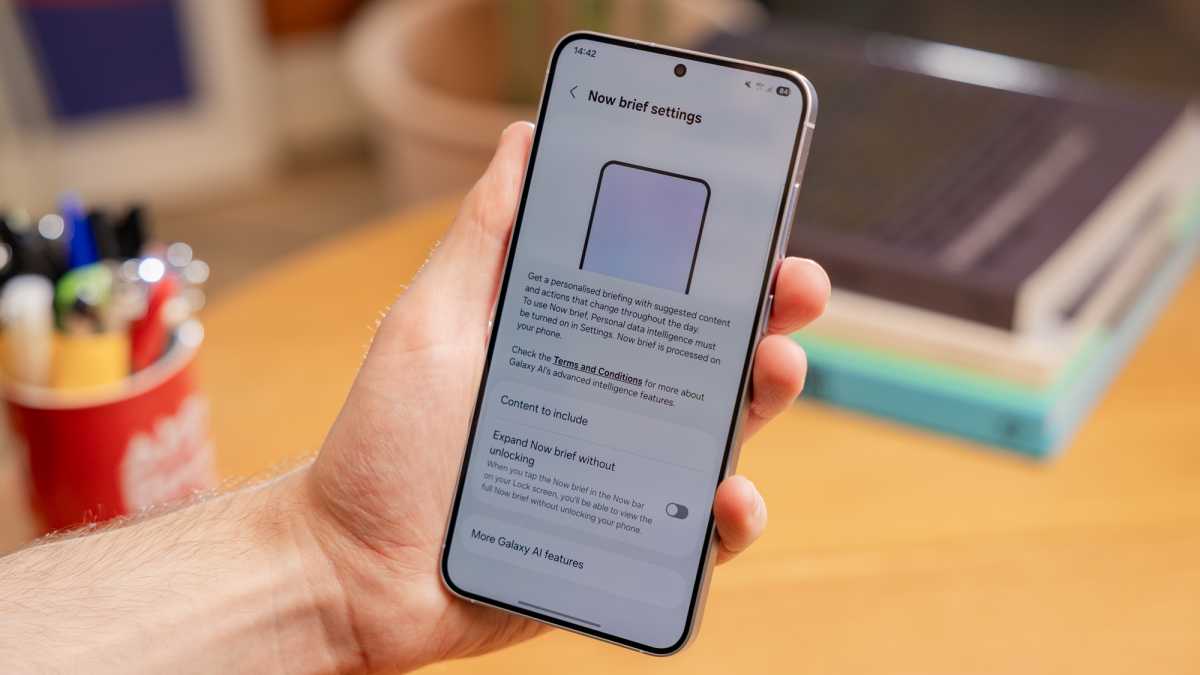
The same can be said for the Now Brief, which summarises information it thinks is relevant and ‘briefs’ you three times a day. However, as someone who mainly uses Google’s apps and doesn’t have any wearables connected, its usefulness is limited.
Dominik Tomaszewski / Foundry
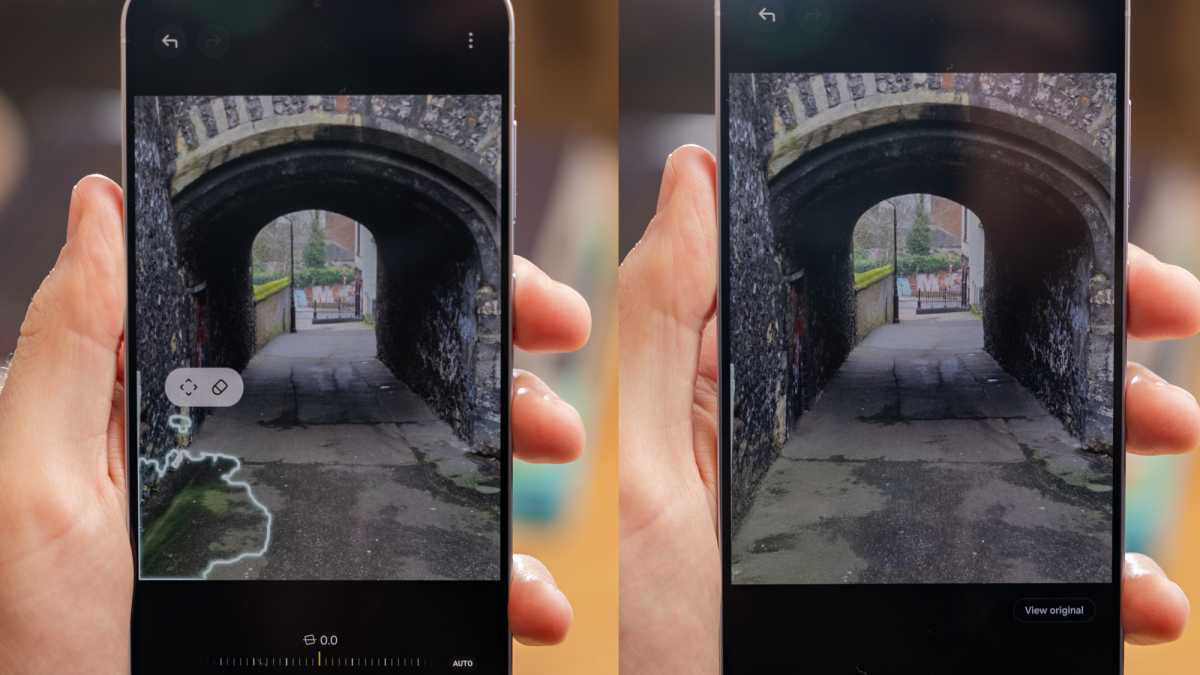
While Circle to Search is still here, AI Select makes it even more powerful. Instead of just finding out about what’s on your screen, you can use it as the basis for something new. I was impressed with the way it could switch up the style of a photo, seamlessly remove background objects or create something new (using generative AI, of course).
Audio Eraser is another new feature. It basically works in the same way as Audio Magic Eraser, analysing audio in a video and reducing the noise. It generally works well, but the result can sound a little artificial at times.
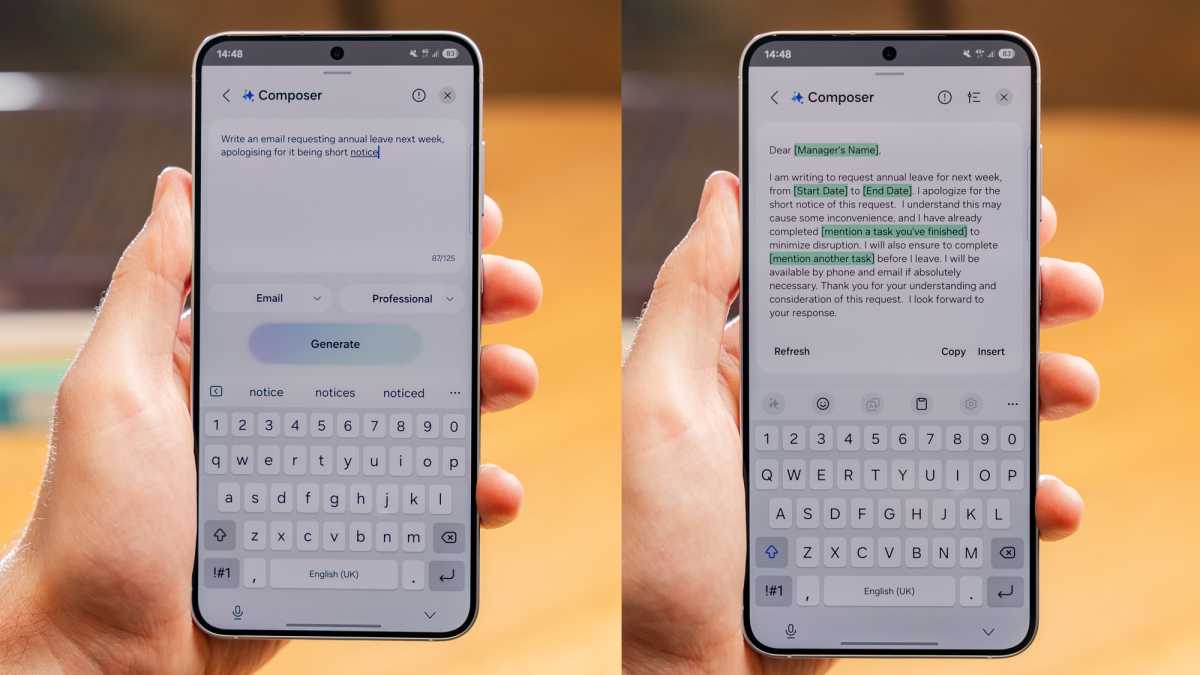
Alongside writing, transcription, summarising and real-time translating tools introduced with the Galaxy S24 series, the S25+ offers a comprehensive suite of AI that can be genuinely useful.
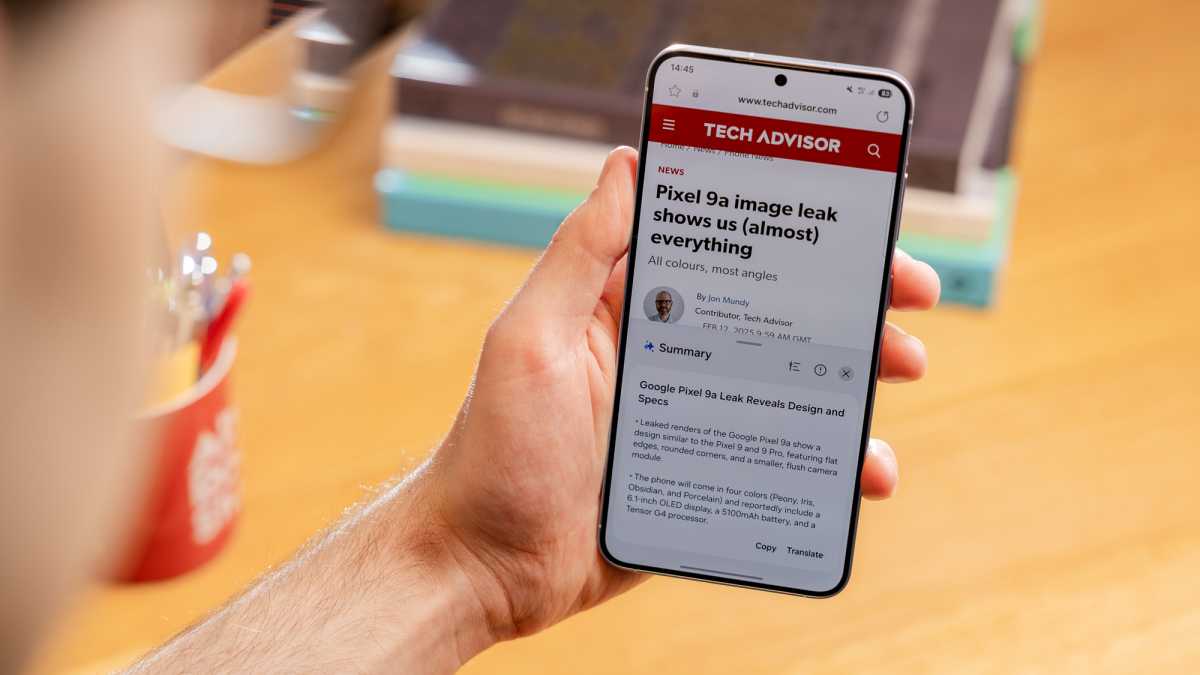
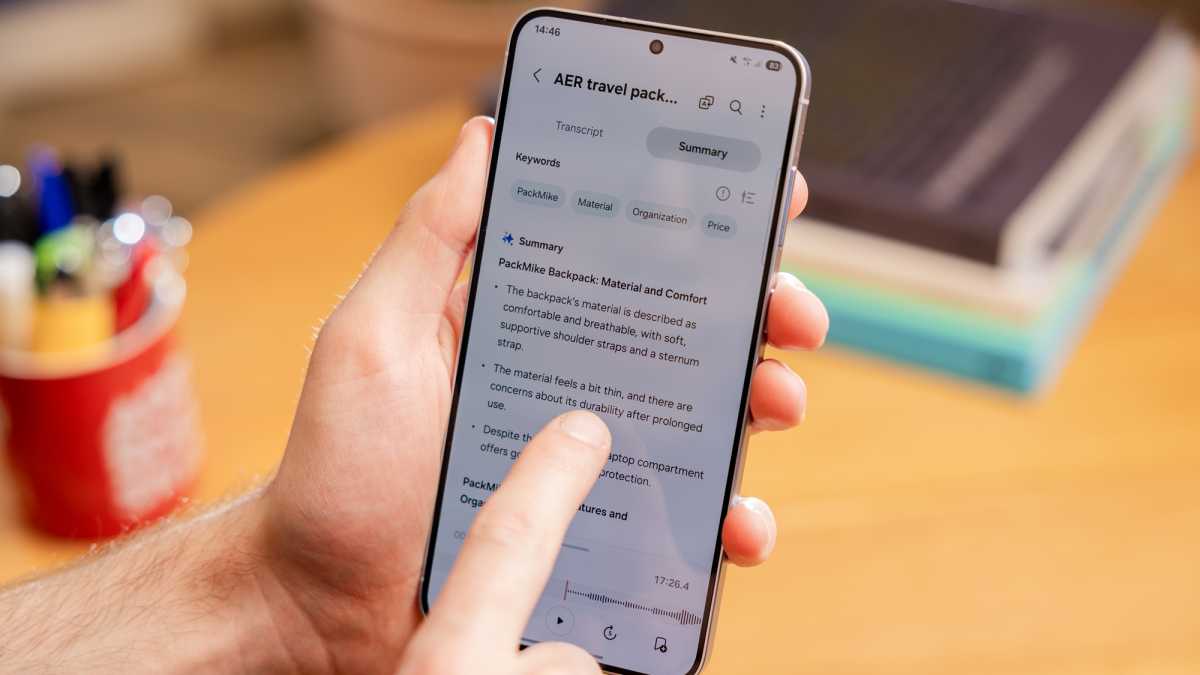
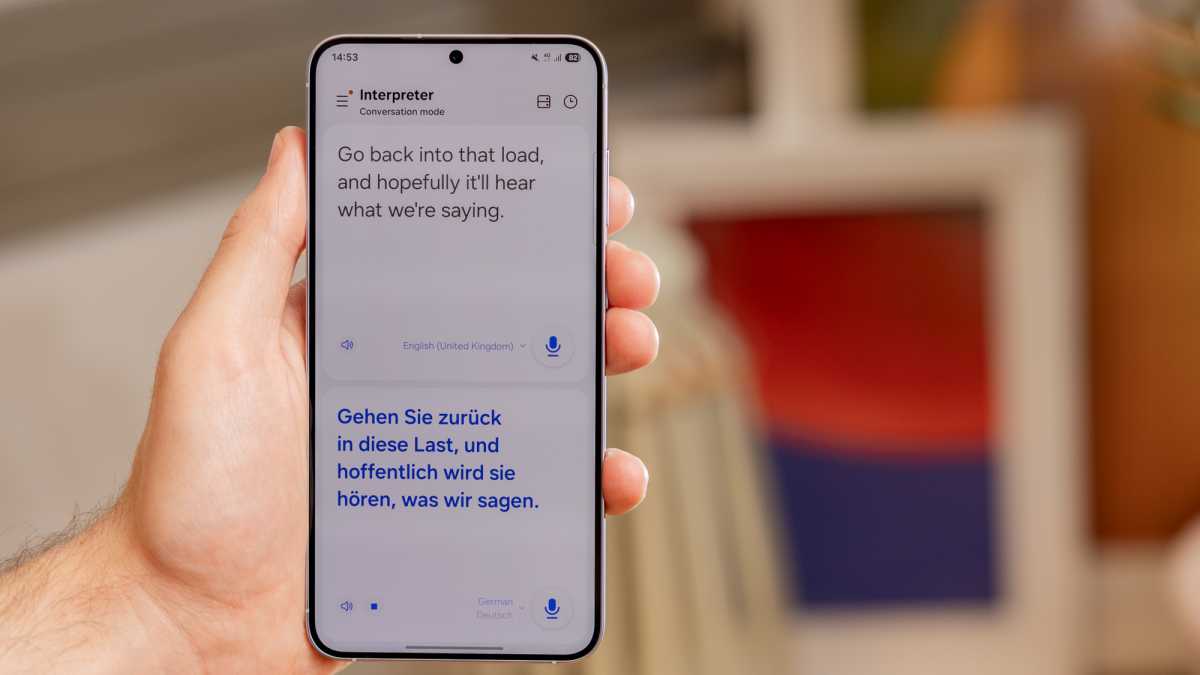
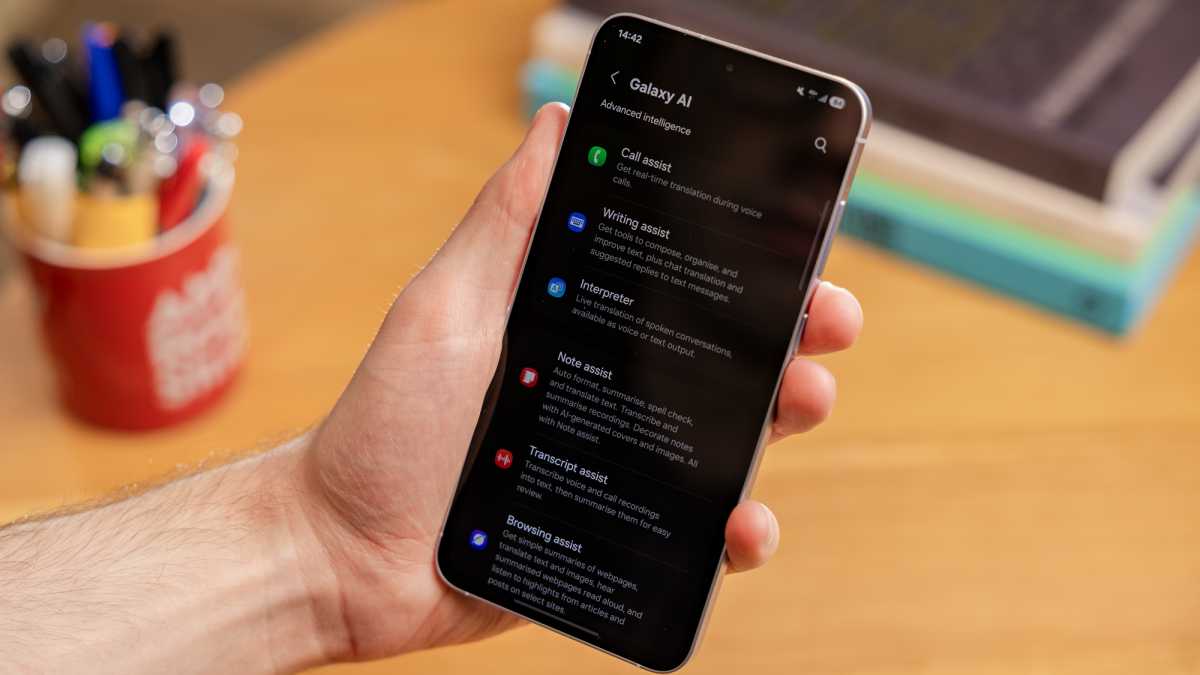
Add in Samsung’s continued class-leading commitment to seven years of both OS and security updates, and you’ve got a nearly faultless software experience.
Price & Availability
The Galaxy S25+ is very much a flagship phone, and it’s priced to match.
It starts at £999/$999.99 for a model with 12GB of RAM and 256GB of storage, though doubling the latter will cost £1,099/$1,099.99.
You buy the phone outright from Samsung UK or Samsung US, plus a range of third-party retailers. See the full selection in our guide to the best Galaxy S25 deals.
On contract, see the best options in the UK and US in the widgets below.
That outright starting price puts it up against some of the very best phones you can buy, including the Google Pixel 9 Pro (from £99/$999), Apple iPhone 16 Pro (from £999/$999) and OnePlus 13 (from £899/$899). However, it’s significantly cheaper than the Galaxy S25 Ultra (from £1,249/$1,299).
Should you buy the Samsung Galaxy S25+?
If you currently have a phone that’s at least three years old and can afford it, yes. For most people, the S25+ is the sweet spot in Samsung’s Galaxy S25 range.
It offers a compelling combination of top-tier hardware and superb, AI-infused software. While you’ll have to give up the S Pen and 50Mp ultrawide from the Ultra, the money you save will be well worth it for most people. Aside from relatively slow charging and some camera inconsistencies, this is a phone with no real weaknesses.
The lack of upgrades means no Galaxy S24 or S23 owners should consider it, but if you have anything older, you’ll really notice the difference. The S25+ is an impressive phone that should stand the test of time, making it easy to recommend.
Specs
- One UI 7, based on Android 15
- 6.7-inch, 1440 x 3120, AMOLED, 120Hz
- Ultrasonic fingerprint scanner
- Qualcomm Snapdragon 8 Elite for Galaxy
- 12GB RAM
- 256GB / 512GB storage
- 50Mp, f/1.8 main camera
- 12Mp, f/2.2 ultrawide
- 10Mp, f/2.4 3x telephoto
- 12Mp, f/2.2 selfie
- Up to 8K @ 30fps rear video
- Stereo speakers
- Dual-SIM + eSIM
- Wi-Fi 7
- Bluetooth 5.4
- 5000mAh battery
- 45W wired charging
- 15W wireless charging
- 158.4 x 75.8 x 7.3 mm
- IP68 certified
- 190g
- Colours: Navy, Icyblue, Silver Shadow, Mint, Blueback (Samsung.com exclusive), Coralred (Samsung.com exclusive), Pinkgold (Samsung.com exclusive)
Best Prices Today: Samsung Galaxy S25 Plus
Author: Anyron Copeman, Mobile Editor, Tech Advisor

Anyron is Mobile Editor at Tech Advisor, where he’s been a mainstay of the editorial team since 2019. In his current role, Anyron is responsible for all smartphone, tablet and mobile network coverage on the site. A BA Journalism graduate, he has experience with a wide range of consumer tech products and services, including smartphones, tablets, foldables, wearables and more.