

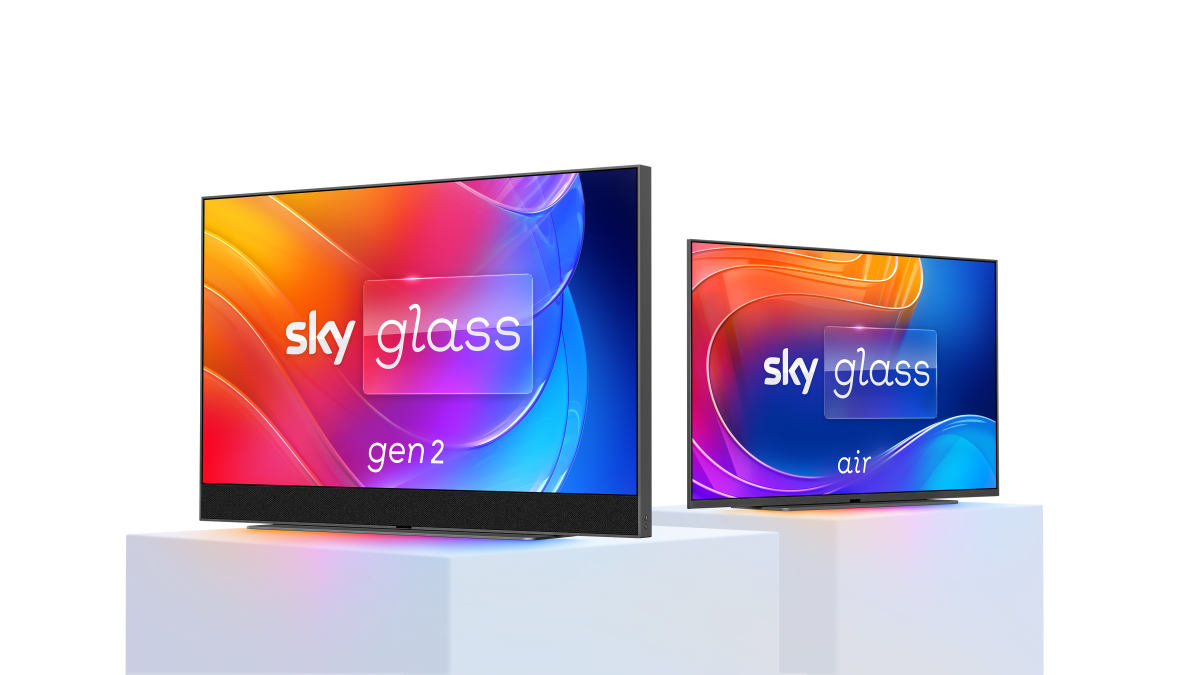
Sky now offers two distinct ways to bring its Wi-Fi-powered TV experience into your home: the flagship Sky Glass Gen 2 and the more affordable Sky Glass Air.
Both are built around the Sky OS smart platform, home to live channels, streaming apps, and personalised streaming recommendations. But while the viewing experience is comparable, the two models differ significantly when it comes to performance and design.
Sky Glass Gen 2 is Sky’s premium pay TV proposition. It’s a high-brightness Quantum Dot display, with Dolby Vision HDR, and a built-in Dolby Atmos sound system. It replaced the Sky Glass Gen 1, which is no longer on sale.
Sky Glass Air is the lighter, smarter sibling. It’s also a 4K Quantum Dot LED display with Dolby Vision support, but features a simpler stereo speaker setup and offers a more modest HDR performance.
So exactly how much spectacle has been sacrificed for the sake of a lower price? I’ve been living with both models to find out…
Sky
Design & Features
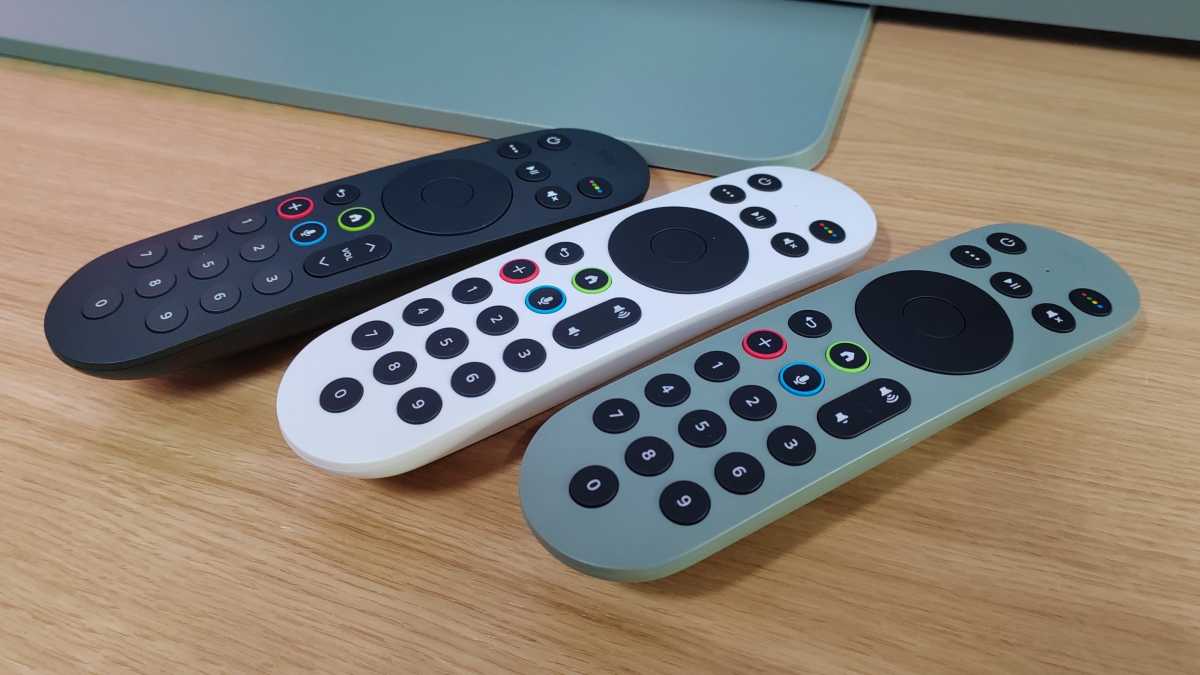
The most obvious difference between Sky Glass Air and Sky Glass Gen 2 is their design. The Air is a good deal lighter, making it the better option if you want to wall mount. It comes in a choice of three muted colours – Sea Green, Carbon Grey, and Cotton White.
The pedestal is a simple drop-in design, so no fiddly assembly, and the Sky remote is supplied in a matching hue. Out of the two models, I think this one has the greatest ‘interiors’ appeal.
Sky Glass 2 is more substantial than the Air (30.3 kg compared to 17.2kg, for the 65-incher), not least because of its built-in Dolby Atmos sound system. Colour options comprise Volcanic Grey, Arctic Silver, and Atlantic Blue.
Both Sky Glass Air and Sky Glass 2 are available in three screen sizes: 43-, 55-, and 65-inches. Both are also built around 60Hz panels, which means there’s no high-frame-rate gaming option.
Steve May / Foundry
There’s plenty of choice for connectivity, with three HDMI ports (one with eARC), USB-A, USB-C, Digital Optical Audio output, plus Wi-Fi 6/Bluetooth connectivity on both TVs. While both sets of ports are found at the back, the Glass Air outlets face sideways, while wires for the regular Glass 2 plug in directly from the rear.
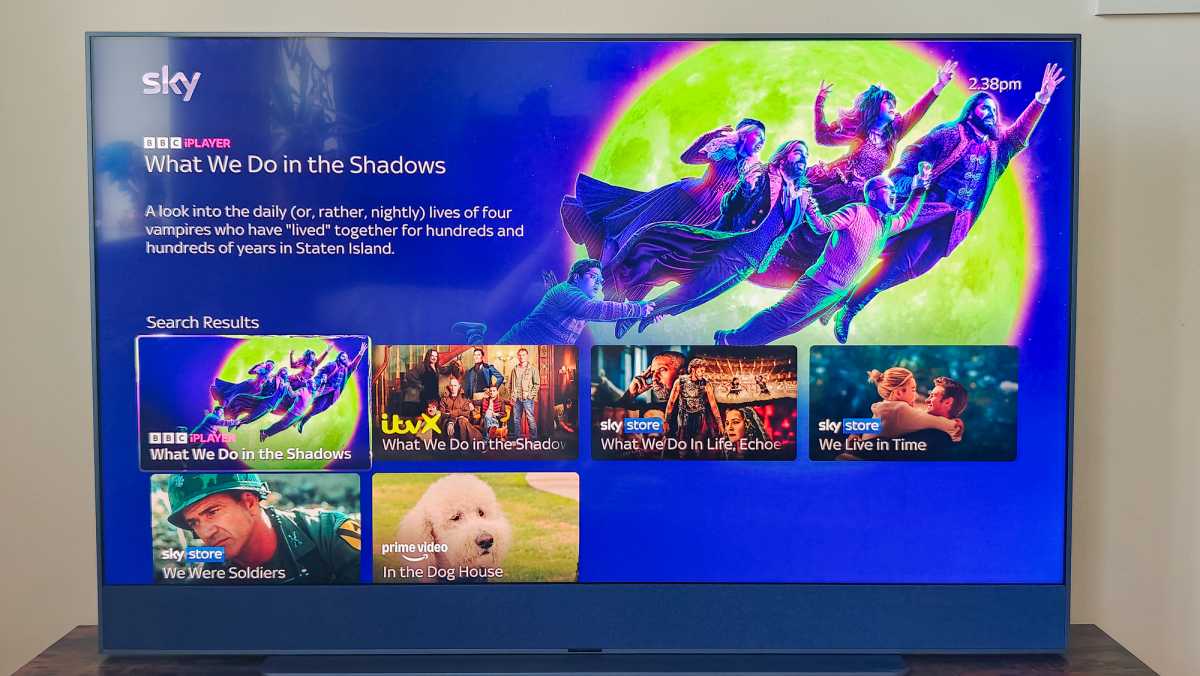
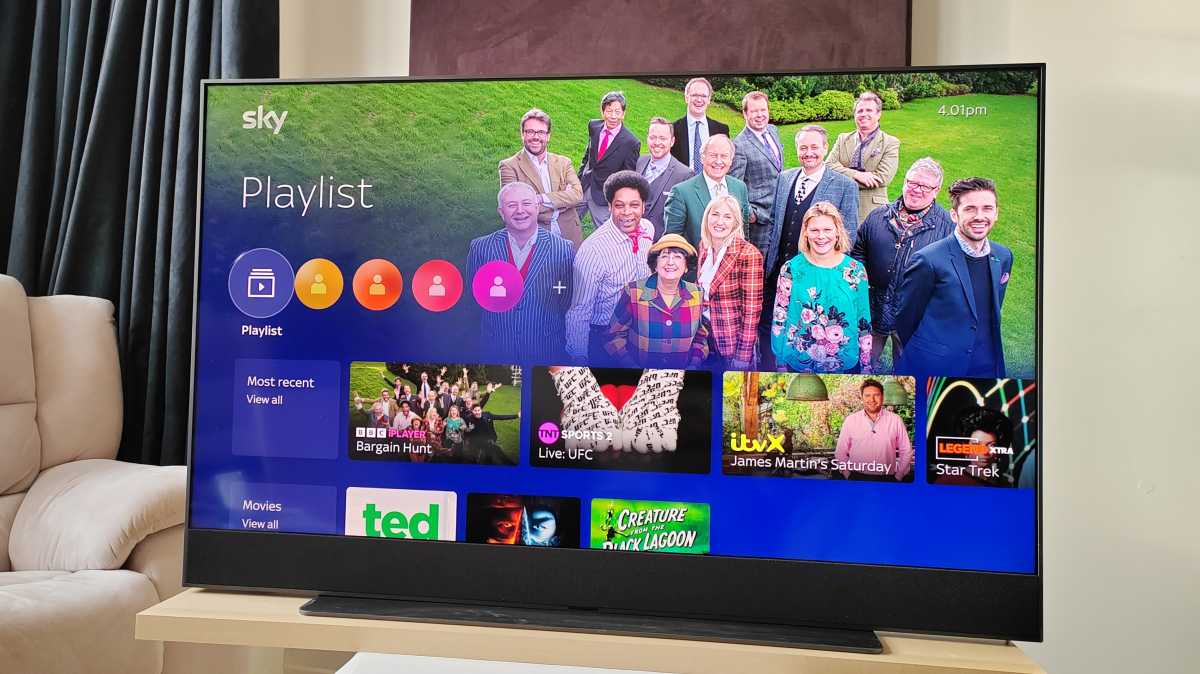
Powered up, the user experience is much the same, with navigable rails of curated content, both from Sky’s own channels, including Sports and Cinema, and the streaming apps. A Continue Watching rail lets you pick up a show where you left off, and ‘recordings’ are saved to a cloud DVR, so you can stream them whenever.
The Air is a good deal lighter, making it the better option if you want to wall mount
The choice of apps is impressive, with Netflix, Prime Video, Apple TV+, Disney+, YouTube, Crunchyroll and others.
But there are minor differences. While both models can be operated by “Hi Sky” voice control, only Sky Glass 2 turns itself on automatically when you walk into a room (a trait I’ve grown to quite like).
Sky Glass 2 also supports the Sky Live camera accessory, but the Air doesn’t.
Hannah Cowton-Barnes / Foundry
Picture Performance
There’s a lot to like about the picture performance of the Sky Glass Air. The Quantum Dot panel delivers vibrant colours and has a high average brightness, making it great for daytime viewing.
The panel uses full-array backlighting, but with global dimming rather than the local dimming seen on the Gen 2. That’s an important distinction. Instead of adjusting brightness in specific zones, the Air dims or brightens the entire backlight as one. The upside is relatively consistent brightness across the screen. The downside is a lack of precision in dark scenes. Black levels are more dark grey than inky black, and subtle shadow detail can get lost in moody material.
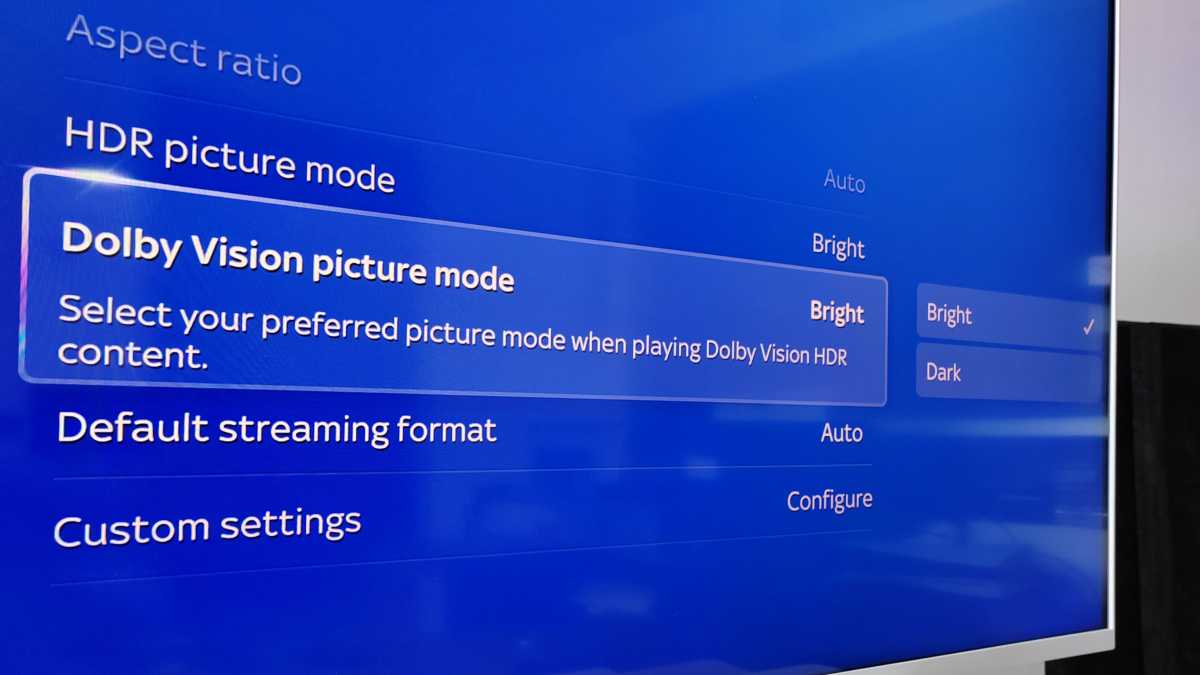
Where it really struggles against its stablemate is HDR peak brightness. In Movie mode specular highlights hit around 363 nits (494 nits in the unrealistic Extra Vivid mode).
Steve May / Foundry
The Glass 2’s display outshines the Glass Air, thanks to a Full Array Quantum Dot panel with local dimming zones and significantly higher peak brightness. I measured HDR brightness on the Gen 2 at around 1300 nits, which translates to a genuine sparkle with HDR content.
Colour handling is lush on both models: Vivid mode is lively without tipping into garish, while Movie mode reins things in for film content without losing too much warmth.
Sound Performance
As with the displays, plenty separates the Sky Glass Air and Sky Glass Gen 2 when it comes to sound.
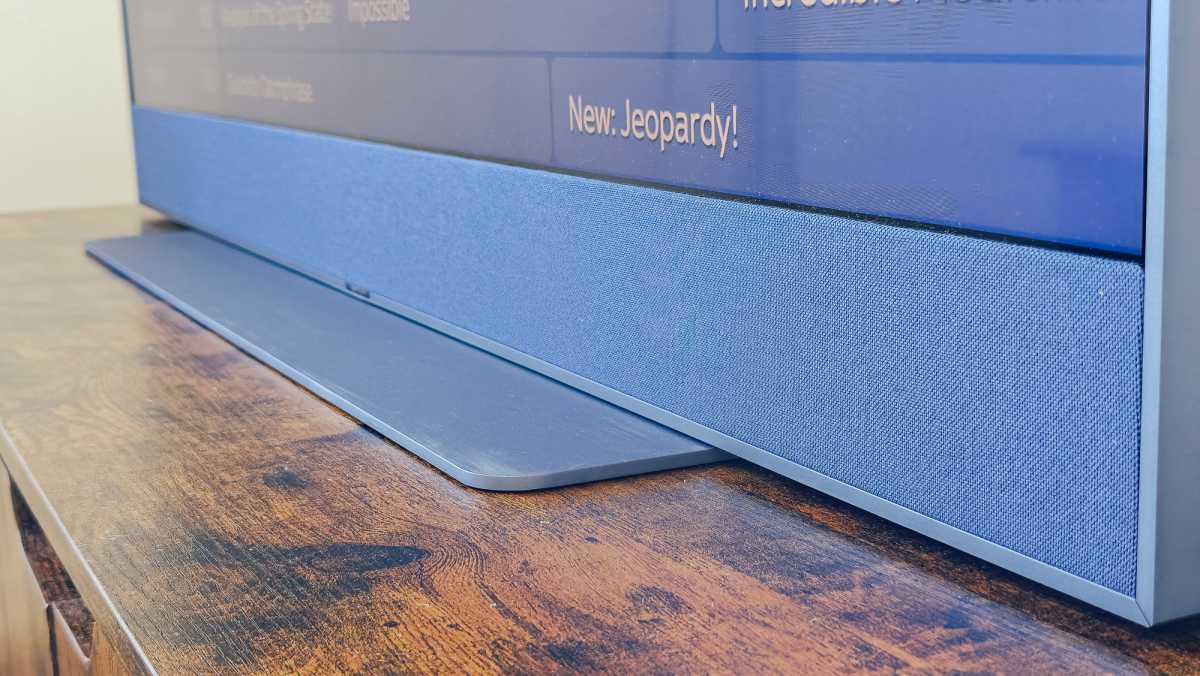
The Glass Air takes a straightforward approach, offering 2 x 15W stereo speakers, and it doesn’t do a bad job either. Dialogue is clean and intelligible, and there’s enough midrange body to stop everything from sounding thin. It handles casual viewing without strain, and action movies remain clear enough to follow without cranking the volume.
But it’s not an immersive experience. There’s no dedicated centre channel, no virtual surround processing of note, and certainly no height effects. Bass is modest; explosions and soundtracks lack the weight and physicality that a separate soundbar or subwoofer can bring. The good news is that the HDMI eARC port lets you pass Dolby Atmos audio to an external sound system or soundbar, giving you an easy upgrade path if you want cinematic sound down the line.
Hannah Cowton-Barnes / Foundry
The regular Glass 2 is very different. This screen packs a 3.1.2 Dolby Atmos system with seven drivers, three forward-firing for the main channels, two up-firing height drivers for Atmos effects, and dual woofers to bolster the low end. Total amplification is rated at 250W.
The Sky Glass 2 sound system is powerful, clear, and leagues ahead of most TV speakers. For many, it negates the need for a separate soundbar.
The Sky Glass 2 sound system is powerful, clear, and leagues ahead of most TV speakers. For many, it negates the need for a separate soundbar
Pricing & Packages
Both Sky Glass models can be bought outright, or more likely, taken on a contract that spreads the cost alongside your Sky subscription. In short, the Sky Glass Air is a much cheaper option.
You can buy either TV directly from Sky or via Currys.
Sky Glass Air – Outright
- 43-inch: £309
- 55-inch: £509
- 65-inch: £649
Sky Glass Gen 2 – Outright
- 43-inch: £699
- 55-inch: £949
- 65-inch: £1199
Sky Glass Air – 24-month contract (plus £20 upfront)
- 43-inch: £12 per month
- 55-inch: £20 per month
- 65-inch: £26 per month
Sky Glass Gen 2 – 24-month contract (plus £20 upfront)
- 43-inch: £28 per month
- 55-inch: £38 per month
- 65-inch: £48 per month
Sky Glass Air – 48-month contract (plus £20 upfront)
- 43-inch: £6 per month
- 55-inch: £10 per month
- 65-inch: £13 per month
Sky Glass Gen 2 – 48-month contract (plus £20 upfront)
- 43-inch: £14 per month
- 55-inch: £19 per month
- 65-inch: £24 per month
On top of that, you’ll need to add your channel package. These start from £21 per month for Sky Essentials (Sky Atlantic, Netflix with Ads, Discovery+, and free-to-air channels). UHD + Atmos is an extra £6 per month.
We also have a breakdown of how the TV compares to other Sky packages, such as the Stream, Q and Now.
Steve May / Foundry
Verdict: Should you buy Sky Glass 2 or Sky Glass Air?
If you want the full Sky streaming experience in one premium package, there’s no doubt that the Sky Glass Gen 2 is the better TV. Its higher HDR brightness, more refined local dimming, and genuinely immersive Dolby Atmos sound make it more satisfying for movie nights and big sporting events.
Sky Glass Air, however, makes a lot of sense if you’re looking for an affordable, easy-to-place Sky TV. It’s lighter, cheaper, and more design-friendly. It’s also a brilliant option as a second room set (perhaps partnering a standard Glass elsewhere on your network). You still get Sky OS’s slick interface and a bright, colourful image, just without the flagship punch.
In short, pick the Sky Glass 2 if you want a main living room TV that can stand alone without a soundbar, but opt for Sky Glass Air if you want Sky’s platform in a stylish, space-friendly package at the lowest cost, and you’re happy to upgrade to immersive audio at a later date.
Author: Steve May, Contributor, Tech Advisor

With more than 25 years experience in the industry, Steve May is a home entertainment technology specialist with a penchant for big screens and immersive sound systems. Creator of Home Cinema Choice magazine, Steve is also the editor of lifestyle website The Luxe Review and edits professional custom install magazine Inside CI.