

At a glance
Expert's Rating
Pros
- Stylish and premium design
- Large, fast-charging battery
- High-quality screen
- Great value
Cons
- Slightly behind in performance
- Limited cameras
- Older Android 15
Our Verdict
Can the Redmi Note 15 Pro+ be a success? Perhaps, if Xiaomi manages to explain to potential customers what it excels at. It is durable, long-lasting and fast-charging, and there is nothing particularly bad about it, even if some rivals are more compelling.
Price when reviewed
This value will show the geolocated pricing text for product undefined
Best Pricing Today
Best Prices Today: Xiaomi Redmi Note 15 Pro Plus

Xiaomi has just launched new phones in its Redmi Note series. This is the manufacturer’s mid-range, between the budget Redmi and flagship Xiaomi phones.
The new phones are the Redmi Note 15, Redmi Note 15 Pro and Redmi Note 15 Pro+. The first two are available in both 4G and 5G versions, but the Plus model on review here is only sold with 5G. I’ve been testing it for couple of weeks to see if it can go toe-to-toe with the Google Pixel 9a and Samsung Galaxy S25 FE.
It’s a likeable phone in many ways, offering most of what you could possibly need for a very reasonable £429 – before Xiaomi’s usual discounts and offers. It can’t challege the best mid-range phones, but is a good value option if you need to prioritise durability, battery life and a practical everyday experience.
Design & Build
- Three colours
- Two rear materials
- Impressive durability
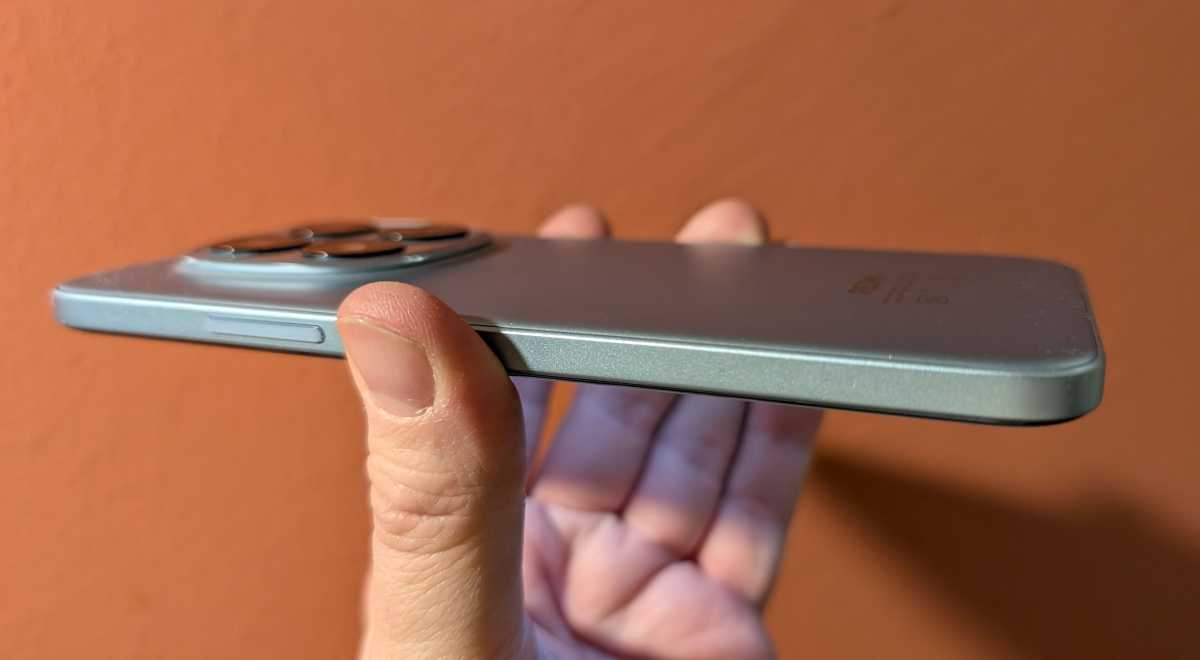
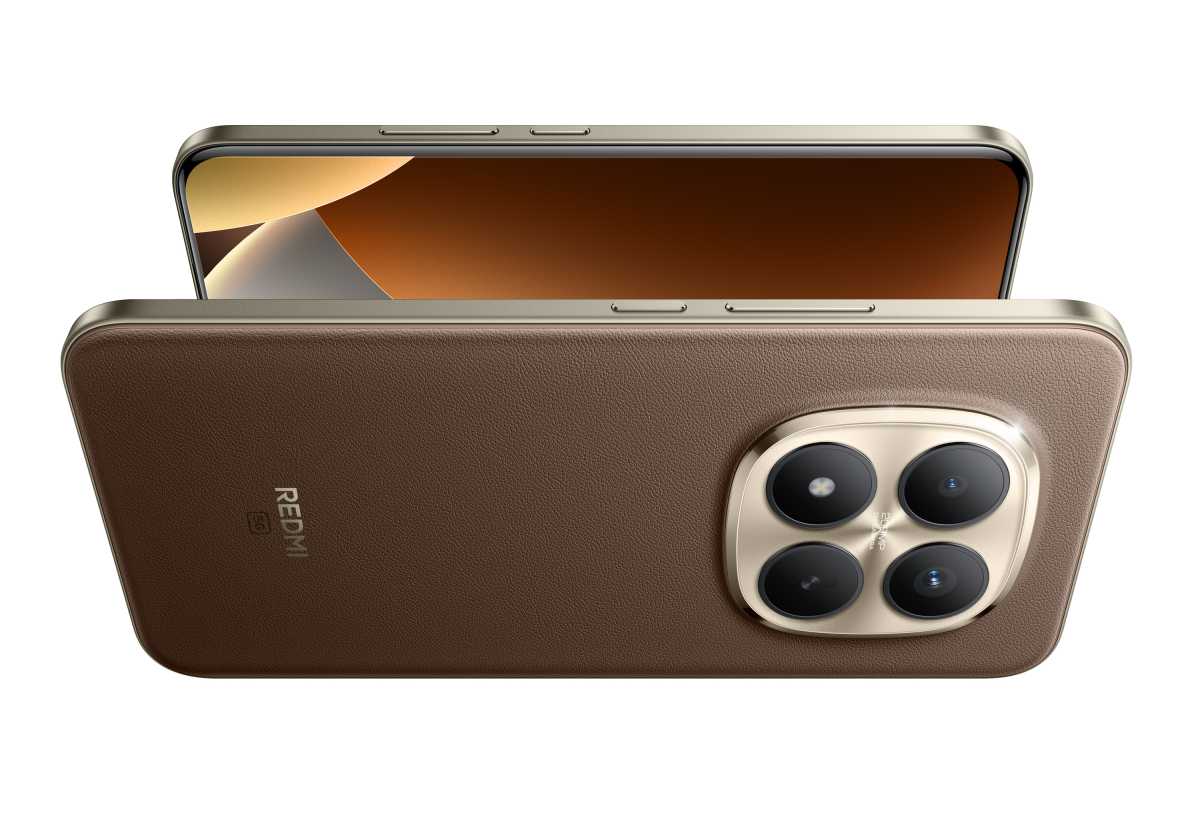
With a slim chassis, slightly rounded at the edges both at the back and front, it is comfortable to hold despite its fairly large screen and wide dimensions. The back is made of matt fibreglass, or synthetic leather if you buy the Mocha Brown colourway.
The frame is made of aluminium and gives the mobile extra stability and the front is Gorilla Glass Victus 2, not often found on cheaper phones.

Xiaomi
The Redmi Note 15 Pro+ does not immediately give the impression of rugged durability, but the fact is that it is more durable than most. With an IP66/68 rating, it can withstand more than many mid-range competitors. It should also withstand being dropped on the ground from a height of up to 2.5 metres. Whether this applies when it lands directly on the glass surface of the screen, I cannot say.
Screen & Speakers
- Large AMOLED screen
- Adaptive refresh rate
- Stereo speakers with Dolby Atmos
The generous 6.83-inch screen has sharp resolution, a 120Hz refresh rate and is built on an excellent AMOLED panel. The brightness is high enough that I never have any problems with outdoor light. It supports both Dolby Vision and HDR10, and with a peak brightness of 2,300 nits, movie viewing is really nice.
The frame rate is not fully adaptive, but runs at 60Hz by default and switches up to 120Hz when needed. It works as advertised; I experienced a consistently smooth image and no choppiness related to the screen.
Mattias Inghe
Speakers on the short sides provide clear sound with extra stereo spread, but the bass and some warmth in the midrange disappear.
So if you want to enjoy a film or listen to music, headphones are a good idea. However, the speakers work excellently for voice, both with the phone to your ear and as a speakerphone on the table or during a video call.
Specs & Performance
- Mid-range Qualcomm chip
- Two models to choose from
- Modern wireless specs
The phone is powered by Snapdragon 7s Gen 4, which provides moderate power. It’s enough for everyday tasks such as surfing the web, scrolling through Instagram, streaming films and managing messages, but it struggles a bit with some heavier apps, especially if I try to split the screen and multitask.
I’m testing the version of the phone that has 12GB of RAM and 512GB of storage, while the entry-level model is 8/256GB.
The latter should be enough for most users, but the price difference is small, just £50, so I would recommend choosing the higher spec model if you can. With memory prices about to skyrocket, it would be wise to get the value while you can.
Other core specs include Bluetooth 5.4, Wi-Fi 6E, NFC and, of course, 5G. The phone is dual-SIM and you can either use two nano-SIM cards or one paired with an eSIM.

Xiaomi
Redmi Note 15+ 5G benchmarks
- Antutu Benchmark 10, general performance: 1,081,688 points
- Geekbench 6, CPU single core: 1,259 points
- Geekbench 6, CPU multi-core: 3,284 points
- Geekbench 6 compute, GPU: 4,701 points
- 3DMark Wild Life Extreme, gaming: 1,060 points
- Read speed, storage: 1,094 MB/s
- Write speed, storage: 1,085.3 MB/s
Cameras
- Looks like triple rear cameras
- Only two in reality
- High resolution selfie camera
Now let’s check out the phone’s cameras. First, there’s a fully usable but not amazing selfie camera on the front. 32Mp with a wide angle, good light sensitivity and 1080p video recording at best.
The camera panel on the back appears to be designed for a third sensor, as it consists of four rings. The fourth houses an LED flash, but the third lacks both optics and a sensor.
There are two cameras, a large 200Mp main sensor complemented by a simpler 8Mp wide-angle with fixed focus. Neither of them is particularly impressive, but they don’t disappoint either.
With such a dense sensor, you can zoom in digitally at both 2x and 4x, which are presets in the camera app. They are sharp and have well-balanced colours, as long as the lighting conditions are good.
In dim lighting, a long exposure mode kicks in, which unfortunately doesn’t have enough image stabilisation behind it to work optimally. It films in up to 4K and 30fps. Although 60fps would have been welcome, let’s not get greedy – this is mid-range, after all.
The camera uses some AI to automate shooting and optimise the image, and you can do more of that in Xiaomi’s gallery app, as well as in Google Photos. For example, you can remove reflections and optimise the light in the image.

Mattias Inghe
Software & Battery Life
- HyperOS 2 with Android 15
- Four OS updates promised
- Large Si-C battery
- 100W wired fast charging
The system in the phone is HyperOS 2, sadly, with Android 15 instead of Android 16. One of the four promised Android updates may therefore be used to catch up.
There are some small AI tools, such as writing assistance in a note-taking app, but nothing that feels very crucial.
The system includes Xiaomi’s usual abundance of its own apps and pre-installed third-party apps, from office apps to mini-games, which irritates me more than it feels generous. But that’s apparently how they want it. Maybe I’m alone in thinking that.
A 6500mAh battery, built on new silicon-carbon technology, provides a lot of energy in a small volume. It delivers decent operating time, although I had hoped for more. Similar batteries in new, expensive top-of-the-line mobiles perform better.
Xiaomi
But the battery life is still good – I can easily use the phone for a whole day without having to charge it. Sometimes two days. Charging can be quick, taking less than an hour with one of the manufacturer’s own 100W Hypercharge chargers. Or another UFCS-compatible charger.
I found it charged 31% in 15 min and 52% in 30 min using a 120W charger.
However, as always these days, you have to buy this separately.
Price & Availability
Xiaomi is asking for £429 to bag you the Redmi Note 15+ 5G. That’s the starting price and gets you the 8/256GB model.
As mentioned earlier, the price jump to the 12/512GB isn’t much so it’s worth upgrading if you can afford it – just £479 is excellent value.
Those prices are before the Xiaomi Store’s discounts. You can currently get the models for £349 and £399 respectively, with additional perks too, such asa trade-in bonus and three months of Google One 100GB storage for free.
You can buy it from the official store as well as the likes of Amazon.
In comparison, the Google Pixel 9a costs £499 for 128GB storage and the Samsung Galaxy S25 FE is more of a stretch at £649, also for 128GB.
Check out our list of the best mid-range phones right now.
Xiaomi Redmi Note 15+ 5G: Is it worth it?
What speaks in Xiaomi’s favour is the promised durability and longer battery life, even if the camera and performance mean a slight compromise.
This may be a trade-off that many are willing to make if they can be patient with Xiaomi’s sometimes demanding software.
The likes of Google and Samsung offer better all-around experience,s but the Redmi Note 15+ offers better value for money.
Specs
- Software: Android 15, HyperOS 2, 4 years of updates
- Processor: Qualcomm Snapdragon 7s Gen 4
- Graphics: Adreno 810
- Memory: 8/12GB
- Storage: 256/512GB
- Display: 6.83-inch AMOLED, 1280 x 2772 pixels, 120Hz adaptive, 3200 nits (peak)
- Cameras: 200Mp main, 8Mp wideangle, 32Mp front
- Ports: USB-C 2.0
- Communication: 5G, Wi-Fi 6E, Bluetooth 5.4, dual-namd GPS, Galileo, NFC, IR
- Other: In-screen fingerprint reader, dual nano-SIM, e-SIM, waterproof (IP66/68)
- Battery: 6500mAh, approx. 19 hours of video streaming (high brightness, 60 Hz
- Battery charging: Up to 100W
- Size: 16.33 x 7.83 x 0.82cm
- Weight: 207g
Best Prices Today: Xiaomi Redmi Note 15 Pro Plus
This article originally appeared on our sister publication M3 and was translated and adapted from Swedish.
Author: Mattias Inghe, Contributor, Tech Advisor

Mattias is a test editor for our sister site, PC för Alla. He has worked with us for many years and knows everything there is to know about computers, networks, smartphones and accessories. When he's not in the test lab benchmarking new hardware, he's out and about visiting trade shows and other launch events to stay up-to-date on the latest tech.